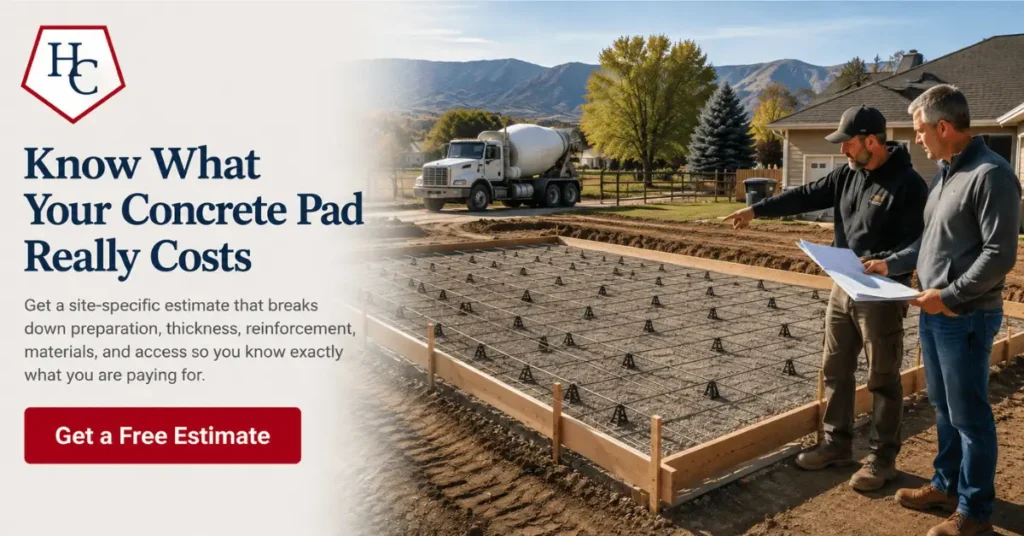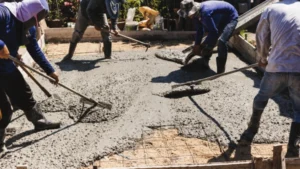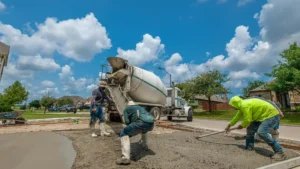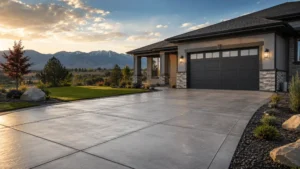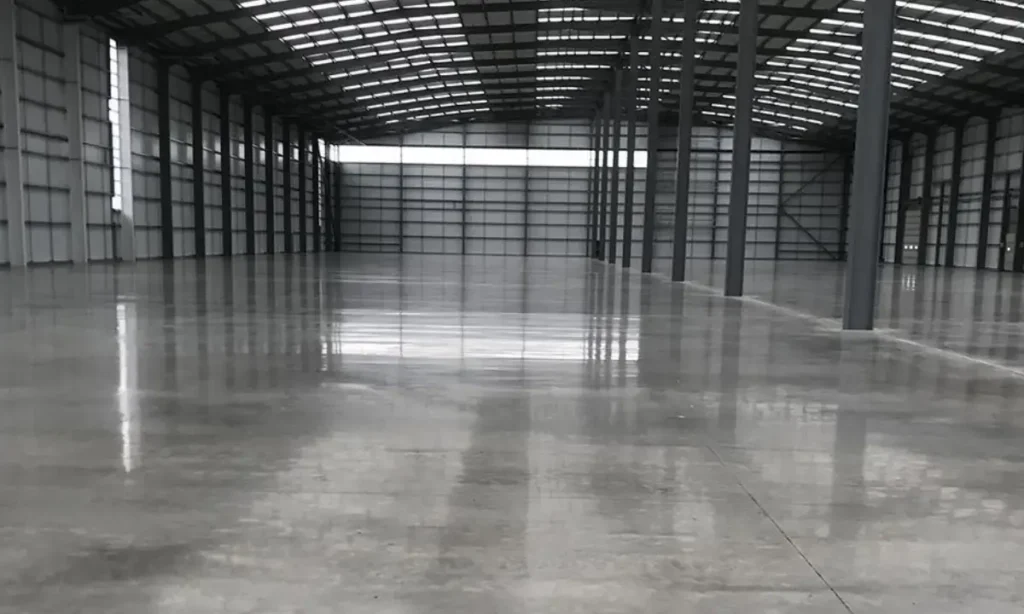
Why does the same 12 by 20 foot pad get quoted at $2,800 by one company and $5,400 by another? Homeowners assume somebody is padding the number, and sometimes somebody is. Far more often the two bids describe genuinely different slabs: different excavation depth, different base, different thickness, different mix, different reinforcement, different joint plan. Only one of those is visible after the pour.
Concrete pad cost is one of the few home projects where the cheaper option can be objectively worse in ways nobody will notice until the third winter. This is a plain breakdown of where the money actually goes on Northern Colorado flatwork, so you can read your own estimates instead of guessing. If you want the short path, our Northern Colorado concrete services page covers what we build and where.
Also Read
- Concrete Contractor Pricing: What Goes Into a Real Bid?
- Cracked Concrete Driveway: Repair or Replace in Colorado?
- Concrete Repair Colorado: When Replacement Is the Better Long-Term Call
In Plain English
A concrete pad is priced by square foot, but the square foot rate is set by everything around the concrete: how much dirt has to come out, how much road base goes in and how well it gets compacted, how thick the slab is, what strength and air content the mix carries, whether steel goes in and how it is supported, how the joints are laid out and cut, whether a truck can reach the site, and what happens to the old slab if there is one. Material is only part of the number, and the ready mix itself is one of the smaller parts. A bid that gives you a single price with no line items is not cheaper or more expensive, it is unreadable, and you should ask for the breakdown before comparing it to anything.
What a Concrete Pad Costs Before Site Conditions
Start with the national baseline, then adjust for your lot. Concrete Network puts a plain poured slab at $6.50 to $10.50 per square foot and reports an average ready mix price of $179.95 per cubic yard in 2025, against a nationwide range of $160 to $195 per yard. Applied to common pad sizes, that works out roughly as follows.
| Pad type | Typical size | Plain slab range at $6.50 to $10.50 per sq ft |
| AC, generator, or utility pad | 3 x 3 (9 sq ft) | Usually priced at a shop minimum rather than by the foot |
| Hot tub pad | 8 x 8 (64 sq ft) | About $415 to $670 |
| Shed or storage pad | 10 x 12 (120 sq ft) | About $780 to $1,260 |
| Single garage or workshop pad | 20 x 20 (400 sq ft) | About $2,600 to $4,200 |
| RV pad | 12 x 40 (480 sq ft) | About $3,120 to $5,040, higher at 5 to 6 inches thick |
| Two-car driveway | 20 x 30 (600 sq ft) | About $3,900 to $6,300 |
Two cautions on that table. Small pads rarely follow the per-foot math, because a short load of concrete, a crew, and a half day of labor cost about the same whether the pad is 60 square feet or 100. And decorative work moves the number substantially: Concrete Network puts plain driveways at $5 to $8 per square foot and stamped or multi-color decorative work at $14 to $21 and up, with tear-out of an existing slab adding roughly $1 per square foot.
Want a number for your actual lot instead of a national range? We measure on site, look at soil and drainage, and put every line item in writing. Request a free estimate or call (970) 988-3198.
The Line Items Behind the Number
Here is where a real bid spends your money, roughly in the order the work happens.
Excavation and haul-off
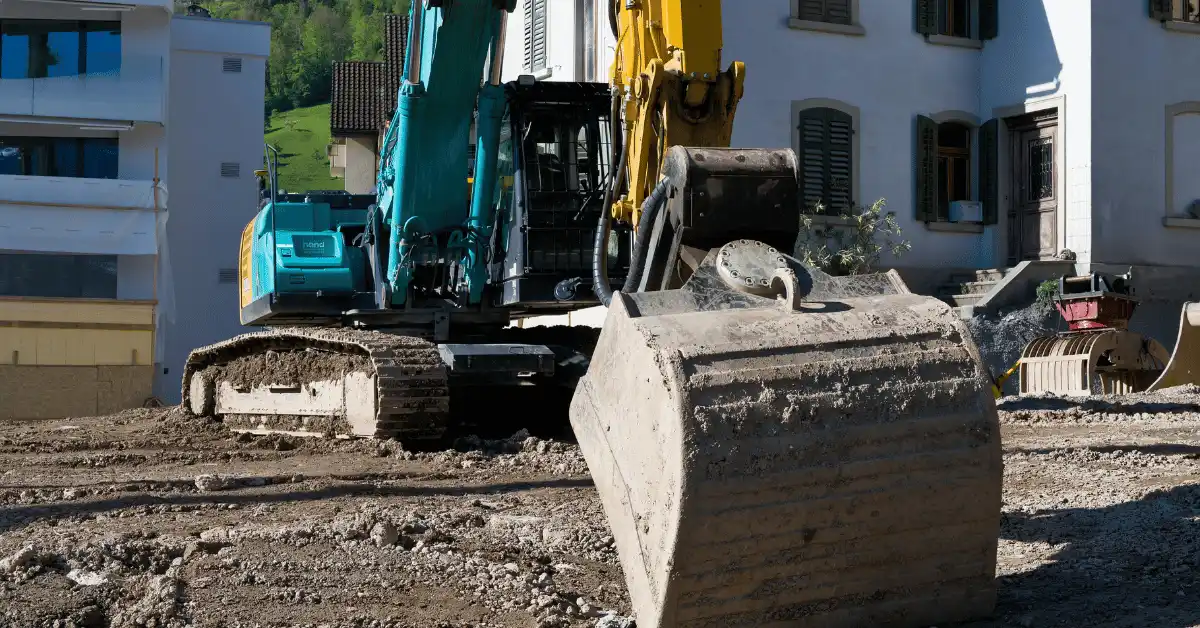
Somebody has to remove sod, topsoil, or an old slab and get it off your property. Depth matters: a pad that needs 10 inches of excavation to fit base plus slab costs more to dig and more to haul than one needing 6. If there is an existing pad, demolition and disposal are their own line, and reinforced concrete costs more to break out than plain.
Base material and compaction
This is the single biggest quality variable and the easiest one to hide. Our standard on driveways is 4 to 6 inches of Class 6 road base compacted in lifts. A crew that skips the base and pours on native soil saves several hundred dollars and gives you a slab riding directly on Front Range clay, which is a problem covered further down.
Thickness and mix design
Four inches is standard for patios, sidewalks, and garage slabs. Driveways generally run 4 to 5 inches, and 5 to 6 inches where a work truck, trailer, or RV will sit. Every extra inch is roughly 25 percent more concrete on a 4 inch slab, so thickness moves the price in visible steps. Strength and air content move it too. The National Ready Mixed Concrete Association recommends 6 percent total air content and 4,000 psi for exterior slabs exposed to freezing and deicing chemicals, and 3,500 psi where deicers are not a factor.
Reinforcement
Fiber in the mix helps control shrinkage cracking. Rebar controls what happens after a crack forms and where load is carried. Bar size, grid spacing, and whether the steel is supported off the base rather than laid on the ground all show up in the price, and all three are worth paying for under anything a vehicle parks on.
Forming, pouring, and finishing
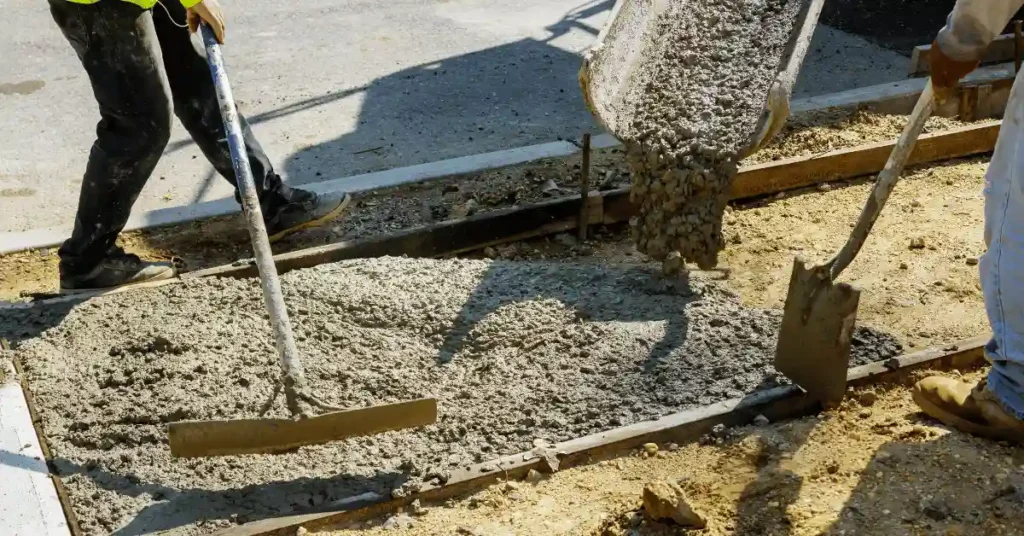
Labor is the largest share of most flatwork bids. Complex shapes, curves, steps, and tie-ins to existing concrete take more form work and more finish time than a rectangle. Broom finish is standard. Anything decorative adds material, labor, and sealing.
Joints and curing
Control joints are cheap to cut and expensive to get wrong. Published guidance places contraction joints at 24 to 36 times the slab thickness, capped at 15 feet, cut at least a quarter of the slab depth and no less than an inch, within 4 to 12 hours of finishing. For a 4 inch pad that means panels around 10 feet, cut the same evening or the next morning. Curing is the other line that quietly disappears from cheap bids, and skipping it is a direct cause of dusting and early surface wear.
Access and pour logistics
If a truck can back to the forms, the pour is fast. If concrete has to be wheeled 90 feet through a side gate, the labor cost climbs and the crew grows. Backyard patios and pads behind fences almost always price higher per square foot than the driveway out front for exactly this reason.
Comparing two bids that are thousands apart? Send us both scopes. We will tell you which line items differ and what those differences will mean in five years. Get your free estimate on a slab built for this climate.
Why Northern Colorado Prices Differ From National Averages
National calculators average a country with very different soil and weather. Two local realities push a correctly built pad toward the upper half of any national range.
The first is soil. The Colorado Geological Survey documents expansive clays through the Front Range corridor that can swell up to 20 percent by volume and exert pressures up to 30,000 pounds per square foot, and lists cracked driveways, sidewalks, and basement floors among the routine damage. That is why excavation depth and compacted base are not optional line items here. They are the entire strategy for keeping a slab off reactive ground.
The second is freeze and thaw. Air entrainment and higher design strength are not upsells on Front Range exterior flatwork, they are the baseline that keeps a surface from scaling. That is why our driveway spec runs 4,000 to 4,500 psi air entrained rather than the cheapest available mix.
Material pricing has also moved. The producer price index for ready mix concrete in the West census region ran 185.7 in June 2026 against 181.6 a year earlier, about 2.2 percent higher, with most of that jump landing in a single step between December 2025 and January 2026. That is modest inflation rather than a spike, but it does mean a quote you collected two years ago is no longer a useful benchmark.
What Permits Add, and What They Do Not
Permit costs surprise people in both directions. In unincorporated Larimer County, plain concrete flatwork such as driveways or sidewalks is exempt from building permits entirely, though setbacks, lot coverage, and floodplain rules still apply to what you build. So on most rural and county-address pads, the permit line is zero.
Inside Fort Collins city limits it depends on what you touch. Work in the public right of way, including modifying a sidewalk or drive approach, requires an engineering permit and a valid city right of way contractor license. The sidewalk and drive approach permit starts at $25 for up to 15 feet plus $0.30 per additional foot, and an excavation permit carries a $45 application fee plus inspection charges. Those are small numbers. The expensive version is discovering mid-project that your contractor cannot pull them.
Where a Cheap Concrete Pad Bid Found the Money
When one bid comes in dramatically under the others on identical square footage, the savings came from somewhere specific. These five places account for nearly all of it.
- Base. Pouring on native soil instead of excavating and compacting road base saves the most money of anything on this list, and costs the most later.
- Thickness. A slab poured at 3.5 inches instead of 4 or 5 is invisible once the forms come off and is roughly 15 to 30 percent less concrete.
- Mix. Dropping air entrainment or design strength cuts the material bill and is undetectable without the delivery ticket.
- Steel. Rebar left out, or laid on the ground and never pulled up, looks identical in a photo taken during the pour.
- Time. Joints cut a day late, curing skipped, or the crew released before finishing is complete. All three save labor hours and all three show up as cracking or dusting within a few seasons.
Ask for the delivery ticket, the base depth, and the joint plan in writing, and four of the five stop being possible.
Concrete Pad Cost Questions We Get
Is a thicker pad always worth the extra money? Only where load justifies it. Going from 4 to 5 inches on an RV or work truck pad is money well spent. Going thicker on a hot tub or shed pad rarely pays back, since base preparation matters more at that size.
Does a small pad cost more per square foot? Yes, usually. Mobilization, forming, a short load of concrete, and crew time do not scale down proportionally, so a 60 square foot pad often lands well above the per-foot rate you would see on a driveway.
Can I save money by pouring in winter? Cold weather pours require additional measures such as heated blankets, mix adjustments, and longer protection periods, so off-season rarely produces a discount on flatwork here. Scheduling flexibility is a better lever than season.
How long does a concrete pad take start to finish? Most residential pads run 3 to 7 days from excavation through finishing, depending on size and access. Foot traffic is fine after 24 to 48 hours, vehicles after roughly 7 to 10 days, and full design strength arrives near day 28.
Should I seal a new pad? Sealing is worth considering after the first full cure and generally runs $1 to $2 per square foot professionally. Keep deicing salt off a new slab entirely through its first winter regardless.
Conclusion
Concrete pad cost is not one number, it is seven or eight decisions stacked on top of each other, and the only way to compare bids fairly is to see those decisions written down. Square footage, excavation depth, base material and compaction, thickness, mix strength and air content, reinforcement, joint spacing, curing method, and access should all appear on the page. When they do, price differences stop being mysterious and start being choices you can actually make.
Hugo’s Concrete has been pouring driveways, patios, and pads across Fort Collins, Loveland, Windsor, Greeley, and the rest of Northern Colorado for more than 20 years and 900 plus projects. Hugo runs the company and is on site personally, the crew are full-time employees, and every bid we hand over lists what goes under the slab, not just what you will see on top of it. If a competing estimate is cheaper, we would rather show you exactly which line explains it than quietly match the number.
Ready for a real breakdown on your project? We will measure the site, check soil and drainage, and itemize every line so you know what you are buying. Request your free estimate or call (970) 988-3198.