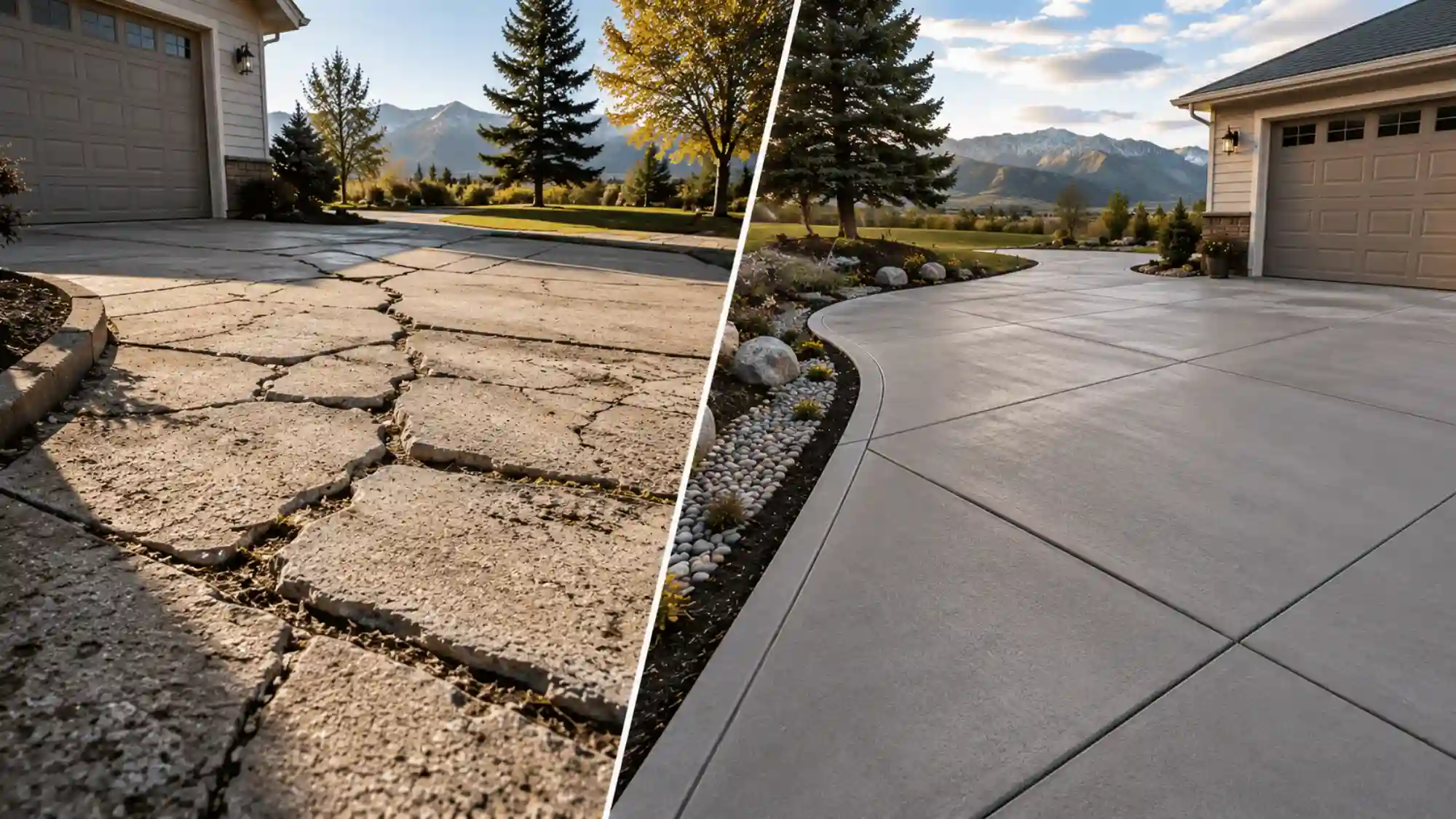
Many property owners looking into concrete repair in Colorado want the quickest, lowest-cost fix. Repairs can often improve the look and function of damaged concrete, but they are not always the best long-term value. In some cases, replacement offers stronger durability, fewer future maintenance problems, and a better return over the life of the concrete.
Colorado presents unique challenges for concrete surfaces. Freeze-thaw cycles, expansive soils, snowmelt, moisture intrusion, and rapid temperature changes can accelerate deterioration. What begins as a small crack can eventually develop into significant structural damage if the underlying cause is not addressed.
Whether you are dealing with a driveway, sidewalk, patio, commercial slab, or floor system, understanding the difference between repairable damage and replacement-level deterioration can help you make a more informed decision. Professional concrete flooring services and structural concrete evaluations often reveal issues that are not immediately visible from the surface.
Before investing in repairs, it is important to understand the warning signs, cost considerations, and long-term implications of both options.
Also Read
- Concrete PSI Strength Guide
- Site Prep Tips to Prevent Concrete Failure
- Concrete Installation Mistakes in Colorado
TL;DR
Minor cracks, surface wear, and isolated damage can often be repaired successfully. However, widespread cracking, settlement, drainage failures, structural movement, and recurring repairs often indicate that replacement provides better long-term value. Colorado’s climate makes it especially important to address root causes rather than cosmetic symptoms.
Key Takeaways
- Small concrete defects can often be repaired effectively
- Structural movement usually indicates deeper problems
- Colorado weather accelerates concrete deterioration
- Drainage failures often lead to replacement recommendations
- Repeated repairs can become more expensive than replacement
- Proper site preparation affects concrete lifespan
- Long-term value matters more than short-term repair savings
Why Concrete Fails in Colorado
Concrete is durable, but it is not indestructible.
Colorado’s environment creates several challenges that affect long-term performance.
Freeze-Thaw Cycles
Water enters small cracks and pores in the concrete surface. When temperatures drop, the moisture freezes and expands.
Over time this can lead to:
- Crack expansion
- Surface scaling
- Spalling
- Joint deterioration
Repeated freeze-thaw cycles often accelerate existing damage.
Expansive Soils
Many Colorado properties sit on clay-rich soils that expand when wet and shrink when dry.
This movement places stress on concrete slabs and can contribute to:
- Cracking
- Settlement
- Uneven surfaces
- Structural movement
Poor Drainage
Water is one of the leading contributors to concrete failure.
Improper drainage can cause:
- Soil erosion
- Base instability
- Foundation movement
- Surface deterioration
Installation Deficiencies
Concrete problems sometimes originate during construction.
Common installation issues include:
- Inadequate compaction
- Insufficient reinforcement
- Poor joint placement
- Improper curing
- Weak concrete mixes
These problems may not become visible until years later.
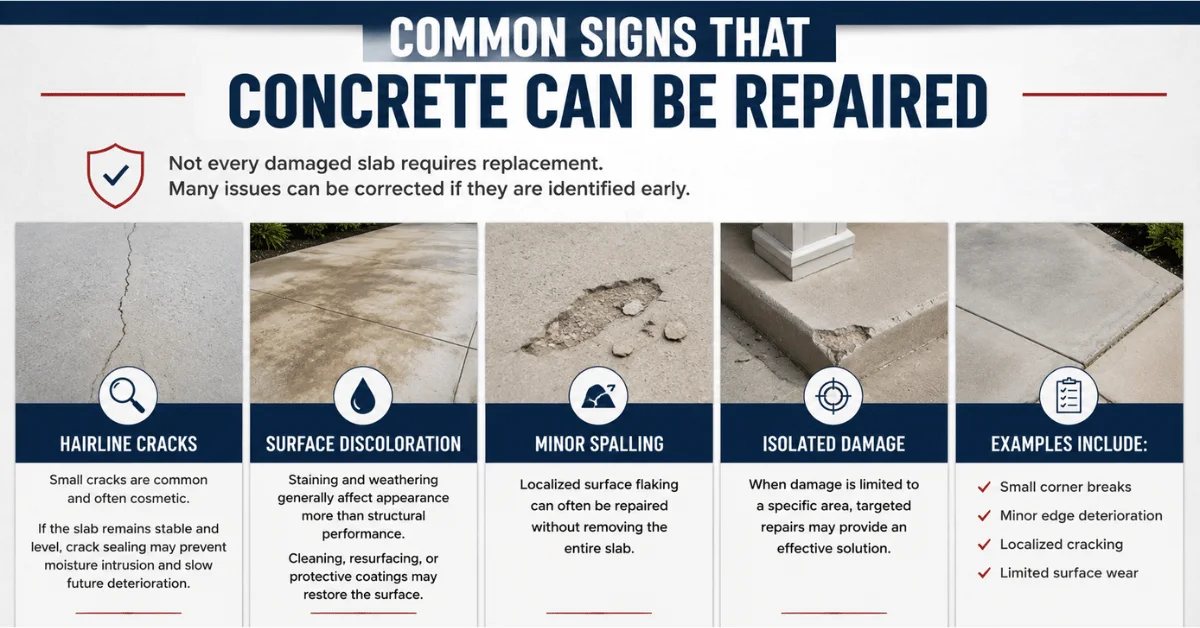
Common Signs That Concrete Can Be Repaired
Not every damaged slab requires replacement.
Many issues can be corrected if they are identified early.
Hairline Cracks
Small cracks are common and often cosmetic.
If the slab remains stable and level, crack sealing may prevent moisture intrusion and slow future deterioration.
Surface Discoloration
Staining and weathering generally affect appearance more than structural performance.
Cleaning, resurfacing, or protective coatings may restore the surface.
Minor Spalling
Localized surface flaking can often be repaired without removing the entire slab.
Isolated Damage
When damage is limited to a specific area, targeted repairs may provide an effective solution.
Examples include:
- Small corner breaks
- Minor edge deterioration
- Localized cracking
- Limited surface wear
Warning Signs That Replacement May Be Necessary
Some forms of damage indicate deeper structural concerns.
Multiple Large Cracks
Large interconnected cracks often suggest movement beneath the slab.
Repairs may improve appearance temporarily but may not stop future movement.
Vertical Displacement
When one side of a crack sits higher than the other, structural movement has occurred.
This may indicate:
- Soil settlement
- Base failure
- Frost heave
- Expansive soil movement
Repeated Repair Failures
If repairs continue to fail, the underlying cause has likely not been resolved.
Recurring damage often points toward replacement.
Significant Drainage Issues
Water pooling around concrete surfaces can accelerate deterioration and weaken supporting soils.
Persistent drainage failures often require more extensive corrective work.
Extensive Surface Deterioration
Large-scale spalling, scaling, or crumbling may indicate that the concrete has reached the end of its useful life.
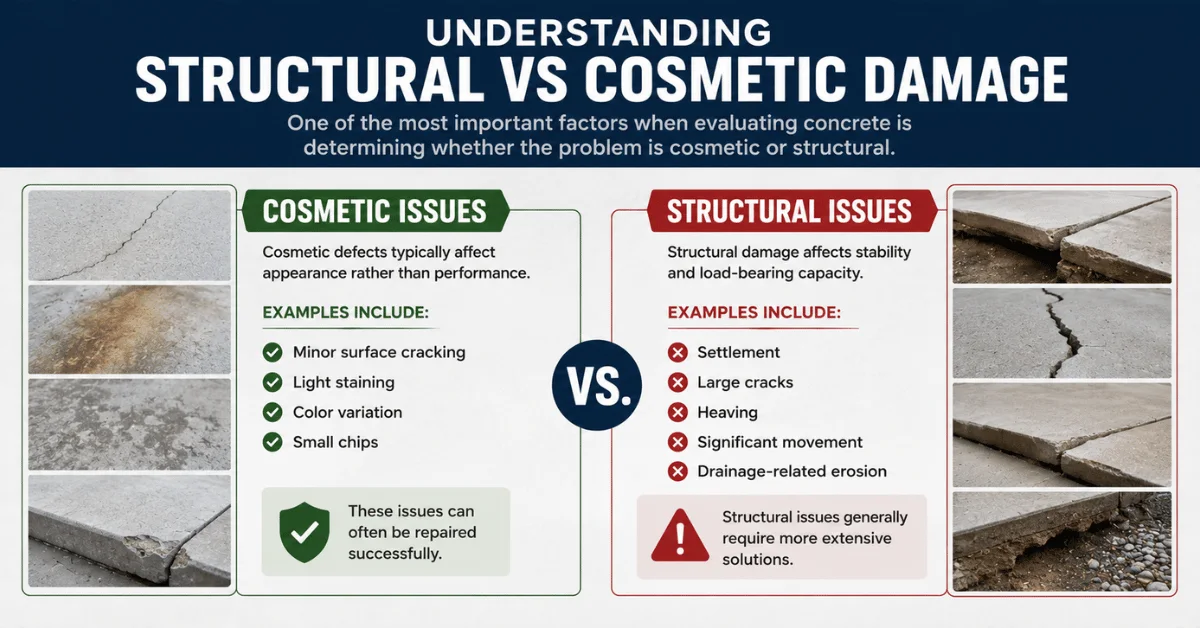
Understanding Structural vs Cosmetic Damage
One of the most important factors when evaluating concrete is determining whether the problem is cosmetic or structural.
Cosmetic Issues
Cosmetic defects typically affect appearance rather than performance.
Examples include:
- Minor surface cracking
- Light staining
- Color variation
- Small chips
These issues can often be repaired successfully.
Structural Issues
Structural damage affects stability and load-bearing capacity.
Examples include:
- Settlement
- Large cracks
- Heaving
- Significant movement
- Drainage-related erosion
Structural issues generally require more extensive solutions.
Cost Analysis: Repair vs Replacement
The competitor article correctly highlights cost as an important consideration, but many property owners focus only on immediate expenses rather than long-term value.
Repair Costs
Repairs often cost less initially.
Typical repair services include:
- Crack filling
- Joint repair
- Surface patching
- Resurfacing
- Slab lifting
These solutions may extend lifespan when underlying conditions remain stable.
Replacement Costs
Replacement involves:
- Demolition
- Disposal
- Excavation
- Base preparation
- Reinforcement
- New concrete installation
While more expensive upfront, replacement often reduces future maintenance expenses.
Long-Term Financial Considerations
Property owners should evaluate:
- Future repair frequency
- Expected lifespan
- Maintenance requirements
- Safety concerns
- Property value impact
A larger investment today may reduce costs over the next decade.
How Drainage Influences the Decision
Drainage frequently determines whether repair or replacement makes sense.
Surface Water Problems
Standing water creates ongoing stress on concrete systems.
Subsurface Erosion
Water can wash away supporting soils beneath slabs.
This often leads to:
- Settlement
- Voids
- Cracking
- Uneven surfaces
Foundation Protection
Concrete surfaces should direct water away from structures whenever possible.
Poor drainage affects more than the slab itself.
The Federal Highway Administration provides extensive research regarding water management and concrete durability in transportation infrastructure.
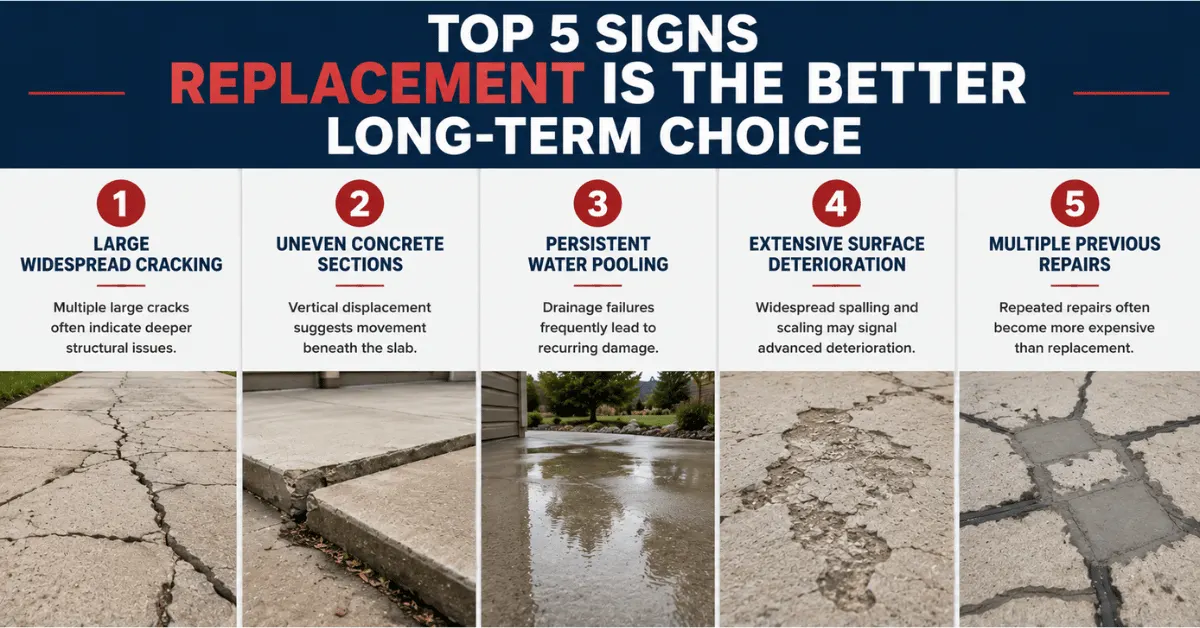
Top 5 Signs Replacement Is the Better Long-Term Choice
1. Large Widespread Cracking
Multiple large cracks often indicate deeper structural issues.
2. Uneven Concrete Sections
Vertical displacement suggests movement beneath the slab.
3. Persistent Water Pooling
Drainage failures frequently lead to recurring damage.
4. Extensive Surface Deterioration
Widespread spalling and scaling may signal advanced deterioration.
5. Multiple Previous Repairs
Repeated repairs often become more expensive than replacement.
How Concrete Age Affects Repair Decisions
Age alone does not determine whether concrete should be replaced.
However, older slabs often develop multiple issues simultaneously.
Aging Concrete Characteristics
Older concrete may experience:
- Surface wear
- Reduced strength
- Joint deterioration
- Increased cracking
End-of-Life Considerations
When multiple systems begin failing together, replacement often becomes more practical.
Why Site Preparation Matters During Replacement
Replacement provides an opportunity to correct underlying causes of failure.
Excavation and Compaction
Proper base preparation reduces future movement.
Drainage Improvements
Water management can be redesigned to improve performance.
Reinforcement Upgrades
Modern reinforcement methods may improve durability.
Concrete Mix Improvements
Current mix designs often outperform older installations.
According to the American Concrete Institute , proper placement, curing, and reinforcement significantly influence long-term concrete performance.
Colorado-Specific Factors That Influence Replacement Decisions
Not every region experiences the same concrete challenges.
Snow and Ice Exposure
Winter weather accelerates moisture-related deterioration.
Temperature Swings
Colorado frequently experiences large daily temperature fluctuations.
High UV Exposure
Sun exposure can affect surface treatments and sealers.
Soil Variability
Soil conditions vary dramatically across Colorado communities.
Contractors familiar with local conditions can often identify risk factors early.
Property owners evaluating long-term concrete performance often consult experienced professionals offering concrete flooring solutions to better understand how slab condition, drainage, and structural factors influence repair decisions.
Repair Methods That May Extend Concrete Life
Replacement is not always necessary.
Several repair techniques can provide meaningful improvements.
Crack Sealing
Helps prevent water intrusion.
Resurfacing
Improves appearance and addresses minor surface defects.
Slab Lifting
Can correct certain settlement issues without full replacement.
Joint Repair
Protects vulnerable expansion and control joints.
The key is determining whether these repairs address the root cause.
How to Evaluate a Contractor’s Recommendation
Not all recommendations are the same.
Ask About Underlying Causes
A good contractor explains why damage occurred.
Request Multiple Options
Repairs and replacement should both be discussed when appropriate.
Review Long-Term Expectations
Understand lifespan expectations for each solution.
Compare Overall Value
Consider performance, maintenance, and future costs.
The competitor article focused primarily on identifying visible damage and comparing repair costs versus replacement costs. This article expands on those concepts by addressing drainage, site preparation, Colorado-specific environmental factors, structural evaluation, long-term ownership costs, and decision-making criteria for property owners considering major concrete investments.
FAQs
How long do concrete repairs typically last?
Repair lifespan varies based on the repair type, installation quality, and underlying cause of damage. Some repairs may last many years while others may require ongoing maintenance.
Can cracked concrete always be repaired?
No. Some cracks indicate structural movement that may continue even after repairs are completed.
Is replacement always more expensive?
Initially, yes. However, replacement may provide better long-term value if repairs are likely to fail repeatedly.
What causes concrete to settle?
Common causes include soil erosion, poor compaction, drainage issues, and expansive soil movement.
Should I repair or replace uneven concrete?
The answer depends on the cause and severity of the movement. A professional evaluation helps determine the most effective solution.
Conclusion
Evaluating concrete repair Colorado projects requires more than looking at surface cracks or comparing repair estimates. Property owners should consider drainage conditions, soil stability, structural movement, long-term maintenance requirements, and overall slab condition before deciding on the best solution.
Repairs remain an effective option for minor defects and isolated damage. However, widespread cracking, settlement, recurring failures, and drainage-related deterioration often indicate that replacement is the better long-term call. Addressing the root cause of the problem rather than the visible symptom helps protect your investment and improve long-term performance.
About the Author
Hugo’s Concrete is a trusted Northern Colorado concrete contractor specializing in residential and commercial concrete solutions, including driveways, patios, sidewalks, flooring systems, decorative concrete, and structural concrete work. Their team focuses on proper site preparation, drainage planning, and durable installations designed for Colorado conditions. Learn more about Hugo’s Concrete and visit the About Us page to learn more about their experience and commitment to quality craftsmanship.