You run your hand across a brand-new patio and something feels off. The surface is chalky, there is a spiderweb of tiny cracks near the edge, and one corner has already started to flake. The concrete was poured a month ago. If you’ve been searching for concrete finishing and worrying about ending up with a slab like that, you’re asking the right question at the right time. The finish is the part of the job you live with every day, and it’s also the part where cut corners show up first.
Finishing is the set of steps a crew performs on fresh concrete after it is placed: leveling, floating, troweling, texturing, and in some cases grinding and polishing. Done well, it produces a surface that is flat, dense, slip-appropriate, and built to last decades. Done poorly, it produces dusting, scaling, and cracking that no sealer can hide. At Hugo’s Concrete, we have spent more than 20 years finishing driveways, patios, and floors across Northern Colorado, and the difference almost always comes down to prep, timing, and patience. Our concrete polishing work in particular is where finishing skill either shows or falls apart.
Also Read
- Concrete Polishing Contractor: What to Check Before You Hire
- Stamped Concrete Guide: Enhancing Spaces with Style and Durability
- The Ultimate Guide to Concrete Curing: Balancing Time and Durability
The Short Version
Concrete finishing covers every technique used to shape the visible surface of a slab, from a simple broom texture to a mirror-gloss polish. Quality finishing depends less on the tool and more on timing: working the surface at the right moment, never adding water to make troweling easier, and curing the slab properly for the first week. The clearest signs of poor finishing are crazing, dusting, blistering, and early scaling. When you evaluate a concrete finishing crew near you, look at completed local projects, confirm they cure their work, and ask how they handle Northern Colorado’s freeze-thaw conditions before you sign anything.
Not sure what finish your project needs? A quick on-site look tells you far more than a phone quote. When you want a straight answer from a local crew, request a free estimate from Hugo’s Concrete.
What “Concrete Finishing” Actually Means
“Finishing” is not one job. It is a menu of surface treatments, and each one calls for a different skill set and a different sense of timing. A crew that is genuinely good at finishing can talk you through the trade-offs of each option instead of pushing whatever they happen to do fastest.
Broom finish
The broom finish is the workhorse of exterior flatwork. After the surface is floated smooth, the finisher drags a broom across it to create fine ridges. According to the Concrete Network, a broom is used specifically to create a slip-resistant texture, which is why it is the standard choice for driveways, sidewalks, and pool decks. The quality tell here is consistency: the lines should be even in depth and direction, not wandering or patchy.
Steel-trowel smooth finish
A hard steel-trowel finish produces the dense, smooth surface you want on interior floors and garages. It is also the easiest finish to ruin, because troweling too early or too aggressively traps water and air just below the surface. A good finisher waits for the bleed water to evaporate before the final passes. A rushed one does not, and the slab pays for it later.
Exposed aggregate
Exposed aggregate removes the top layer of cement paste to reveal the stone underneath, using a surface retarder, washing, or light abrasive blasting. The Concrete Network describes it as a durable, naturally slip-resistant decorative option. It hides minor surface wear well, which makes it popular for walkways and patios.
Stamped and colored concrete
Stamped concrete presses patterns into fresh concrete to mimic stone, brick, slate, or wood, and color is added either integrally in the mix or broadcast onto the surface. Our stamped and colored concrete work is one of the most requested finishes in the region because it delivers a high-end look at a fraction of natural stone cost. Timing is everything: the stamp has to go down in the narrow window when the concrete is firm enough to hold detail but soft enough to take the imprint.
Polished concrete
Polishing is the most technical finish of all, and it is worth its own section.

Polished Concrete: Where Finishing Skill Shows Most
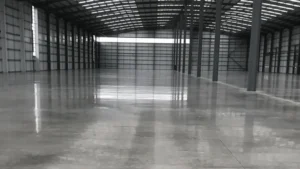
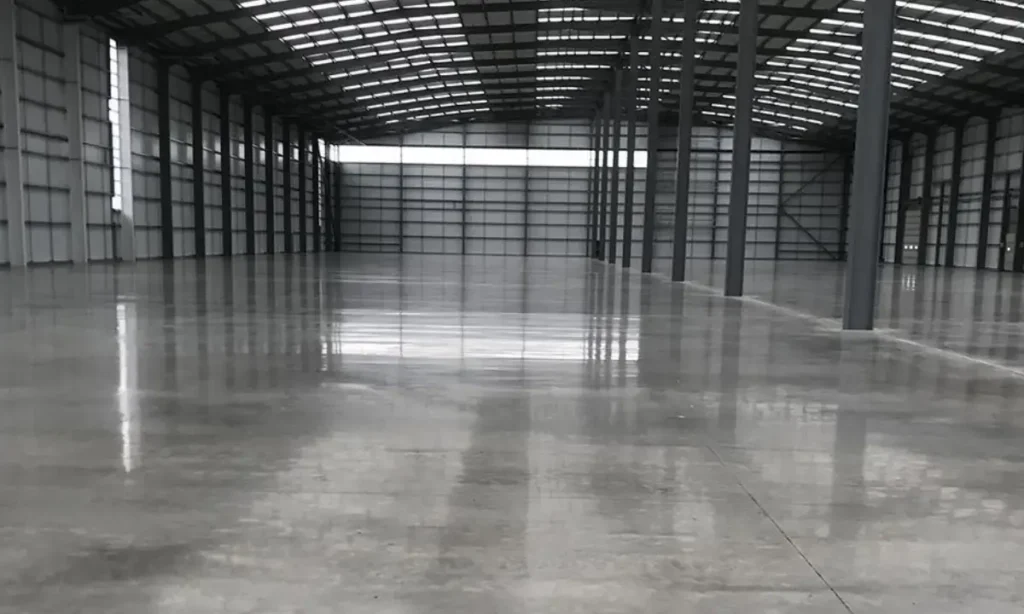
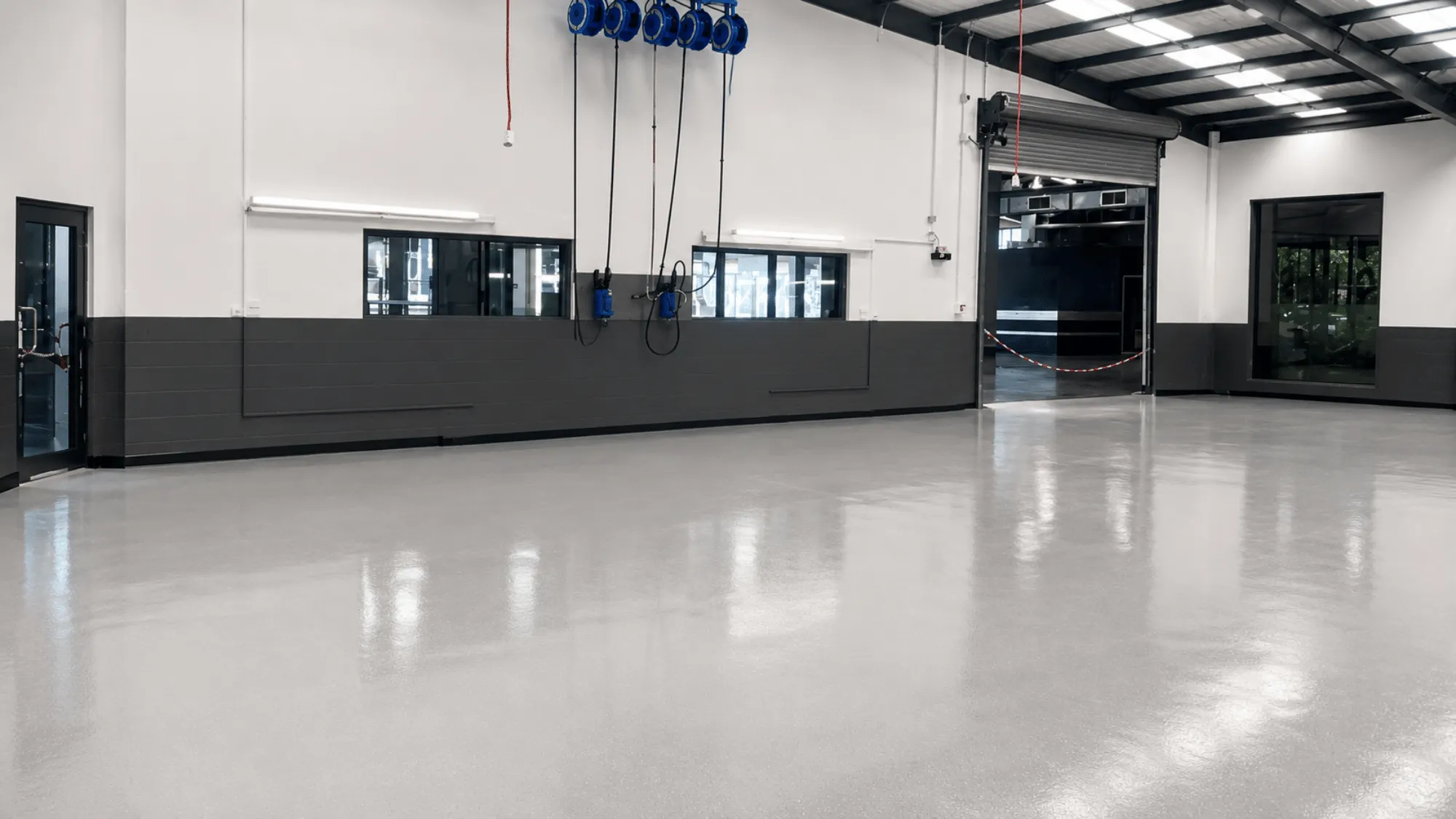
Polished concrete is produced by mechanically grinding and honing the surface with progressively finer diamond abrasives, then hardening it with a chemical densifier. It is not a coating. The shine comes from the concrete itself, refined step by step. That is exactly why it exposes a finisher’s skill: there is no film to hide behind.
The industry grades the result on two scales. As the Concrete Network explains, gloss runs from Level 1 (a flat, ground surface) up to Level 4 (a highly polished, mirror-like reflection), while aggregate exposure runs from Class A (minimal “cream” exposure) to Class D (large stone revealed). A quality contractor will show you samples and tell you which combination is realistic for your slab, because not every floor can reach a Level 4 shine.
Polished floors have earned their popularity honestly. The Concrete Network notes that because polished concrete never needs waxes or coatings and offers superior durability and easy maintenance, it has become a common flooring surface in warehouses, retail spaces, schools, and other high-traffic facilities. On cost, expect to pay between $3 and $12 per square foot depending on the gloss level and any decorative work, since higher gloss simply means more grinding passes. If a bid is far below that range, ask what steps are being skipped.
Thinking about a polished floor for a garage, basement, or shop? Polishing rewards experience and the right equipment. See how we approach it, then explore concrete polishing with Hugo’s Concrete.
The Tells of a Bad Finish
Most finishing failures trace back to the same root causes: working the surface too soon, adding water to ease troweling, or skipping the cure. The symptoms have names, and once you know them you can spot poor work on sight.
Crazing. These are the fine, random hairline cracks that look like a dry lakebed or shattered glass. The National Ready Mixed Concrete Association attributes crazing to rapid surface drying and to floating or troweling before the bleed water has evaporated. Crazing is usually cosmetic, but it is a reliable signal that timing and curing were mishandled.
Dusting. A properly finished floor should not shed powder when you rub it. Dusting, per NRMCA guidance, is the formation of loose powder from a disintegrating surface, and a leading cause is finishing while bleed water is still present or sprinkling water onto the surface during troweling. A dusty slab has a weak, low-strength wear surface from day one.
Blistering. Blisters are hollow bumps that form when a finisher seals the surface with premature troweling, trapping bleed water and air underneath. NRMCA describes them as low-profile bumps caused by premature finishing and overworking. They break open under traffic and leave pockmarks.
Scaling and early wear. Flaking and peeling of the top surface, especially near edges, points to a surface that was overworked or poured without proper air content for a freeze-thaw climate. In Northern Colorado, this is the failure we get called to replace most often.
Why Timing and Curing Decide the Finish
You can use the best mix in the state and still get a bad finish if the crew rushes the clock. Two moments matter more than any tool.
The first is the finishing window. Fresh concrete gives off bleed water as it settles. Every hard-troweled or stamped surface has to be worked after that water evaporates, not before. The temptation on a busy day is to trowel early and move on, and that single shortcut causes crazing, dusting, and blistering all at once.
The second is curing, which happens after the crew has packed up. Curing keeps the slab moist so the cement can keep gaining strength. The Concrete Network points out that concrete moist-cured for seven days is roughly 50 percent stronger than concrete left to dry, and that an uncured slab tends to develop crazing and a dusting surface with little abrasion resistance. A finisher who explains their curing plan is telling you they intend to protect the work after the photogenic part is done.
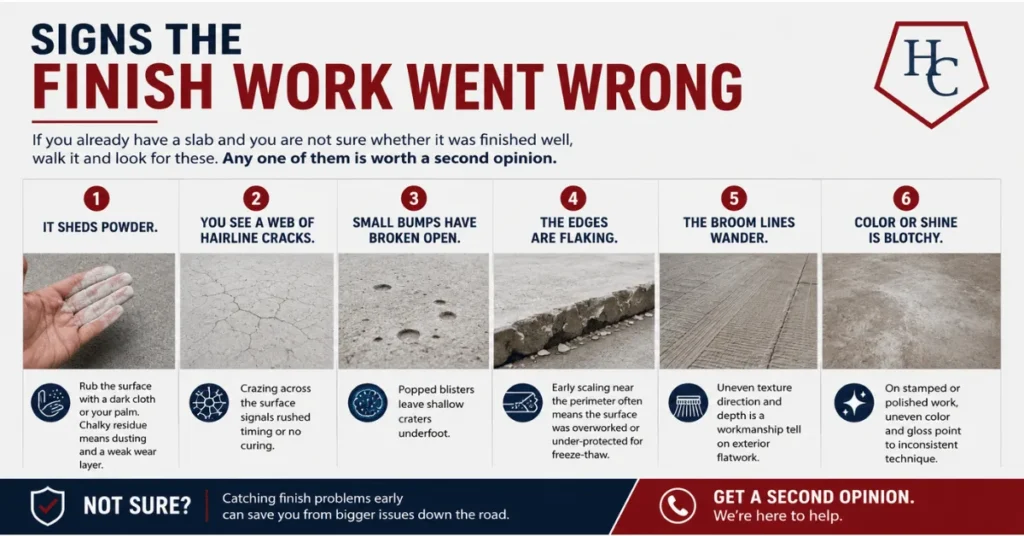
Signs the Finish Work Went Wrong
If you already have a slab and you are not sure whether it was finished well, walk it and look for these. Any one of them is worth a second opinion.
- It sheds powder. Rub the surface with a dark cloth or your palm. Chalky residue means dusting and a weak wear layer.
- You see a web of hairline cracks. Crazing across the surface signals rushed timing or no curing.
- Small bumps have broken open. Popped blisters leave shallow craters underfoot.
- The edges are flaking. Early scaling near the perimeter often means the surface was overworked or under-protected for freeze-thaw.
- The broom lines wander. Uneven texture direction and depth is a workmanship tell on exterior flatwork.
- Color or shine is blotchy. On stamped or polished work, uneven color and gloss point to inconsistent technique.
Already living with a finish that failed early? Replacing a poorly finished slab the right way costs less than replacing it twice. Talk to Hugo’s Concrete about a repair or replacement and get an honest read on what you have.
How to Vet a Concrete Finishing Crew Near You
Searching concrete finishing near me will hand you a list of names. Narrowing it down is about proof, not promises. Start with completed local work: a crew that finishes concrete well in Northern Colorado will have recent projects you can actually look at, like the driveways, patios, and floors in our recent work gallery. Ask to see a finish similar to the one you want, not just any slab.
Then ask three plain questions. How do you decide when to start finishing? A real finisher will mention bleed water. How do you cure the slab afterward? The answer should be specific, not “it just dries.” And how do you adjust the mix and finish for our freeze-thaw winters? Local experience should be obvious in the reply. A crew that talks fluently about timing, curing, and Colorado conditions is showing you the exact skills that separate a finish that lasts from one that fails.
The Bottom Line
Concrete finishing is where a project either becomes something you are proud of or something you start apologizing for. The tools are simple; the judgment is not. Quality finish work comes from knowing when to touch the surface, when to leave it alone, and how to protect it through the first critical week, all adapted to the ground and climate you are actually building on.
That judgment is what owner Hugo has spent two decades building and teaching to his crew. Hugo’s Concrete is a family-owned, licensed, and insured concrete contractor that finishes flatwork, decorative concrete, and polished floors across Fort Collins, Loveland, Windsor, Greeley, and the rest of Northern Colorado, and every job is owner-supervised from prep to final walkthrough. If you want a finish that still looks right in ten years, that is the standard we hold.
Ready for finish work that holds up? Tell us about your driveway, patio, or floor and we will walk the site with you. Request your free estimate from Hugo’s Concrete, or call (970) 988-3198 to talk it through.