Choosing the right patio builder Fort Collins homeowners can trust often comes down to more than appearance alone. A beautiful patio that ignores drainage issues, grading problems, or soil conditions can quickly develop standing water, cracking, settlement, and costly maintenance concerns.
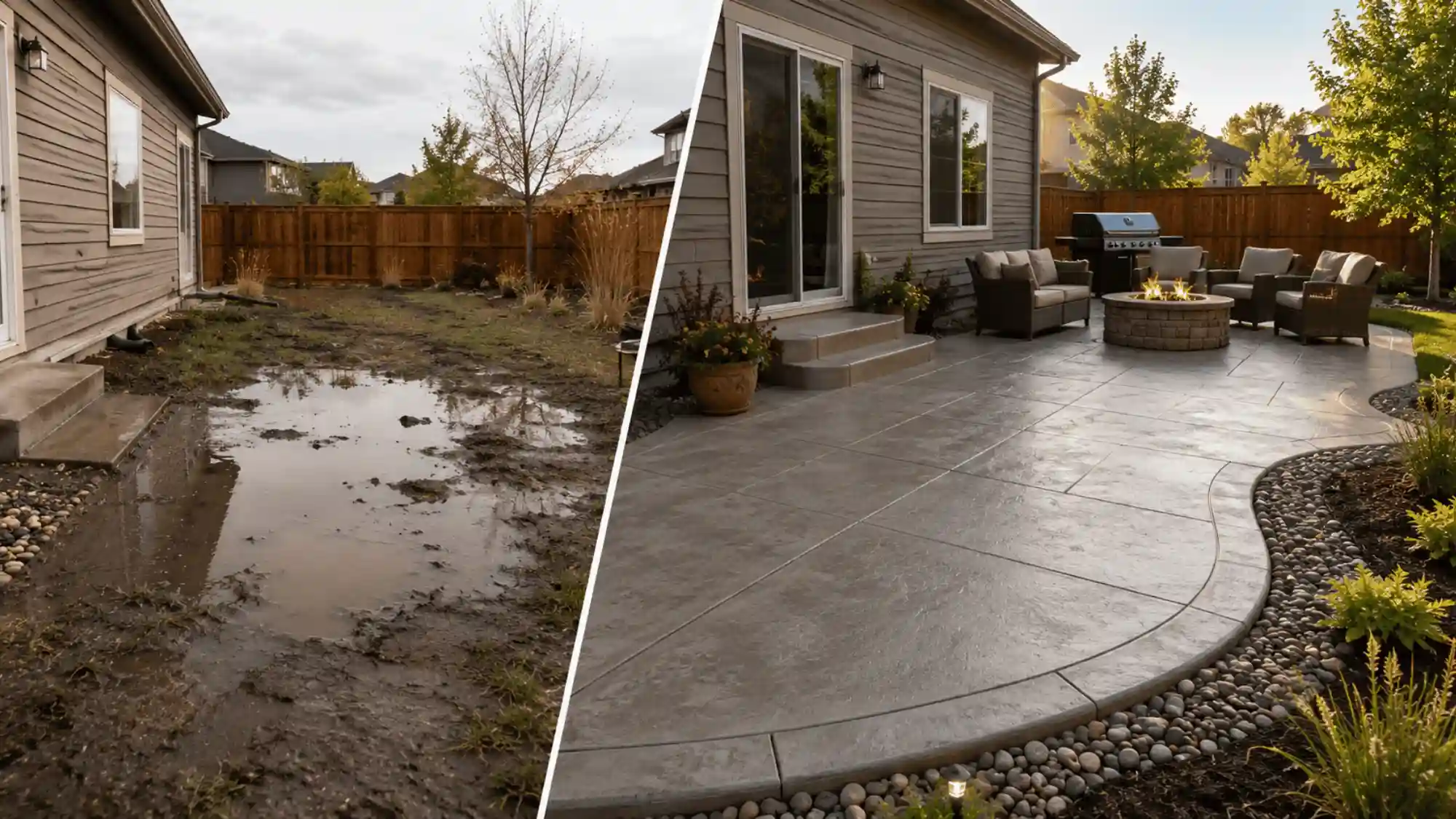
This case study follows a common scenario seen throughout Northern Colorado. A homeowner wanted to expand their outdoor living space but faced persistent drainage problems that made the backyard difficult to use. Water collected near the home’s foundation after storms, portions of the yard remained muddy for days, and previous landscaping efforts failed to solve the underlying issue.
By combining proper drainage planning, excavation, grading, and professional concrete patio installation services , the project transformed an unusable backyard into a durable outdoor living area designed for Colorado conditions. The process highlights why preparation and site evaluation are just as important as the finished concrete itself.
Also Read
- Custom Concrete Patios
- Fort Collins Backyard Patio Installation
- Stamped Concrete Patio in Fort Collins
TL;DR
A Fort Collins homeowner struggled with standing water, poor drainage, and an unusable backyard. Through proper site preparation, grading corrections, drainage improvements, and professional patio installation, the space became a functional, durable outdoor living area designed to handle Colorado weather.
Key Takeaways
- Drainage issues should always be addressed before patio construction
- Proper grading protects both the patio and home foundation
- Site preparation impacts long-term concrete performance
- Colorado weather requires durable construction methods
- Patio design should account for water flow and runoff management
- Reinforcement and proper base preparation reduce future cracking
- Professional planning improves both functionality and longevity
The Original Problem: A Backyard That Stayed Wet
The property initially appeared to be a good candidate for a patio project.
The homeowner had:
- Adequate backyard space
- Existing landscaping
- Easy access from the home
- Strong interest in outdoor entertaining
However, several issues became apparent during evaluation.
Standing Water After Storms
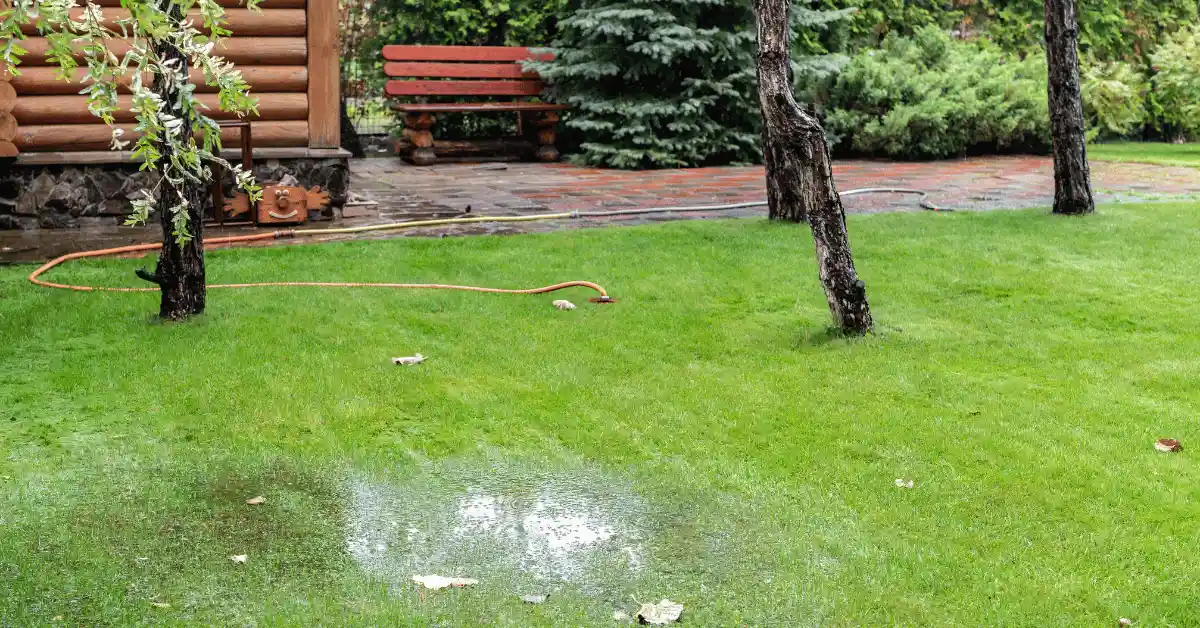
Water is regularly collected in multiple areas of the yard.
After moderate rainfall:
- Puddles remained for several days
- Grass struggled to grow
- Mud developed near walkways
- Portions of the yard became unusable
Improper Grading
The backyard slope directed water toward the home rather than away from it.
This created concerns involving:
- Foundation moisture
- Erosion
- Landscape damage
- Long-term property maintenance
Previous Attempts Failed
The homeowner had attempted several solutions including:
- Additional topsoil
- Decorative rock
- Landscape modifications
While these provided temporary improvements, the core drainage issue remained unresolved.
Why Drainage Matters Before Building a Patio
Many property owners focus primarily on patio size, shape, and finish options.
However, drainage often determines whether the patio performs properly over time.
Water Is One of Concrete’s Biggest Enemies
Concrete itself is durable, but improper drainage can create problems beneath the slab.
Common issues include:
- Settlement
- Soil erosion
- Freeze-thaw damage
- Surface cracking
- Uneven sections
Foundation Protection
Patios should direct water away from the home whenever possible.
Poor drainage can contribute to:
- Foundation movement
- Basement moisture
- Crawlspace issues
- Landscape deterioration
Long-Term Performance
A patio built on unstable or saturated soil is more likely to experience movement over time.
Addressing drainage before installation helps protect the investment.
Site Evaluation and Planning
Before excavation began, the project required a comprehensive site evaluation.
Measuring Existing Grades
Contractors mapped the yard’s elevation changes to understand water flow patterns.
This process identified:
- High points
- Low points
- Water collection areas
- Existing drainage routes
Evaluating Soil Conditions
Northern Colorado properties often contain clay-heavy soils.
These soils can:
- Expand when wet
- Contract during dry periods
- Contribute to concrete movement
Understanding soil behavior helps determine proper preparation methods.
Identifying Runoff Sources
Water entered the yard from multiple locations.
These included:
- Roof downspouts
- Adjacent landscaping
- Natural slope patterns
Each source required consideration during design.
The Drainage Solution
Correcting drainage involved multiple improvements rather than a single fix.
Regrading the Backyard
The first step involved reshaping portions of the yard.
This helped:
- Redirect runoff
- Eliminate low spots
- Improve water movement
Proper grading established the foundation for the entire project.
Improving Water Flow
The patio design incorporated slopes that encouraged runoff to move away from the home.
Water management considerations included:
- Surface drainage
- Adjacent landscaping
- Future maintenance access
Base Stabilization
A properly compacted base was installed to support the patio and reduce future settlement risks.
Preparation included:
- Excavation
- Compaction
- Aggregate placement
- Final grading adjustments

Designing the New Outdoor Living Space
Once drainage concerns were addressed, attention shifted to patio design.
Defining Functional Areas
The homeowner wanted a space that supported multiple activities.
The layout included:
- Dining space
- Seating area
- Grill location
- Open circulation paths
Patio Size Considerations
Rather than maximizing square footage, the design focused on functionality.
This created a layout that felt spacious without overwhelming the yard.
Integration With Existing Landscaping
The patio blended with existing landscape features while improving accessibility throughout the property.
Choosing the Right Concrete Patio System
Not all patios are built the same.
Several factors influenced material and construction decisions.
Concrete Thickness
The patio was designed to handle:
- Foot traffic
- Outdoor furniture
- Seasonal weather changes
Proper thickness helps improve durability and reduce cracking risks.
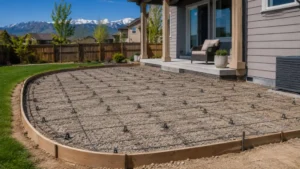
Reinforcement
Reinforcement helped strengthen the slab and improve long-term performance.
This included appropriate measures to control cracking and distribute stress.
Joint Placement
Control joints were incorporated to help manage natural concrete movement.
According to the American Cement Association , proper joint placement is one of the most important factors in managing concrete cracking.
Construction Process
The installation process followed a structured sequence.
Excavation
Existing soil was removed to achieve proper depth and drainage requirements.
Base Installation
Aggregate material was installed and compacted to provide stable support.
Formwork
Forms established:
- Patio dimensions
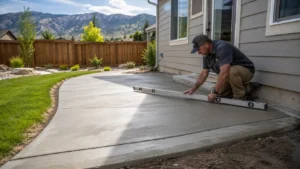
- Elevation control
- Final shape
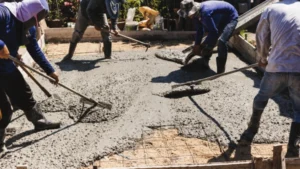
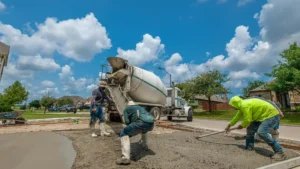
Concrete Placement
The slab was placed carefully to maintain proper slopes and drainage performance.
Finishing
The selected finish balanced:
- Appearance
- Slip resistance
- Durability
Challenges Encountered During Construction
Most projects encounter some unexpected conditions.
Additional Soil Corrections
During excavation, portions of the soil required further stabilization than initially anticipated.
Drainage Adjustments
Minor adjustments were made after identifying a secondary runoff path.
Weather Scheduling
Colorado weather required careful scheduling to maintain installation quality.
Professional contractors account for these variables when planning projects.
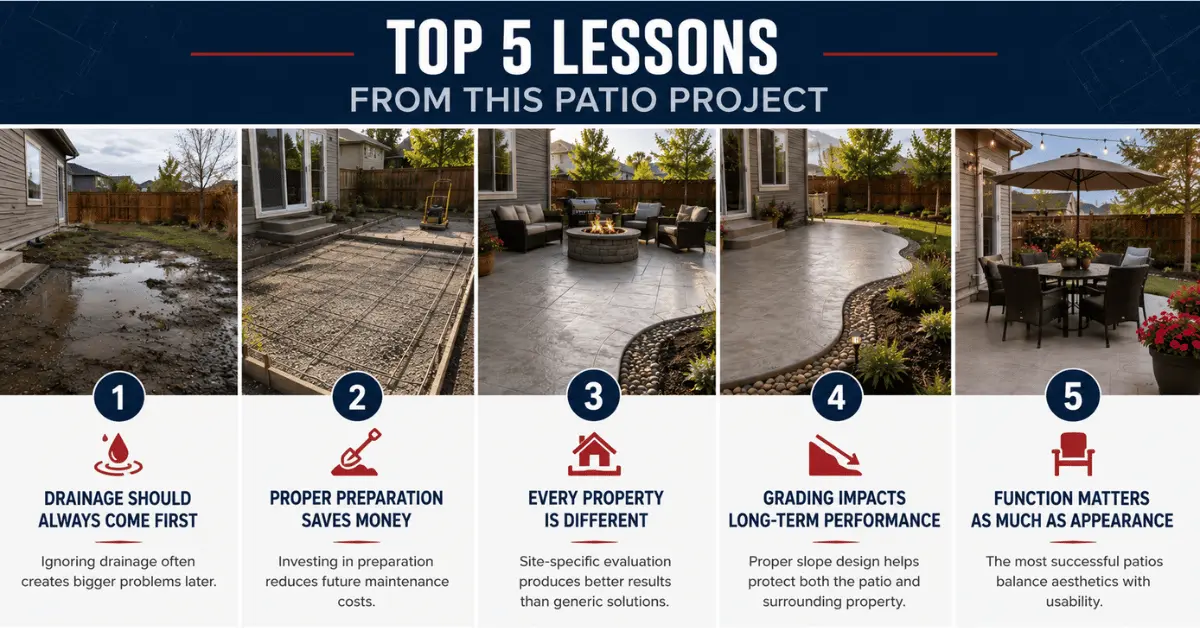
Top 5 Lessons From This Patio Project
1. Drainage Should Always Come First
Ignoring drainage often creates bigger problems later.
2. Proper Preparation Saves Money
Investing in preparation reduces future maintenance costs.
3. Every Property Is Different
Site-specific evaluation produces better results than generic solutions.
4. Grading Impacts Long-Term Performance
Proper slope design helps protect both the patio and surrounding property.
5. Function Matters as Much as Appearance
The most successful patios balance aesthetics with usability.
How Colorado Weather Influences Patio Design
Patios in Northern Colorado face unique environmental conditions.
Freeze-Thaw Cycles
Repeated freezing and thawing can stress concrete surfaces.
Snow and Ice Exposure
Winter moisture management remains important even after installation.
Intense Sunlight
Colorado’s elevation increases UV exposure throughout the year.
Seasonal Soil Movement
Expansive soils require thoughtful construction methods.
The Colorado Geological Survey provides extensive information regarding expansive soils and their impact on residential construction throughout the state.
Patio Features That Added Value
Beyond solving drainage issues, the project improved overall property functionality.
Increased Usable Space
The homeowner gained a dedicated outdoor gathering area.
Improved Maintenance
The patio reduced muddy areas and simplified landscape upkeep.
Better Water Management
Drainage improvements benefited the entire backyard.
Enhanced Property Appeal
A well-designed outdoor space can contribute positively to overall property value.
Why Professional Planning Matters
Many patio issues originate long before concrete is poured.
Professional planning helps address:
- Drainage concerns
- Soil conditions
- Grading requirements
- Structural considerations
- Long-term maintenance needs
Homeowners exploring concrete patio options often focus on design features first, but site preparation and drainage planning frequently have the greatest impact on long-term performance.
Comparing DIY Fixes vs Permanent Solutions
The homeowner initially considered several lower-cost options.
Temporary Fixes
Examples included:
- Additional soil
- Surface gravel
- Landscape changes
These approaches addressed symptoms rather than causes.
Permanent Improvements
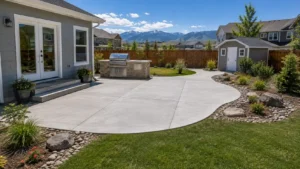
The completed project corrected underlying drainage issues while creating a functional outdoor space.
The result delivered greater long-term value.
FAQs
Can a patio solve drainage problems?
A properly designed patio can help manage water movement when combined with grading and drainage improvements.
How important is grading before patio installation?
Grading is critical. Improper grading can contribute to standing water, erosion, and structural issues.
Will drainage problems cause patio cracks?
Poor drainage can weaken soil beneath the slab and increase the likelihood of settlement and cracking.
How long should a concrete patio last in Colorado?
With proper installation and maintenance, a concrete patio can last several decades.
What is the most common patio construction mistake?
Failing to address drainage and soil conditions before installation is one of the most common causes of future problems.
Conclusion
This patio builder Fort Collins case study demonstrates how successful patio projects begin with solving underlying site issues rather than focusing solely on appearance. By addressing drainage concerns, correcting grading, stabilizing the base, and installing a properly designed concrete patio, the homeowner gained a durable outdoor living space that performs well throughout Colorado’s changing seasons.
The project highlights an important lesson for any property owner considering a new patio. Long-term success depends on preparation, drainage planning, and quality installation methods. When these elements are handled correctly, a concrete patio can provide decades of functionality, improved usability, and enhanced property appeal.
About the Author
Hugo’s Concrete is a trusted Northern Colorado concrete contractor specializing in patios, driveways, flatwork, and custom concrete solutions built for Colorado conditions. Their team focuses on proper site preparation, drainage planning, and durable installations that deliver long-term value. Learn more about Hugo’s Concrete and visit the About Us page to learn more about their experience and commitment to quality craftsmanship.