
What Causes My Concrete Driveway To Crack?
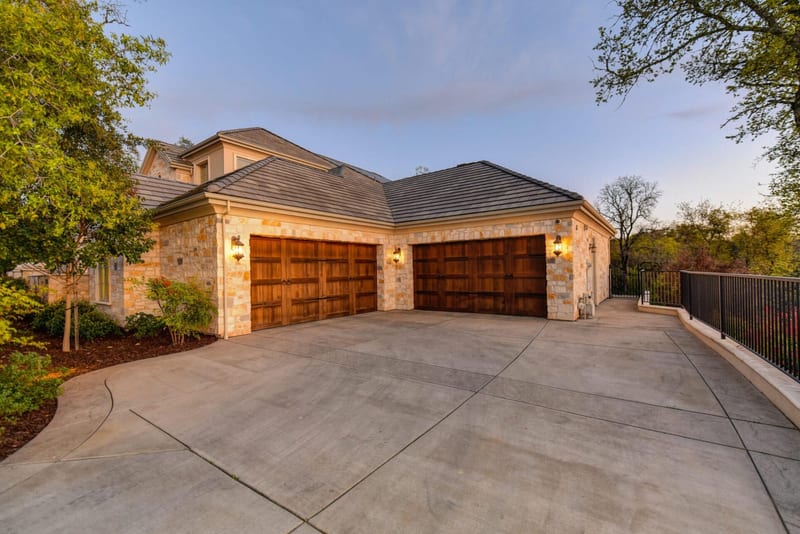
Most Common Causes of Cracks in Concrete Driveway We know just how much pride you take in your home. It’s not just a house; it’s your own personal piece of Northern Colorado, a reflection of you, and your love for our great state. But we also know that one annoying crack in your driveway can really take the shine off your curb appeal. And if you’re like us, you’re probably wondering why these unsightly cracks have decided to settle. Well, that’s what we’re here to unravel today. So, buckle up, and let’s take a deep dive into the world of concrete and its mysterious cracking ways! Understanding Concrete and Its Properties Let’s get to know concrete, the strong, silent type that’s always underfoot but seldom appreciated. Made up of cement, aggregate (those tiny, but mighty rocks), and water, the backbone of your driveway. It’s sturdy, reliable, and in most cases, can weather the varying storms of Fort Collins and Northern Colorado. However, like everything in life, it’s not perfect. One of its quirks is its proclivity to develop cracks. We know, it’s heartbreaking to see your solid companion showing such signs of vulnerability. But rest assured, understanding this is the first step towards solving the issue. Common Causes of Concrete Driveway issues Cracks don’t just appear out of nowhere. Like everything else, there’s a reason, and sometimes, there’s more than just one. First up, we have our beloved Colorado weather. As charming as it is with the sunshine and snow, it does cause the concrete to expand and contract, which creates stress within it. Think of it as your driveway having a bit of an identity crisis with all the temperature changes. And let’s not overlook our famous freeze-thaw cycle. Picture this: water seeps into your driveway, then winter arrives and that water freezes, expanding in the process. Come spring, it thaws, leaving behind larger spaces in your concrete. It’s Mother Nature’s version of a jackhammer, chipping away at your driveway’s integrity, little by little. Then we have external factors such as heavy loads or traffic that can put more strain on your driveway than it signed up for. Your soil might also be the culprit as it shifts or settles over time, creating uneven support for your concrete. And let’s not forget the trees you love for their shade – their roots might be slowly but surely intruding upon your driveway’s space. Lastly, there’s the unfortunate event of improper installation or the simple but inevitable fact of aging. Distinguishing Between Different Types of Cracks Looking at your cracked driveway is like staring at a piece of modern art – there’s a story in there, but you need to understand the signs. Hairline cracks are like the laugh lines on a well-aged face – natural signs of use and maturation. They generally don’t indicate serious problems but are worth keeping an eye on. Larger, uneven cracks might be hinting at a more thrilling tale of shifting soils or adventurous tree roots making their way under your concrete driveway. Wide, deep cracks could be due to heavy loads frequently traversing your driveway or perhaps even an issue dating back to the installation process. Deciphering these crack codes isn’t just a fun detective game; it’s also crucial for figuring out how to address the issue and prevent further damage. Prevention and Maintenance If your driveway were a pet, it would be a loyal dog – with proper care, it will serve you well for years. Regular maintenance is a huge part of this care. Sealing your driveway can protect it from water seepage, oxidation, and those infamous freeze-thaw cycles. It’s like giving your driveway a nice, warm coat for the winter. Avoiding unnecessarily heavy loads can help prevent over-stressing your concrete driveway. And if you’ve got trees near your driveway, ensure their roots are not sneaking under your concrete. Regular checks can help spot potential issues before they become serious problems. Think of it as preventative medicine for your driveway. We Can Help with Cracked Driveways Here’s the good news – you’re not alone in this fight against cracks! We have been dealing with the intricate web of concrete cracks for years. From those pesky hairline cracks to more substantial, concerning ones, we’ve seen and fixed them all. Our team can restore your Fort Collins concrete driveway’s smooth charm, bringing back the curb appeal you so dearly miss. We’re armed with the right tools, skills, and a truckload of dedication to getting the job done right. Whether your driveway needs a simple touch-up, a sealant application, or perhaps a comprehensive repair or resurfacing, we’ve got you covered. We’re committed to helping our neighbors take pride in their homes. Finishing up on cracked concrete driveways So there we have it, folks – your very own guide to understanding why your beautiful driveway may have developed those unsightly cracks. There are multiple causes, and often, it’s a combination of factors. But with the right preventative measures and some tender loving care, you can keep those cracks at bay. Remember, a crack is not an unsightly blemish but a common issue with a solution. And that solution is often just a phone call away. Ready to show those driveway cracks who’s boss? Don’t let them tarnish your home’s curb appeal. We’re always here, ready to roll up our sleeves and tackle your driveway woes head-on. Let’s restore the beauty of your driveway.
6 Reasons Why Our Concrete Polishing Services Are Perfect
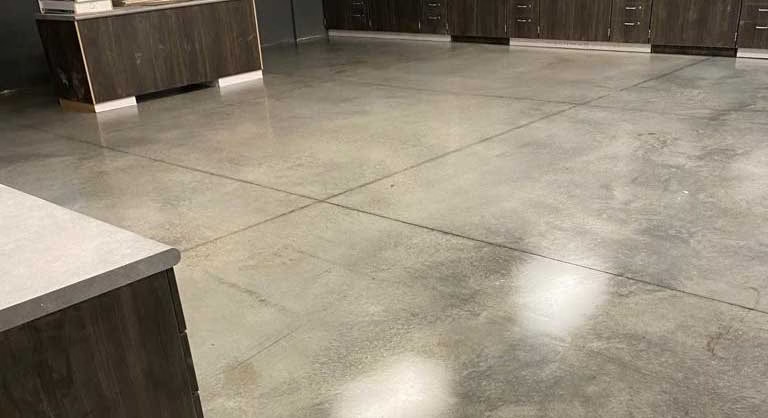
Many of the savvy business owners we work with are seeking ways to improve the aesthetics, functionality, and durability of their establishments without breaking the bank. One of the most effective methods for achieving these goals is through our concrete polishing services. Hugo’s Concrete, a reputable Fort Collins concrete contractor, has a successful track record of helping businesses throughout Colorado improve their interior concrete flooring. What is Concrete Polishing Services? Excellent flooring option for businesses looking to improve their space’s durability and aesthetic appeal. The process involves using a specialized machine that grinds concrete surfaces until they reach a highly polished finish. This type of flooring is gaining popularity as more businesses recognize the benefits it has to offer compared to other types of flooring. The process involves several steps, beginning with cleaning and repairing the surface to ensure that it is free of scratches and cracks. The next step involves grinding down the surface using specialized grinding equipment. After grinding, the concrete surface is then honed to obtain the desired shine. Many different grinding techniques and polishing compounds can be used, depending on the desired finish. Businesses can choose from different types of finishes, including cream finish, aggregate finish, and salt and pepper finish. The choice of finish depends mainly on the business owner’s preference and the intended use of the space. For example, an industrial space may require a rough aggregate finish, while a retail space may benefit more from a refined cream finish Enhances Aesthetics and Increases Property Value First impressions are important in any business environment. You can transform ordinary concrete floors into visually stunning surfaces with concrete polishing. The high-gloss finish and sleek appearance of polished concrete are not only appealing to the eye but also add a touch of elegance and professionalism to any space. You’re making a long-lasting impression on your clients and customers while simultaneously increasing the overall value of your property. Improves Durability and Reduces Maintenance Costs Concrete is already known for its durability and strength, but polishing takes it to another level. Polishing increases the density of the concrete surface, making it more resistant to wear and tear. This means that your polished floors can withstand heavy foot traffic, machinery, and even harsh chemicals without succumbing to damage. Moreover, concrete polishing seals the pores of the concrete, reducing the need to As a result, maintenance costs are significantly reduced, saving you time and money in the long run. Enhances Safety and Reduces Slip Hazards Safety is a paramount concern for any business owner. Polished concrete floors provide a safer environment for employees and customers, as the polishing process increases the coefficient of friction. This means that even though the surface appears glossy and smooth, it still offers a slip-resistant quality. Polished concrete is an excellent choice for businesses where safety is crucial, such as restaurants, retail stores, and warehouses. Additionally, polished concrete does not harbor dust, mold, or allergens, providing a cleaner, healthier environment for even. Versatility in Design and Customization Options One of the most appealing aspects of concrete polishing is its versatility in design. Polished concrete can be customized to match your business’s unique aesthetic, with a wide array of colors, patterns, and textures available. You can choose from different levels of sheen – from satin to high-gloss – and incorporate decorative elements such as logos, designs, or even metallic finishes. With polished concrete, the possibilities are truly endless, allowing you to create a floor that’s both functional and visually striking. Cost-Effectiveness and Longevity Most importantly for many businesses, it is an economically sound choice. While the upfront costs may be slightly higher than alternative flooring options, the long-term benefits – such as reduced maintenance, increased durability, and enhanced aesthetics – make it a worthwhile investment. Moreover, when properly maintained, polished concrete floors can last for decades, providing your business with a durable, attractive flooring solution that stands the test of time. Concrete Polishing Services: A Great Choice for Your Business Choosing the right flooring solution for your business is crucial to its success and longevity. an ideal choice for Colorado business owners who seek a versatile, durable, and cost-effective flooring option. With its numerous benefits, such as enhanced aesthetics, improved durability, reduced maintenance costs, increased safety, eco-friendliness, and design versatility, it’s no wonder that concrete polishing is becoming increasingly popular among businesses.
How To Remove Stains From Concrete
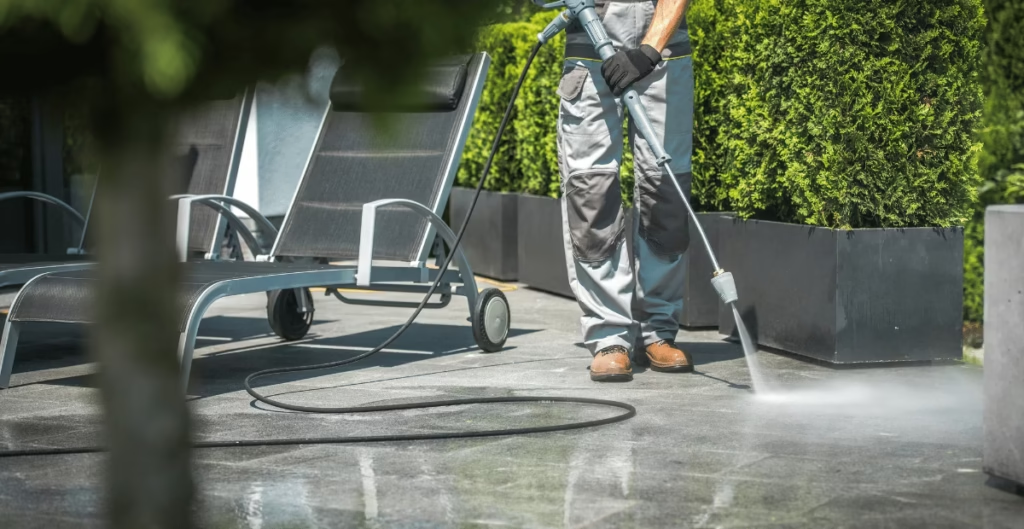
Concrete is a versatile and durable building material that is used in a variety of areas throughout homes and driveways. Some common areas where concrete is used are driveways. Driveways are a popular choice due to their durability and ability to withstand heavy loads. Concrete patios are another popular choice for outdoor living spaces. They can be used for entertaining, cooking, and relaxing. Concrete walkways are a functional and attractive option for connecting different areas of a property. They can be used to create a path through a garden or to connect a driveway to a front door. Many basements are made of concrete and can be used as additional living space or storage area. Concrete is a durable and long-lasting material, but it can still be affected by various types of stains over time. Here are some common types of stains that concrete can get, starting with the simplest to the most complex: Stains on concrete can be removed, but the method and frequency of cleaning will depend on the type of stain and the condition of the concrete It’s important to remove stains as soon as they appear to prevent them from becoming ingrained in the concrete and more difficult to remove. Also, keep in mind that some stains may require specialized cleaning products or professional help, and it’s always recommended to test a small, inconspicuous area before applying any cleaning solution to the entire surface. Equipment That Can Be Used While Cleaning Concrete How To Remove Stains of Organic from Concrete? Organic stains on concrete can come from a variety of sources, such as leaves, dirt, and other organic materials. These stains can be unsightly and can detract from the overall appearance of the concrete surface. Fortunately, organic stains can be removed with the right cleaning methods and equipment. Power washing: One of the most effective ways to remove organic stains from concrete is by using a power washer. This powerful tool uses high-pressure water to blast away dirt and grime, making it an ideal tool for removing stains caused by organic materials. Detergent solution: A mild detergent solution can also be used to remove organic stains from concrete. Mixing a small amount of mild detergent with warm water can create a cleaning solution that can be used to scrub away dirt and grime. Efflorescence It is a common issue that affects concrete surfaces. It is a white or gray powdery substance that forms on the surface of concrete and can be unsightly and difficult to remove. This phenomenon occurs when water containing dissolved salts and minerals comes into contact with concrete, and the water evaporates, leaving behind the salts and minerals on the surface. There are several methods available for removing efflorescence from concrete surfaces, each with its own pros and cons. Scrubbing with a mixture of water and muriatic acid: Scrubbing with a mixture of water and muriatic acid is a method commonly used to remove efflorescence from concrete surfaces. Muriatic acid is a type of hydrochloric acid that is commonly used in the construction industry and can be effective at breaking down and dissolving the salts and minerals that makeup efflorescence. To use this method, a solution of water and muriatic acid is mixed together, usually in a ratio of 1 part acid to 10 parts water. The solution is then applied to the surface of the concrete using a stiff-bristled brush, and the surface is scrubbed thoroughly. The solution should be left on the surface for a few minutes to allow the acid to break down the efflorescence, and then the surface should be rinsed thoroughly with water. This method is effective at removing even stubborn efflorescence, but it can be labor-intensive and requires the use of a potentially harmful chemical. That’s why it is important to use the appropriate safety precautions when using this method. Always wear gloves, goggles, and appropriate clothing while working with any chemical solutions. Avoid skin and eye contact and always keep the chemical solutions out of reach of children and pets. Pressure washing: This method is effective at removing efflorescence and can be done relatively quickly, but it can also damage the concrete surface if not done properly you may need to hire a professional for this job which can be costly but if you decide to do it by yourself then it is important to wear appropriate personal protective equipment, such as goggles and ear protection, to avoid any accidents. This method uses high-pressure water to blast away the efflorescence to use this method, a pressure washer is used to spray water at high pressure onto the surface of the concrete. The pressure washer nozzle should be held at a distance of around 12 inches to 18 inches away from the surface and moved in a back-and-forth motion. The efflorescence should start to break down and lift off the surface as the pressure washer is moved over it. Chemical cleaners: Chemical cleaners are specialized products that are specifically formulated to remove efflorescence from concrete surfaces. These cleaners can be effective at removing the efflorescence, but they can also be expensive and may not be as effective as other methods. Here are a few examples of commonly used chemical cleaners: Both power washing and detergent solution are effective in removing organic stains from concrete. Power washing can also remove built-up dirt, grime, and other debris that can accumulate over time. A detergent solution is a less harsh and less expensive option to remove organic stains. Power washing can be a labor-intensive process and requires the use of specialized equipment and the solution may not be as effective as power washing in removing heavy stains. Both methods may require multiple applications to completely remove the stain. TSP (Tri-Sodium Phosphate): TSP is a powerful cleaner that is effective at removing efflorescence, as well as other types of stains and grime.TSP can be corrosive and can damage surfaces if not used properly. TSP is also toxic and can be harmful
How to Clean and Maintain Stamped and Decorative Concrete?
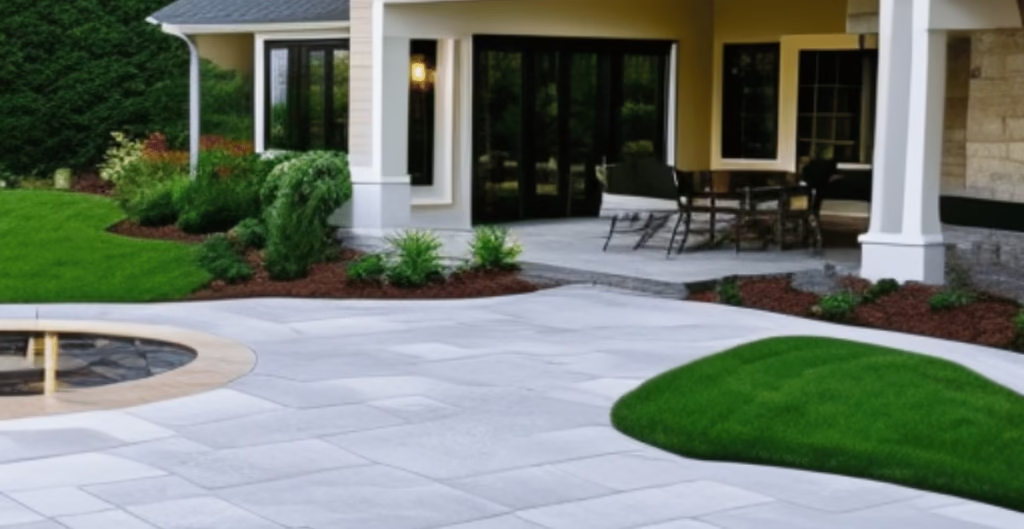
Stamped concrete in Fort Collins has become increasingly popular in recent years for a variety of reasons. One of the main factors driving its popularity is the wide range of design options it offers. With stamped and decorative concrete, homeowners can create a wide variety of different looks, from traditional cobblestone patterns to modern geometric designs, which allows them to customize their outdoor spaces to suit their personal tastes and preferences. Clean and Maintain Stamped and Decorative Concrete The advancements in technology and techniques used in stamped and decorative concrete have made it more accessible and cost-effective. The new techniques and materials used have made it possible to create more intricate designs, and the equipment used to stamp and finish the concrete has become more efficient and user-friendly. Not only that it can be used in a wide range of different applications, including driveways, patios, sidewalks, pool decks, and even indoor floors. However, like any other type of surface, stamped and decorative concrete requires regular cleaning and maintenance to keep it looking its best and by doing so it also increases the resale value of Stamped and decorative concrete. Here are some key things to keep in mind for Cleaning and Maintaining Stamped and Decorative Concrete: Proper Cleaning is Important for Maintaining and Resealing Stamped Concrete in Fort Collins Use a mild detergent or a specialized stamped concrete cleaner to remove dirt, grime, and other debris. Avoid using harsh chemicals or abrasive cleaners, as they can damage the surface of the concrete and cause discoloration. High-pressure washers or power cleaners can cause damage to the surface of the stamped concrete and remove the sealer. To avoid this, use a garden hose or a low-pressure washer to clean the surface. It is important to use appropriate cleaning products for stamped concrete. Avoid using harsh chemicals or abrasive cleaners, as they can damage the surface of the concrete and cause discoloration. Instead, use a mild detergent or a specialized stamped concrete cleaner that is specifically designed for use on decorative concrete surfaces. Clean up any spills or stains as soon as they occur to prevent them from becoming embedded into the surface. This will help to maintain the appearance and longevity of your stamped concrete surface. Due to our winter weather with snow in Fort Collins, it is not recommended to use salt or ice melt on stamped concrete. Salt alone can cause stains on any concrete and especially on stamped concrete. Ice melt has many chemical compounds can corrode the sealant and colors that make your patio so beautiful. Instead, we recommend using sand as a way to add traction to your patio in the winter if needed. Resealing Resealing your Fort Collins stamped concrete patio is important to protect the surface from stains and discoloration, as well as make it easier to clean. The frequency of resealing depends on the amount of traffic and exposure to the elements. It is recommended to reseal the surface every 1-3 years, or when you notice the surface losing its shine or color. It is important to consider the specific requirements of the surface and the environment when selecting the appropriate sealer. Sealer Type Description Benefits Acrylic sealers Water-based sealers provide a durable, UV-resistant barrier and enhance the color of stamped and decorative concrete. Easy to apply and clean up UV resistant, and enhances color Epoxy sealers Two-part sealers that are mixed together before application. They provide a high-gloss, durable finish that is resistant to chemicals and abrasion. High-gloss, durable, chemical and abrasion resistance Polyurethane sealers High-performance sealers provide a long-lasting, durable finish that is resistant to chemicals and abrasion. Long-lasting, durable, chemical and abrasion resistance Penetrating sealers Penetrate deep into the concrete and react chemically with the concrete to form a barrier against moisture and staining. Protects concrete from harsh weather conditions, moisture, and staining Table: 1 By following these tips and maintaining your stamped concrete regularly, you can ensure that your decorative concrete surface remains beautiful and long-lasting for many years to come. Stamped Concrete Maintenance: An Easy and Important Task Cleaning and maintaining stamped and decorative concrete require the use of appropriate sealers to protect the surface from damage and enhance its appearance. Acrylic, epoxy, polyurethane, and penetrating sealers are all suitable options, each with its own unique benefits. However, it’s important to consider the specific requirements of the surface and the environment before making a selection. Regular cleaning and maintenance, along with the use of the right sealer, will help keep stamped and decorative concrete looking great for years to come. It’s also essential to follow the manufacturer’s instructions and test the sealer on a small area before applying it to the entire surface. If you want custom concrete services, contact us at Hugo’s Concrete for professional service.
Cement vs Concrete: Difference between cement and concrete
Cement vs Concrete Cement and concrete are fundamental materials used in construction. They have been utilized for thousands of years, and have been instrumental in the development of modern infrastructure. Cement, in its basic form, is a binding agent that when combined with water and aggregates forms concrete. Concrete is known for its strength, durability, and versatility, making it a popular choice for various types of construction projects such as buildings, bridges, roads, and dams. Due to its ability to be molded into different shapes and forms, It is also known for its ability to withstand extreme weather conditions and last for many years. Cement and concrete are essential components in the construction industry, providing the backbone for many of the structures that shape our built environment. What is Cement? Cement is a magical powder that when mixed with water, transforms into a strong and durable adhesive that holds together the building blocks of our modern world. With the advancements in technology, it has become even more versatile and adaptable to different construction needs. There are several different forms of cement, each with its own unique properties and composition. Some of the most common forms of cement include: Portland Cement: Is a mixture of limestone and clay, ground to a fine powder and it is commonly used in construction projects as it provides a strong and durable material. White Cement: A blend of raw materials similar to Portland cement but with a very low iron and manganese content, this is what gives the cement its light color and it is Primarily used in decorative and architectural applications due to its light color. Blended Cement: It’s a combination of different types of cement such as Portland cement, fly ash and slag, and is used to achieve specific properties, such as increased strength, improved workability, or reduced heat of hydration. Low Heat Cement: This type of cement is specially formulated cement that generates less heat during setting and hardening therefore it is used in large concrete structures where the heat generated during setting causes cracking. Sulfate Resistant Cement: It is a blend of raw materials similar to Portland cement but with a lower content of tricalcium aluminate and a higher content of dicalcium, and silicate and will be used in construction projects where the concrete will be exposed to sulfates in soil or water. High Alumina Cement: Is a blend of bauxite and limestone, ground to a fine powder which is used in construction projects where high heat resistance is required, such as furnace linings and refractory bricks. What is Concrete? Concrete is a versatile and durable material that forms the backbone of our modern infrastructure. It is made by mixing cement, water, and aggregates such as gravel and sand. The combination of these ingredients creates a strong and solid material that can be shaped and molded into various forms. From bridges and roads to buildings and monuments, concrete is used in an array of construction projects worldwide. There are different types of concrete used worldwide depending on the specific needs of a construction project. Regular Concrete: A mixture of cement, water, and coarse and fine aggregates. It is most commonly used in construction projects as it provides a strong and durable material. High-strength Concrete: A mixture of cement, water, coarse and fine aggregates and with a higher compressive strength than regular concrete. This mixture is used in projects where high loads and stress are expected, such as high-rise buildings, bridges, and heavy-duty industrial floors. Lightweight Concrete: A mixture of cement, water, and lightweight aggregates such as pumice, scoria, or expanded clay.Used in projects where weight reduction is a priority, such as in precast concrete, roof decks, and lightweight fill. Self-compacting Concrete: A mixture of cement, water, coarse and fine aggregates, and superplasticizers are used in specific applications where the regular concrete is unable to flow, such as in the construction of bridges, precast elements, and tight reinforced sections. Fiber-reinforced Concrete: A mixture of cement, water, coarse and fine aggregates, and fibers such as steel, polypropylene, or glass fibers. it is used in construction projects to improve strength and toughness, such as in precast concrete, shotcrete, and in slab on grade. High-performance Concrete: A mixture of cement, water, coarse and fine aggregates, and additional ingredients such as silica fume, fly ash, and high-range water reducers. that is used in construction projects where high strength, durability, and low permeability are required, such as in nuclear power plants, bridges, and marine structures. It’s worth noting that each type of concrete can be adjusted to meet the specific needs of the project, by adjusting the composition of ingredients, the water-to-cement ratio, and the curing process. Cement vs Concrete: The Main Difference Both cement and concrete are essential materials in the construction industry and each has its own unique properties and uses. Cement is a powdery substance that is used as a binding agent to hold together other materials and create a solid structure. Concrete, on the other hand, is a composite material made up of cement, water, and aggregates such as gravel and sand. It is a strong and durable material that is used as a structural material in construction projects. Cement may be the better option to use when building something, such as when making mortar for bricklaying or making grout for tiles and filling gaps. Cement is also used as an adhesive to hold together other materials and create a solid structure. Concrete, on the other hand, is commonly used in construction projects such as building foundations, roads, bridges, and skyscrapers. It is also used in the construction of dams, retaining walls, and many other structures. Concrete is known for its strength, durability, and versatility, making it a popular choice for various types of construction projects. However, in most cases, cement and concrete are used together in construction projects. The combination of cement and concrete creates a strong and durable material that can withstand the stress and weight of construction projects. Conclusion
How Thick Should a Concrete Driveway Be in Fort Collins
When it comes to building a concrete driveway in Fort Collins, one of the most important factors to consider is the thickness of the slab. The thickness of a concrete driveway determines its strength, durability, and longevity. In this article, we will discuss the importance of concrete thickness and best practices for achieving the optimal thickness for your driveway. Why is concrete thickness important? The thickness of a concrete slab determines its ability to withstand loads and pressures. The thicker the slab, the more weight it can support. A thicker slab will also be more resistant to cracking and other forms of damage, which can lead to a longer lifespan. Additionally, the thickness of a slab also determines the depth of frost penetration. In areas where the ground freezes like Fort Collins, it’s important to have a thick enough slab to prevent the concrete from heaving or cracking due to freezing and thawing cycles. What is the optimal thickness for a concrete driveway? The optimal thickness for a concrete driveway in Loveland or Fort Collins is typically 4 inches. This thickness is considered the industry standard for residential driveways, as it provides enough strength and durability to withstand the weight of vehicles and daily use. However, it’s important to note that the optimal thickness may vary depending on the specific conditions of your driveway. For example, if you live in an area with heavy snowfall or frequent freeze-thaw cycles up in the Rocky Mountains, a thicker slab may be necessary to prevent damage. Similarly, if you plan to park large vehicles or heavy equipment on your driveway, a thicker slab may be required to support the added weight. Best Practices for Achieving Optimal Concrete Thickness Prepare the base properly: The base is the foundation of your concrete slab, and it’s crucial to ensure that it’s level and compacted properly. A poorly prepared base can lead to uneven settling and cracking of the concrete. Use quality materials: Using quality materials, such as high-strength concrete mix and reinforcing steel, can also help to ensure that your slab is strong and durable. Use proper forming: The forms are the temporary structures used to hold the concrete in place while it cures. It’s important to use proper farming techniques to ensure that the slab is of the correct shape and thickness. Proper curing: Proper curing is the process of keeping the concrete moist and at the right temperature for the first few days after it is poured. Proper curing helps the concrete reach its maximum strength and durability. Hire a professional: If you’re unsure of how to properly pour and finish a concrete slab, it’s best to hire a professional contractor. They will have the knowledge and experience to ensure that your slab is poured correctly and to the optimal thickness. Concrete Driveway Thickness: It Matters Concrete thickness is an important factor to consider when building a driveway in Fort Collins. A thickness of 4 inches is generally considered the industry standard, but the optimal thickness may vary depending on the specific conditions of your driveway. By following best practices such as preparing the base properly, using quality materials, proper forming, proper curing, and hiring a professional, you can ensure that your concrete driveway is strong, durable, and long-lasting.
Why Installing a Concrete Driveway Is a Smart Investment?
Installing a Concrete Driveway Is a Smart Investment in 2026 Homeowners and businessowners today aren’t just looking for a space to park, they’re looking for upgrades that improve curb appeal, reduce maintenance, and hold long‑term value. With Colorado’s freeze‑thaw cycles, heavy vehicle loads, and fast‑changing weather, choosing the proper driveway material matters more than ever. Concrete has become the top choice for Fort Collins and surrounding areas because it delivers long‑term performance, modern aesthetics, and a smart return on investment. Built to Last: Strength That Outperforms Other cheap Materials Not all driveway materials handle Colorado’s climate the same way. Traditional asphalt softens in heat, cracks in winter, and requires regular resurfacing. Pavers shift, settle, and allow weeds to grow through the joints. Concrete, however, offers unmatched compressive strength and stability. When installed with the correct mix, proper base preparation, and controlled curing, a concrete driveway can last 40 years or more with minimal upkeep. This long lifespan is one of the biggest reasons homeowners choose it over alternatives. Low Maintenance and Easy to Care For A big advantage of concrete is how little attention it needs. Routine sweeping and occasional rinsing keep the surface clean. For oil or grease, a mild detergent is usually enough. Sealing every 3 years protects against stains and weathering, but even without frequent sealing, concrete holds up far better than asphalt. This low‑maintenance nature saves homeowners time, money, and frustration. A Cost‑Effective Upgrade Over Time While the upfront cost may be higher than asphalt, concrete rapidly becomes the more economical choice. Asphalt often needs patching, resurfacing, or full replacement within 10–15 years. Concrete hardly requires major repairs, and its long lifespan spreads the investment over decades. When you factor in durability, reduced maintenance, and increased property value, concrete delivers the strongest long‑term return. Customizable Designs That Elevate Curb Appeal Modern concrete isn’t limited to plain gray slabs. Homeowners can choose from a wide range of finishes, including: stamped concrete patterns integral or surface coloring exposed stylish aggregate textured or broom finishes saw‑cut lines for design and style polished or decorative surfaces These options allow you to match the style of your home whether contemporary, traditional, or rustic. Decorative concrete can even mimic stone, brick, or pavers without the maintenance issues those materials bring. Environmentally Conscious and Quiet Underfoot Concrete is made from durable materials and lasts significantly longer than other driveway options, reducing waste over time. Its ability to absorb and manage water helps reduce runoff, making it a smart choice for areas prone to heavy rain or snowmelt. The smooth surface also reduces tire noise, creating a quieter environment around your home. Handles Heavy Loads Without Stress Concrete’s density and compressive strength make it ideal for households with trucks, SUVs, trailers, or RVs. When properly installed and cured, it resists pressure, heavy weight, and surface wear far better than asphalt or pavers. This makes it a smart choice for both residential and light‑commercial properties. Boosts Property Value and Buyer Appeal A well‑designed driveway instantly improves curb appeal, and buyers notice. Concrete’s clean appearance, long lifespan, and low maintenance make it a premium feature that adds value to your home. Whether you plan to stay long‑term or eventually sell your property, a concrete driveway is an upgrade that pays off. A Clean, Stable Surface That Stays Looking Good Concrete resists stains, weeds, and surface damage better than most surfaces. Slip‑resistant such as broom finish textures can be added for safety, especially in winter. Because it doesn’t shift or rut, the surface stays smooth and attractive year‑round. This makes it ideal for families, high‑traffic homes, and properties that want a clean, polished look. A Reliable Paved Surface for Everyday Use Concrete provides a stable, even surface that performs well in all seasons. When installed by reputable concrete contractors, it becomes a long‑lasting part of your property that enhances both function and appearance. Whether you’re parking vehicles, hosting guests, or simply improving your home’s exterior, concrete delivers consistent performance. Final Thoughts In 2026, homeowners want upgrades that are durable, low‑maintenance, and visually appealing, and concrete driveways check every box. They stand up to Colorado’s harsh climate, support heavy loads, and offer endless design options. With proper installation, they last for decades and significantly improve property value. If you’re considering a new driveway or replacing an old one, choosing concrete is a smart, future‑proof investment. For expert installation and guidance tailored to your home, Hugo’s Concrete delivers quality craftsmanship built to last. Contact us today to schedule a consultation and explore the best options for your property. FAQs About Installing a Concrete Driveway 1. What kind of maintenance does a concrete driveway need? Maintenance is simple: sweep regularly, rinse as needed, and reseal every few years for added protection. Most homeowners appreciate that concrete doesn’t require constant repairs or resurfacing like other materials. 2. Can I customize the look of my concrete driveway? Absolutely. You can choose from stamped patterns, color options, exposed aggregate, textured finishes, and decorative saw‑cuts. Concrete offers far more design flexibility than asphalt or gravel, allowing you to match your home’s style. 3. Will a concrete driveway increase my home’s resale value? Yes. Buyers value durability, low maintenance, and clean curb appeal. A well‑installed driveway signals quality and can make your home more attractive on the market, often boosting perceived value.