
Concrete Polishing vs. Epoxy Coating: The Best Commercial Flooring Choice for 2026
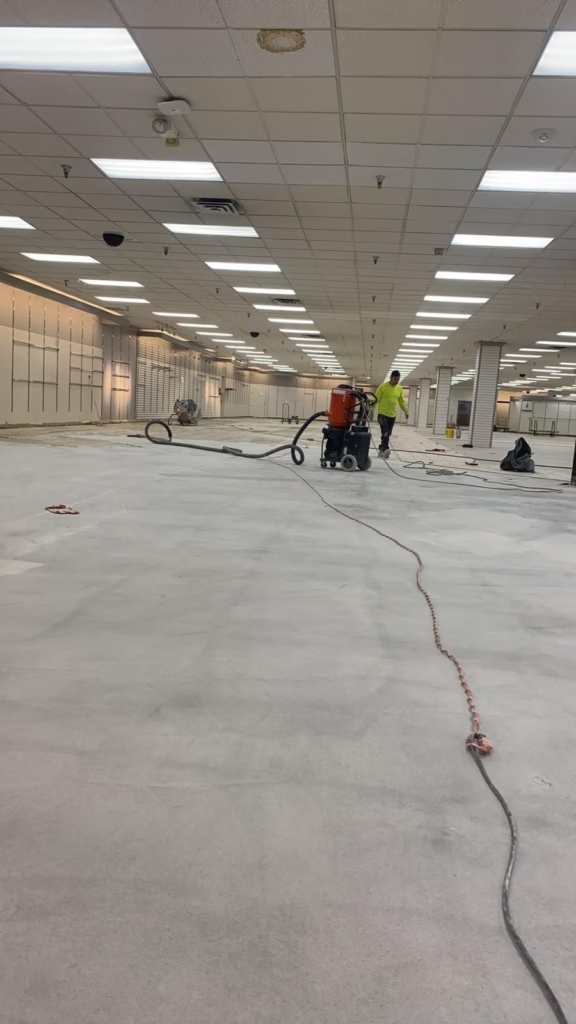
Understanding the Best Commercial Flooring Options for Modern Facilities Commercial buildings today need flooring that can withstand constant use, support safety standards, reduce maintenance costs, and maintain a clean, professional appearance. Whether you manage a warehouse, retail store, restaurant, school, or industrial facility, the flooring system you choose directly affects daily operations and long‑term performance. Two of the most reliable systems used across commercial properties are polished concrete and epoxy coating. While both are strong options, they serve different purposes. This guide breaks down the real‑world differences—updated for 2026 Google Core Update standards—so you can make the right decision for your facility. Why This Comparison Matters for Commercial Properties Commercial floors face demanding conditions every day, including: forklifts, pallet jacks, and rolling loads heavy foot traffic chemical spills and cleaning agents moisture and sanitation requirements branding and appearance expectations Choosing the wrong flooring system can lead to: Premature wear Safety hazards Higher maintenance costs Downtime for repairs Poor aesthetics This guide is built for facility managers, general contractors, property owners, and operations teams who need flooring that performs under pressure. When Concrete Polishing Is the Better Choice 1. Designed for High‑Traffic, High‑Durability Environments Polished concrete is extremely hard and abrasion‑resistant. It performs exceptionally well in: Warehouses Retail stores Distribution centers Schools and universities Showrooms Office buildings Properly densified and polished concrete stands up to forklifts, carts, and continuous foot traffic without surface damage. 2. Lowest Maintenance Requirements Polished concrete is one of the easiest commercial flooring systems to maintain. Routine care includes: Sweeping Auto‑scrubbing Occasional burnishing There are no coatings to reapply, no peeling, and no shutdowns for re‑coating cycles. 3. Long Service Life (20–30+ Years) Because polishing uses the existing concrete slab, the system can last decades with minimal upkeep. There is no surface layer to wear out. 4. Sustainable and Cost‑Efficient Polished concrete is an environmentally friendly option: Uses the existing slab Produces minimal waste Contains no VOCs Offers long‑term cost savings This makes it one of the most economical choices for large facilities. 5. Clean, Modern Appearance Polished concrete offers multiple finish levels: Matte Satin Semi‑gloss High‑gloss It delivers a sleek, professional look that fits modern commercial design. When Epoxy Coating Is the Better Choice 1. Ideal for Chemical, Spill, or Moisture‑Heavy Environments Epoxy is the preferred system for facilities that deal with: Oils Acids Chemicals Grease Moisture Sanitation requirements Common applications include: Commercial kitchens Auto shops Breweries Laboratories Food processing plants Manufacturing facilities Garages 2. High Customization for Branding and Safety Epoxy allows extensive design flexibility: Colors Patterns Safety striping Logos Flakes Metallic finishes This makes it ideal for businesses that want branding integrated into the floor or need OSHA‑compliant markings. 3. Seamless, Non‑Porous Surface Epoxy creates a smooth, sealed surface that: Prevents absorption Improves hygiene Simplifies cleaning This is why it’s widely used in kitchens, labs, and medical environments. 4. Slip‑Resistant Options Available Texture can be added to improve traction in wet or greasy areas. 5. Strong Protection with a Moderate Lifespan Epoxy typically lasts 5–10 years, depending on traffic and chemical exposure. It will eventually require re‑coating. Maintenance Comparison Polished Concrete Sweep and scrub No coatings No peeling No chemical breakdown No re‑coating cycles Epoxy Coating Easy to clean Requires re‑coating every 5–10 years Can peel if moisture is present Sensitive to installation conditions Which Flooring System Should You Choose? Choose Polished Concrete If You Want: long‑term durability minimal maintenance a modern, professional appearance the lowest lifetime cost eco‑friendly flooring performance in high‑traffic areas Choose Epoxy Coating If You Need: chemical resistance moisture protection branding or color customization slip‑resistant textures a seamless, hygienic surface Final Thoughts Selecting the right flooring system depends on your facility’s traffic levels, operational needs, and long‑term goals. Polished concrete offers unmatched durability and low maintenance, making it ideal for warehouses, retail stores, and high‑traffic commercial spaces. Epoxy coating provides superior chemical resistance, customization, and hygiene, making it the best choice for kitchens, labs, auto shops, and industrial facilities. Hugo’s Concrete installs both systems and helps commercial clients choose the flooring solution that delivers the best performance, appearance, and long‑term value. FAQs About Commercial Concrete Polishing and Epoxy Coating 1. Which flooring option lasts longer? Polished concrete typically lasts 20–30+ years, while epoxy coatings last 5–10 years depending on use. 2. Is polished concrete better for warehouses? Yes. Its durability and low maintenance make it ideal for warehouse environments. 3. Can epoxy flooring handle chemical spills? Absolutely. Epoxy is highly resistant to oils, acids, cleaners, and chemicals. 4. Does polished concrete get slippery? No. When properly finished, polished concrete maintains traction. Additional grip can be added if needed. 5. Which option is more cost‑effective long‑term? Polished concrete offers the lowest lifetime cost because it requires minimal maintenance and never needs re‑coating.
Concrete vs. Pavers, Gravel and Rock in Fort Collins
Concrete is often a good fit for Fort Collins homeowners who want a firm surface with fewer joints and little loose material. Pavers can work well when individual-unit repairs and a segmented look matter more. Gravel or rock can suit informal paths and low-traffic areas. Your best choice depends on how you’ll use the space, drainage, base preparation, upkeep and design preferences. Concrete, Pavers or Gravel: Quick Comparison Factor Concrete Pavers Gravel or rock Surface Continuous and firm when properly installed Individual units with joints Loose material that can move Routine care Cleaning and sealing as recommended Joint care, weed control and possible re-leveling Raking, regrading and replenishment Repair approach Repair cracks or replace an affected section Lift and replace individual units Add and redistribute material Design choices Broom finish, plant-mixed color and stamped patterns Many unit shapes, colors and patterns Several stone sizes and colors Common fit Driveways, patios and walkways needing a stable surface Decorative areas where a segmented design is preferred Informal paths and lower-traffic areas How Fort Collins Conditions Affect the Choice Fort Collins weather and clay-heavy soil can put stress on any outdoor surface. Water can enter gaps or cracks, freeze and expand. Soil movement can also affect the finished area. The material is only part of the decision. Excavation, base depth, compaction, drainage, reinforcement, concrete mix and curing all affect performance. Proper preparation reduces movement and water problems, though no outdoor surface is free from future repairs. Hugo’s Concrete uses locally sourced ready-mix concrete with fiber reinforcement. Our crew installs premium recycled base material, compacts it with heavy equipment and grades the area for drainage. We use #3 rebar or thicker when the project calls for it. Where Concrete Has an Advantage Stable Surface for Driving and Walking A properly installed concrete slab creates a firm surface for vehicles, patio furniture, wheelchairs and foot traffic. It doesn’t scatter under tires or shoes like loose gravel. It also has fewer joints than a paver surface. Lower Routine Upkeep Concrete usually needs sweeping, occasional washing and sealing when recommended. These minimal maintenance needs appeal to homeowners who don’t want to rake gravel or maintain paver joints. Pavers can need joint sand, weed control and re-leveling as the base moves. Gravel may need regular redistribution and added material in high-use spots. Finish and Color Choices Concrete can be shaped for curved walkways, broad patios and custom driveway layouts. Stamped patterns can resemble stone, brick or wood. Colored concrete can also fit a home’s exterior or outdoor design. Hugo’s uses color mixed at the concrete plant for colored projects. The color runs through the concrete instead of sitting only on the surface. Long Service Life Concrete is known for superior durability when the slab is designed, placed and maintained correctly. Its life depends on drainage, base preparation, mix, thickness, curing and use. Cleaner Edges and Less Loose Material A concrete surface won’t send loose rock into lawns, planting beds or indoor spaces. Its defined edges can also make snow removal and routine cleaning easier. Cracks and joints can still collect debris or allow weeds, so occasional care is needed. When Pavers or Gravel May Be the Better Choice Pavers are worth considering if you want to replace individual surface units after damage. They also offer detailed patterns and a segmented appearance that some homeowners prefer. Their performance still depends on a well-built base and proper edge restraint. Gravel or decorative rock can fit an informal path or low-traffic part of the yard. The initial project may require less site work than a concrete slab. Plan for movement, weed control, snow removal and periodic replenishment. Concrete is usually the stronger choice for a driveway, patio or walkway where a stable surface and lower routine upkeep are the main goals. Compare Concrete Options for Your Fort Collins Project Review Hugo’s options for a concrete driveway, concrete patio, sidewalk or walkway or stamped and colored concrete. You can also see our full range of Fort Collins concrete services. Hugo’s Concrete has more than 20 years of residential flatwork experience in Northern Colorado. Our team can review your property, explain the tradeoffs and compare materials based on how you’ll use the finished area. Compare Concrete Options for My Project