
Cost-Effective Strategies for Planning Your Concrete Pour Installation in Northern Colorado
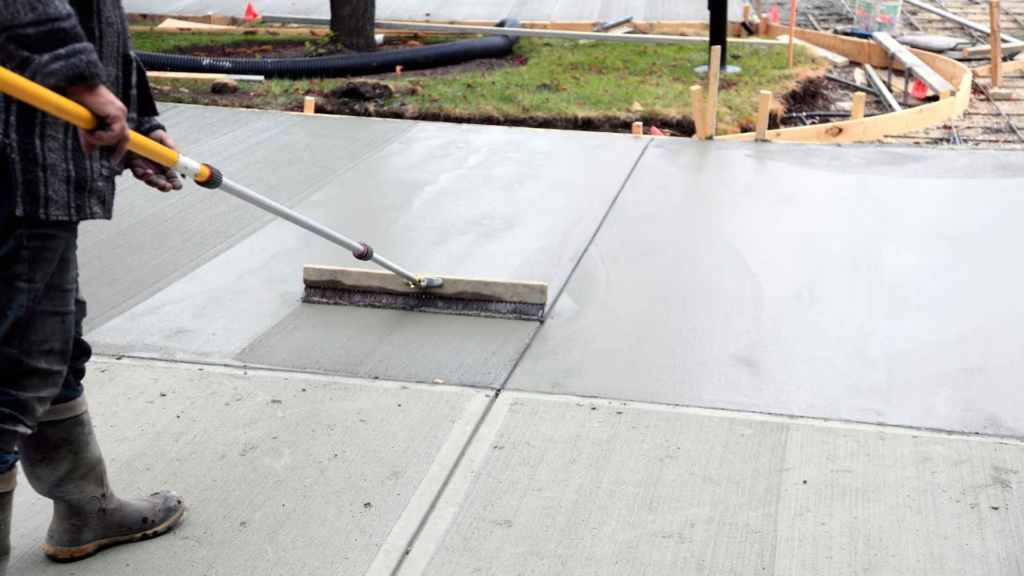
Discover the costs of concrete pour installation in Northern Colorado with Hugo’s Concrete. Our comprehensive guide breaks down the key factors affecting prices, including market dynamics and project specifics. Learn about cost-effective strategies for planning your concrete pour installation in Northern Colorado, ensuring you get the best value for your investment. From affordable concrete installation tips to understanding the nuances of Northern Colorado’s concrete market, this guide covers everything you need to know. Trust Hugo’s Concrete for expert advice on planning and executing your concrete projects efficiently and economically. Market Dynamics: In Northern Colorado, concrete pour installation prices are influenced by various market factors. Factors such as market demand, availability of materials, and local economic conditions play a significant role in determining pricing. Understanding these dynamics can help you anticipate fluctuations in costs and plan accordingly. The level of market demand for concrete services plays a crucial role in pricing. During peak construction seasons, such as spring and summer, The availability and cost of raw materials, such as cement, aggregates, and additives, are pivotal in determining the overall cost of concrete pour installations. Supply chain disruptions, fluctuations in material costs, and changes in import/export policies can all affect material availability and pricing. For instance, a shortage in cement supply or an increase in fuel prices can drive up the costs of materials, subsequently raising the price of concrete pour services. Project Scope: The scope of your concrete pour project is a major determinant of the overall cost. Projects vary in scale and complexity, ranging from small residential driveways to large commercial slabs. Each project comes with its unique requirements, which directly impact pricing. By assessing the scope of your project accurately, you can get a better understanding of the expected costs. Concrete Mix Design: The choice of concrete mix design can significantly impact the overall cost of your project. Factors such as strength, durability, and special additives influence pricing. Higher-quality concrete mixes may come at a premium price but offer enhanced performance and longevity. Understanding the implications of different mix designs can help you make informed decisions while balancing cost and quality. Site Preparation: Proper site preparation is essential for a successful concrete pour installation. Site preparation activities such as excavation, grading, reinforcement, and formwork play a crucial role in ensuring the stability and longevity of the concrete structure. These preparatory tasks require skilled labor, equipment, and materials, all of which contribute to the total project cost. Labor Costs: Labor costs constitute a significant portion of the overall project cost. Skilled labor rates, equipment operation, and project duration considerations all influence labor costs. The complexity of the project and the expertise required can impact labor pricing. Additionally, factors such as accessibility and site conditions may affect labor efficiency, thereby influencing costs. Additional Expenses: In addition to the core components of the project, there may be additional expenses to consider. These include permits, disposal fees, and finishing touches such as staining or sealing. While these expenses may seem minor, they can add up and affect the overall project budget. It’s important to account for these additional costs during the planning stage to avoid unexpected surprises. Competitive Analysis: Conducting a competitive analysis can provide valuable insights into prevailing industry rates and help you evaluate quotes from different contractors. Comparing pricing structures, services offered, and reputation can help you make an informed decision when selecting a contractor for your project. By choosing a reputable and competitive contractor, you can ensure quality results at a fair price. Cost-Saving Strategies: Concrete pour installation without compromising quality is a key consideration for many project owners. There are several cost-saving strategies you can employ to maximize value and minimize expenses. These may include scheduling installations during off-peak seasons to take advantage of lower labor rates, bundling multiple services for discounts, or exploring alternative materials or construction methods. Conclusion: Navigating the complexities of concrete pour installation pricing in Northern Colorado requires a comprehensive understanding of the factors at play. By considering market dynamics, project specifics, and cost-saving strategies, you can plan and budget your projects effectively while ensuring quality results. Whether you’re embarking on a residential driveway project or a large-scale commercial development, being informed about pricing considerations will set you on the path to success. Ready to get started? Let’s make your concrete project a success!
Comparing Repairing and Replacing Concrete Driveways
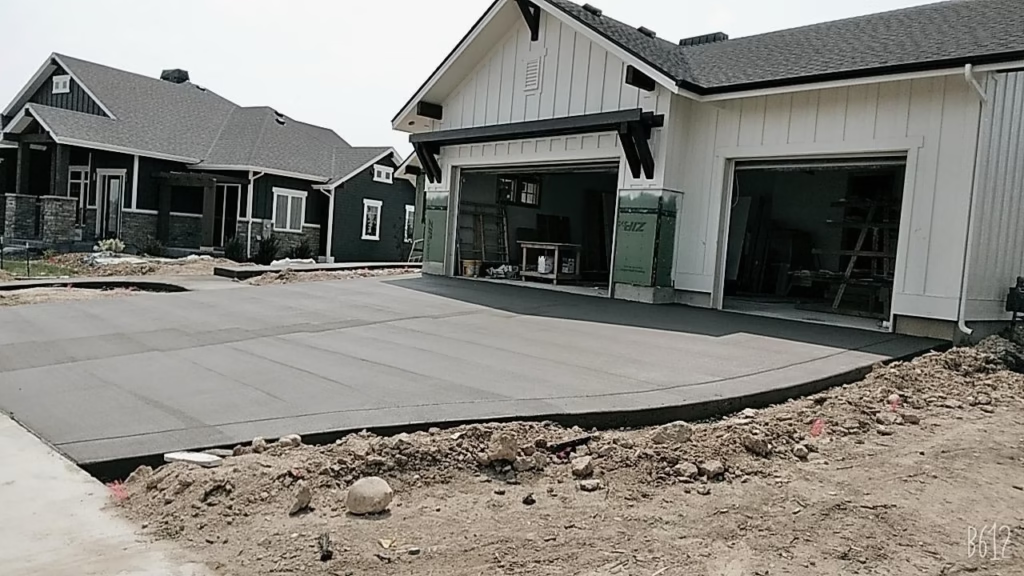
Choosing Between Driveway Repair and Replacement Deciding whether to replace or repair a concrete driveway depends on the extent of damage and individual preferences. If the concrete is extensively cracked or structurally compromised, replacement might be the more appropriate choice, offering a fresh start and potential long-term durability. However, for minor surface cracks or budget considerations, repairing the driveway can be a cost-effective solution, especially if the damage is localized. Ultimately, the decision should consider factors such as the overall condition of the driveway, aesthetic preferences, and budget constraints, and consulting with a professional can help determine the most suitable course of action. A new installation often addresses underlying problems with the base and subbase, contributing to the long-term stability and performance of the driveway. While the initial cost may be higher compared to repairs, the investment in a new driveway can result in a more aesthetically pleasing, structurally sound, and enduring solution, making it a better option for those seeking a comprehensive and lasting upgrade Replacing the Concrete Driveway: Extensive Damage: If the concrete is severely cracked, uneven, or damaged throughout, replacement might be the more viable option. Structural Issues: If there are underlying structural problems with the base or subbase, replacing the entire driveway can address these issues. Aesthetic Preferences: If you want a completely new look, design, or color for your driveway, replacement provides a fresh start. Long-Term Investment: While the upfront cost is higher, a new driveway can be a long-term investment, potentially offering better durability and performance. Repairing the Concrete Driveway: Surface Cracks or Minor Damage: If the damage is primarily cosmetic or limited to surface cracks, repairing might be a cost-effective solution. Budget Considerations: If your budget is a significant concern, and the damage is not extensive, repairing the driveway can be more economical than a full replacement. Localized Damage: If the damage is confined to specific areas, patching or resurfacing might be sufficient to address the issues. Environmental Impact: Repairing the driveway typically generates less waste than a complete replacement, which can be a consideration for those concerned about environmental impact. In some cases, a middle-ground option might be considered, such as resurfacing the existing concrete to improve its appearance and address minor issues. Consulting with Fort Collins based contractor Hugo’s Concrete can help you assess the condition of your driveway and make an informed decision based on your specific needs, budget, and long-term goals.
Concrete vs. Pavers, Gravel and Rock in Fort Collins
Concrete is often a good fit for Fort Collins homeowners who want a firm surface with fewer joints and little loose material. Pavers can work well when individual-unit repairs and a segmented look matter more. Gravel or rock can suit informal paths and low-traffic areas. Your best choice depends on how you’ll use the space, drainage, base preparation, upkeep and design preferences. Concrete, Pavers or Gravel: Quick Comparison Factor Concrete Pavers Gravel or rock Surface Continuous and firm when properly installed Individual units with joints Loose material that can move Routine care Cleaning and sealing as recommended Joint care, weed control and possible re-leveling Raking, regrading and replenishment Repair approach Repair cracks or replace an affected section Lift and replace individual units Add and redistribute material Design choices Broom finish, plant-mixed color and stamped patterns Many unit shapes, colors and patterns Several stone sizes and colors Common fit Driveways, patios and walkways needing a stable surface Decorative areas where a segmented design is preferred Informal paths and lower-traffic areas How Fort Collins Conditions Affect the Choice Fort Collins weather and clay-heavy soil can put stress on any outdoor surface. Water can enter gaps or cracks, freeze and expand. Soil movement can also affect the finished area. The material is only part of the decision. Excavation, base depth, compaction, drainage, reinforcement, concrete mix and curing all affect performance. Proper preparation reduces movement and water problems, though no outdoor surface is free from future repairs. Hugo’s Concrete uses locally sourced ready-mix concrete with fiber reinforcement. Our crew installs premium recycled base material, compacts it with heavy equipment and grades the area for drainage. We use #3 rebar or thicker when the project calls for it. Where Concrete Has an Advantage Stable Surface for Driving and Walking A properly installed concrete slab creates a firm surface for vehicles, patio furniture, wheelchairs and foot traffic. It doesn’t scatter under tires or shoes like loose gravel. It also has fewer joints than a paver surface. Lower Routine Upkeep Concrete usually needs sweeping, occasional washing and sealing when recommended. These minimal maintenance needs appeal to homeowners who don’t want to rake gravel or maintain paver joints. Pavers can need joint sand, weed control and re-leveling as the base moves. Gravel may need regular redistribution and added material in high-use spots. Finish and Color Choices Concrete can be shaped for curved walkways, broad patios and custom driveway layouts. Stamped patterns can resemble stone, brick or wood. Colored concrete can also fit a home’s exterior or outdoor design. Hugo’s uses color mixed at the concrete plant for colored projects. The color runs through the concrete instead of sitting only on the surface. Long Service Life Concrete is known for superior durability when the slab is designed, placed and maintained correctly. Its life depends on drainage, base preparation, mix, thickness, curing and use. Cleaner Edges and Less Loose Material A concrete surface won’t send loose rock into lawns, planting beds or indoor spaces. Its defined edges can also make snow removal and routine cleaning easier. Cracks and joints can still collect debris or allow weeds, so occasional care is needed. When Pavers or Gravel May Be the Better Choice Pavers are worth considering if you want to replace individual surface units after damage. They also offer detailed patterns and a segmented appearance that some homeowners prefer. Their performance still depends on a well-built base and proper edge restraint. Gravel or decorative rock can fit an informal path or low-traffic part of the yard. The initial project may require less site work than a concrete slab. Plan for movement, weed control, snow removal and periodic replenishment. Concrete is usually the stronger choice for a driveway, patio or walkway where a stable surface and lower routine upkeep are the main goals. Compare Concrete Options for Your Fort Collins Project Review Hugo’s options for a concrete driveway, concrete patio, sidewalk or walkway or stamped and colored concrete. You can also see our full range of Fort Collins concrete services. Hugo’s Concrete has more than 20 years of residential flatwork experience in Northern Colorado. Our team can review your property, explain the tradeoffs and compare materials based on how you’ll use the finished area. Compare Concrete Options for My Project