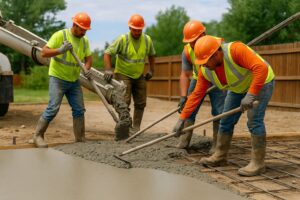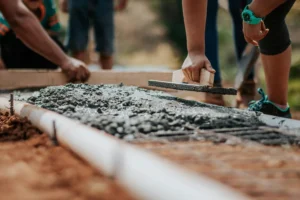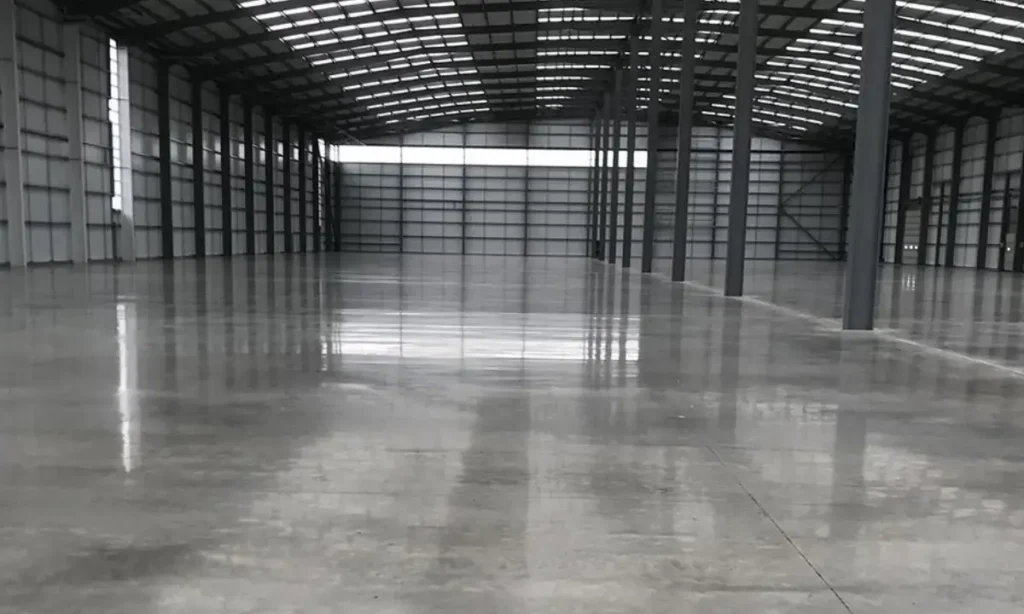
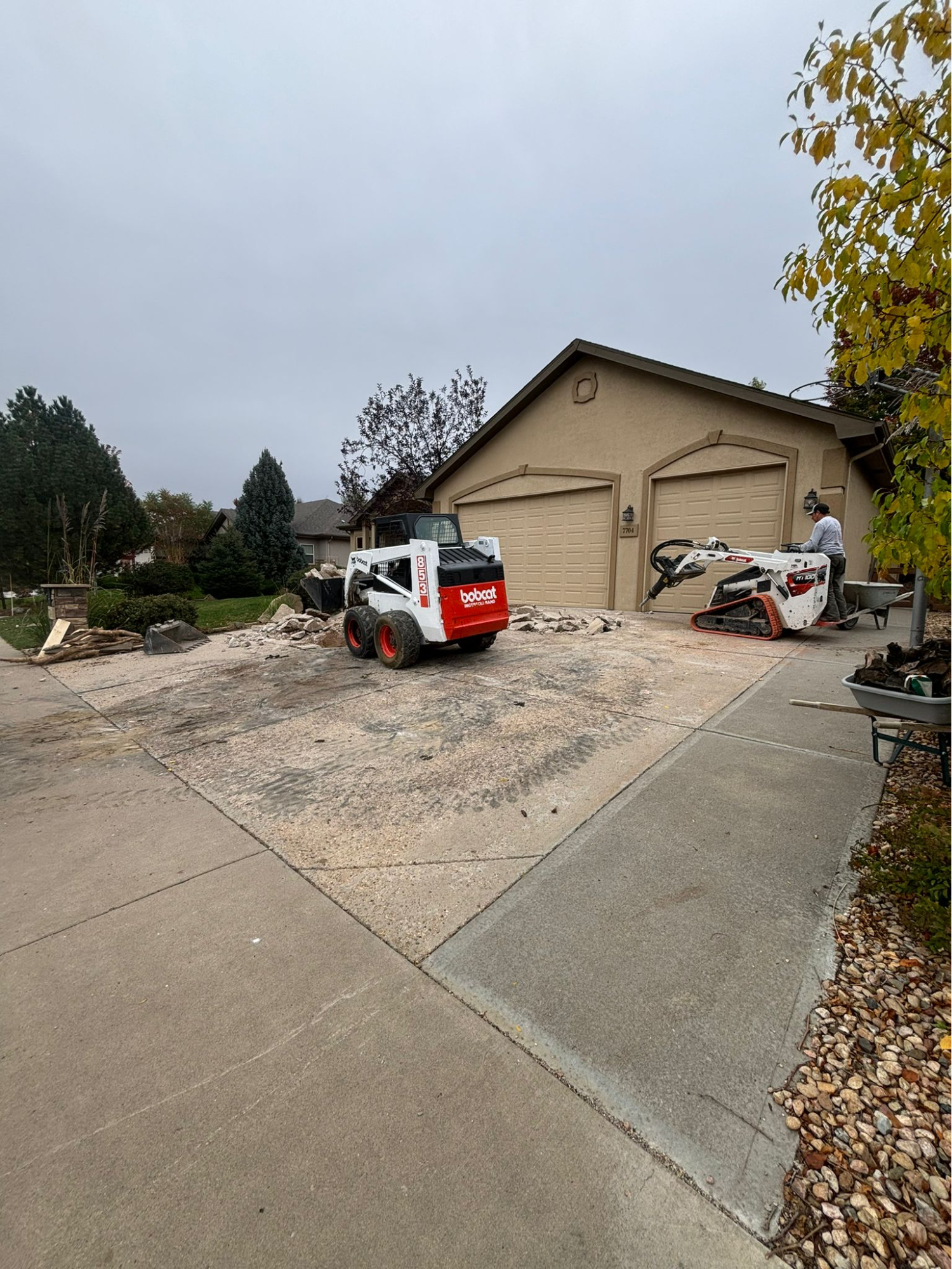
Concrete is one of the best long-term upgrades you can make to your home. A durable driveway improves curb appeal immediately. A well-built patio adds usable outdoor space. Solid walkways and steps make a property safer and easier to live in.
But concrete is also one of the most misunderstood parts in the home improvement industry. Many homeowners don’t know what’s normal, what’s a warning sign, or what “professional quality” actually looks like until something starts cracking, flaking, or settling.
This helpful guide is written for homeowners who want clear answers. Not sales talk. Not vague advice. Just the most common concrete issues, what causes them, and the standards you should expect if you hire a contractor to do the work right.
The Most Common Concrete Problems (and What They Usually Mean)
Cracking
Most concrete eventually cracks. That doesn’t usually mean the job was poured improperly. Concrete is extremely strong under pressure, but it’s not flexible, and it shrinks as it cures.
What matters is the size crack and whether it gets worse over time.
Hairline tiny cracks are often nothing to worry about and cosmetic. Long and deep cracks that keep widening, or cracks that come with height differences, usually point to movement under the slab. If one side sits higher than the other, you’re looking at more than “usual settling.”
If cracks are collecting too much water, growing each season, or creating trip hazards, it’s worth having them evaluated before the damage spreads.
Uneven Concrete (heaving or sinking)
Uneven concrete is one of the biggest headaches that homeowners face. It looks bad, can be dangerous to walk on, and often gets worse over time.
This is usually caused by foundation problems or water issues, not the concrete itself. If water gets under a slab, it can soften the foundation, create erosion, or trigger shifting and movement during freeze/thaw cycles. In some areas, clay soil expands and shrinks as moisture changes, which can shift slabs over time.
A small height change might be repairable. But if multiple areas are moving, it often means the base or drainage needs to be corrected, not just patched.
Surface Flaking (scaling)
Scaling happens when the surface of concrete starts to peel away in thin flakes or chips. This is especially common in climates with freezing temperatures.
Scaling is often related to moisture sitting on the surface of the slab, repeated freeze/thaw cycles, deicer use, or improper finishing practices during installation. Once the top layer starts to break down, it tends to worsen each winter because water can get into the slab pretty fast.
Some minor scaling can be managed, but widespread scaling usually means the surface was weakened and will continue deteriorating over time.
Spalling (Surface pitting and chipping)
Spalling is similar to scaling but normally deeper and more serious. Instead of small flakes, you’ll notice rough pits or chips that feel uneven to the touch.
Spalling can be seen at slab edges, control joints, and driveway areas where vehicles sit. It can also appear where water pools and freezes frequently.
If a slab begins to spall, it’s a sign the surface is breaking down structurally. Repairs most of the time don’t help, but many spalling issues eventually require replacement, especially if it keeps spreading.
Discoloration and stains
Concrete staining is extremely common, and it doesn’t always mean something is wrong with the prep and pour.
Discoloration can come from water overspray from the sprinklers, mineral deposits, mud, rust, oil leaks, or sealers that were applied incorrectly. Most stains can be removed or improved with a deep clean, while other stains may require resurfacing or replacement depending on the severity.
The biggest thing homeowners should understand is that prevention is easier than restoration. Drainage and sealing decisions matter more than most people realize.
Drainage problems and pooling water
Water is the biggest enemy of outdoor concrete. If water stays sitting on a slab regularly, it almost always causes problems later. In winter, pooling water becomes ice and can accelerate surface damage. In warmer months, it can seep underneath the slab and contribute to erosion or settling.
This issue usually comes down to slope, grading around the slab, and how the surrounding landscape handles water. It’s rarely “just cosmetic,” especially if the problem repeats.
Professional Concrete Standards Homeowners Should be aware of
Most homeowners judge concrete by how it looks on day one. That’s understandable. But the real quality of concrete work is determined by what you don’t see immediately.
Solid concrete lasts because of planning, proper preparation, and proper technique. Here are the standards that matter most.
Base preparation that’s done correctly
A quality slab starts the ground structure, it needs to be stable and properly compacted. If soft soil is left in place or the base is rushed, you can end up with movement, cracking, or uneven panels even if the surface looks perfect.
A reputable contractor should be able to explain how they prep and compact the base, not just say “we’ll pour on top of it.”
Proper slope and drainage planning
Concrete needs to drain properly. Driveways and patios should be installed with a slope that moves water away from the home and off the slab.
If a contractor isn’t talking about drainage, that’s a red flag. Poor drainage is one of the most common reasons concrete fails early, especially in climates with freeze/thaw cycles.
Reinforcement that matches the job
Homeowners often hear “rebar” and assume it means the job will never crack. Reinforcement helps, but only when it’s the correct type, spacing, and placement.
Rebar or mesh should be positioned evenly so it actually supports the slab. If it sinks to the bottom during the pour, it’s not doing much.
A professional contractor should be able to explain what type of reinforcement is being used and why.
Control joints that are planned, not guessed
Concrete will eventually crack. Control joints are meant to guide where cracks happen so they don’t spread randomly across the slab.
If control joints are missing, poorly spaced, or installed without thought, cracks will show up wherever they want, and that often looks worse and causes serouis problems.
A professional contractor doesn’t promise “no cracks.” They build slabs so cracks are controlled and expected.
Finishing with proper timing and technique
Finishing is where real craftsmanship gets noticed.
Concrete finishing isn’t just about the look. It’s about doing the right steps at the right time, especially with changing Colorado weather. Finishing too early, overworking the surface, or rushing the job can weaken the top layer and lead to scaling or flaking later.
A nice finish should look clean, consistent, and hold up long-term.
Clear communication and jobsite respect
This is part of professionalism too, and homeowners should ask for it.
A reliable contractor shows up when they say they will, communicates clearly, takes care of your property, keeps the site clean, and does a final walkthrough when the job is finished.
Concrete is a big investment. The experience should feel organized and professional, not stressful.
When It Makes Sense to Repair vs Replace
Sometimes homeowners want the cheapest fix, but concrete doesn’t always work that way. Few repairs are good. Other times they’re temporary.
Repairs can make sense if the slab is mostly level, cracks are minor, and the base is still stable. If damage is mostly unnoticeable and cosmetic, the right repair can extend the life of the concrete.
Replacement is usually the better alternative when the slab is uneven, pooling water can’t be corrected, scaling or spalling is widespread, or repairs have already been attempted and keep failing.
If you’re fixing the same problems repeatedly, the real issue is usually underneath the surface.
Final Thoughts
Concrete can last for decades when it’s built properly and installed for the right environment it’s in. Most failures aren’t random. They come from weak preparation, poor drainage, rushed finishing, or ignored red flags.
If you’re seeing cracking that spreads, uneven panels, surface flaking, or constant pooling water, it’s a good idea to address it sooner rather than later. These issues rarely improve on their own, and waiting often turns a manageable problem into a full replacement.
When you hire a local contractor, look for someone who can explain their process clearly, shows recent projects, and stands behind their work. That’s what quality looks like in 2026.