Epoxy Garage Floor in Windsor: Prep, Flakes, and Finish Options
How a coated garage floor gets prepped, which flake and finish options fit your garage, and what keeps it looking good through Colorado winters.
An epoxy garage floor that Windsor homeowners can count on starts well before any coating goes down. Most people focus on colors and decorative flakes, and those matter, but how a floor holds up comes down to the preparation, the installation, and picking the right finish for the way you use the space.
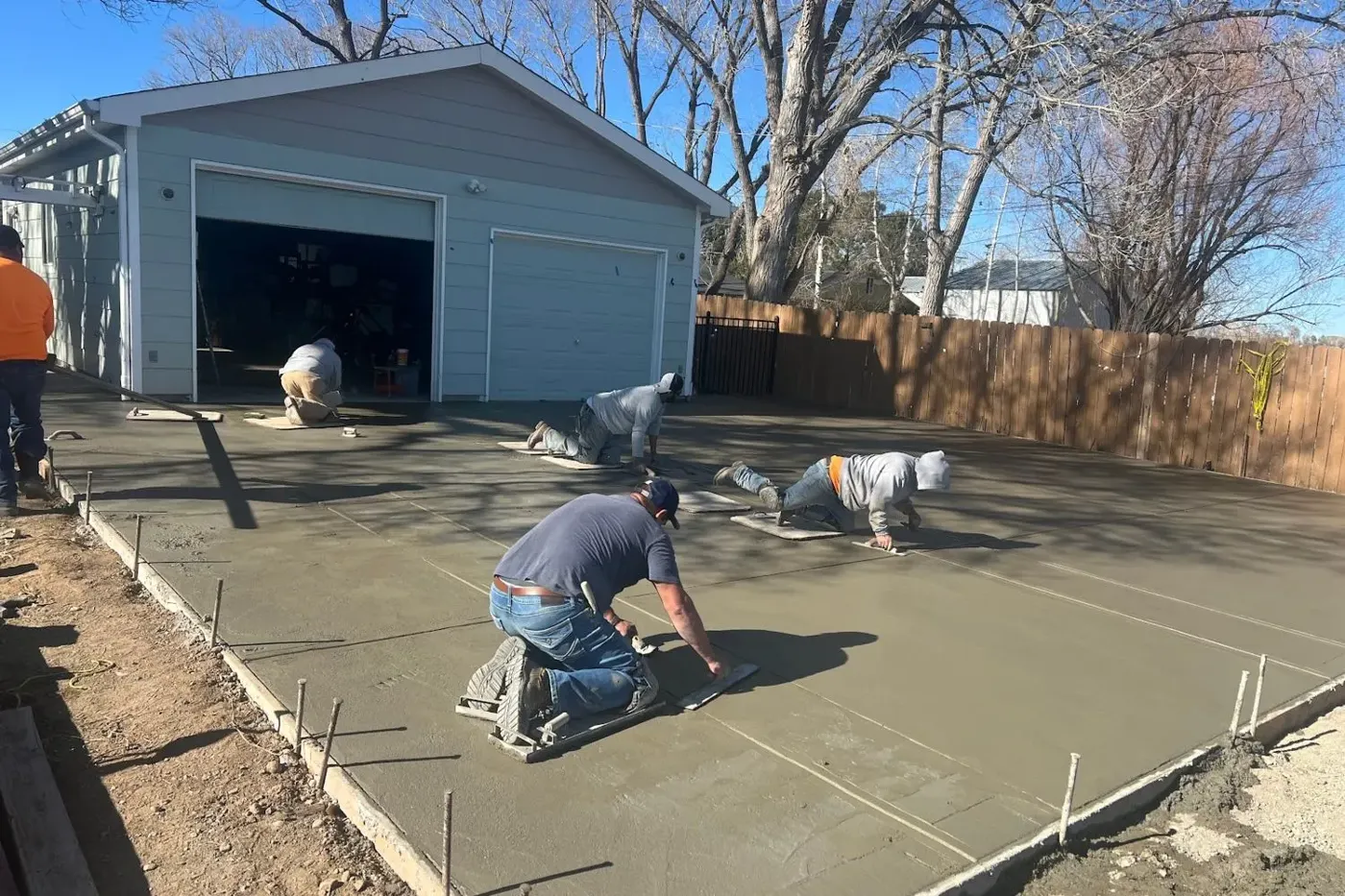
Garage floors in Northern Colorado take a beating. Snow, ice melt, road salt, moisture, vehicle traffic, temperature swings and heavy storage all wear on bare concrete. A properly installed coating protects the slab, looks better, and makes the floor much easier to keep clean. If you're redoing a garage, workshop, hobby space or storage area, it helps to know your options before you pick a color. You can see the epoxy flooring we install around the region, or a Windsor garage floor we coated on 7th St.
The Short Version
A garage floor coating that lasts depends on proper preparation, good materials, the right flake system and the right finish. If you're in Windsor, put surface prep and durability ahead of looks when you're deciding, since a well-prepped floor also tends to keep its looks longer.
Why Garage Floors Need Protection in Colorado
Freeze-thaw exposure
All winter, snow and ice ride into the garage on your car. Bare concrete soaks up that water, and freeze-thaw cycles slowly weaken the surface.
Road salt and deicers
Vehicles track salt and deicing products in all winter long. Over time those break down the surface, stain it, hold moisture in the concrete and add to long-term damage.
Vehicle traffic
Cars, trucks, motorcycles, trailers and recreational equipment put steady stress on the slab. Repeated traffic leaves tire marks, wears the surface, causes dusting and slowly breaks down the top layer.
Storage loads
Garages often hold heavy toolboxes, shelving, workbenches and equipment, and a coated floor holds up better under that concentrated weight.
Surface Preparation Comes First
No part of a garage floor coating matters more than the prep. A lot of coating failures happen because the work went into the look of the floor and the slab underneath was never properly prepared.
Evaluating the concrete
Before anything else, the slab should be inspected for cracks, surface scaling, moisture problems, oil contamination, existing coatings and spalling. Finding those early tells you how the floor needs to be prepared.
Mechanical grinding
Professional installers usually prepare the concrete with diamond grinding equipment. Grinding opens up the pores of the concrete, removes contaminants, helps the coating bond and leaves an even surface profile. Mechanical prep generally gives stronger results than acid etching alone.
Crack and surface repairs
Damaged areas should be fixed before the coating goes on. That usually means filling cracks, repairing joints, patching the surface and correcting spalls. If you skip the repairs, the flaws can show through the finished floor.
Moisture testing
Moisture is one of the leading causes of coating failure. Testing the slab tells you whether it's ready for a coating and flags conditions that could hurt adhesion down the road.
Decorative Flake Options
Flakes are one of the most popular garage floor upgrades, and they do more than look nice.
What decorative flakes are
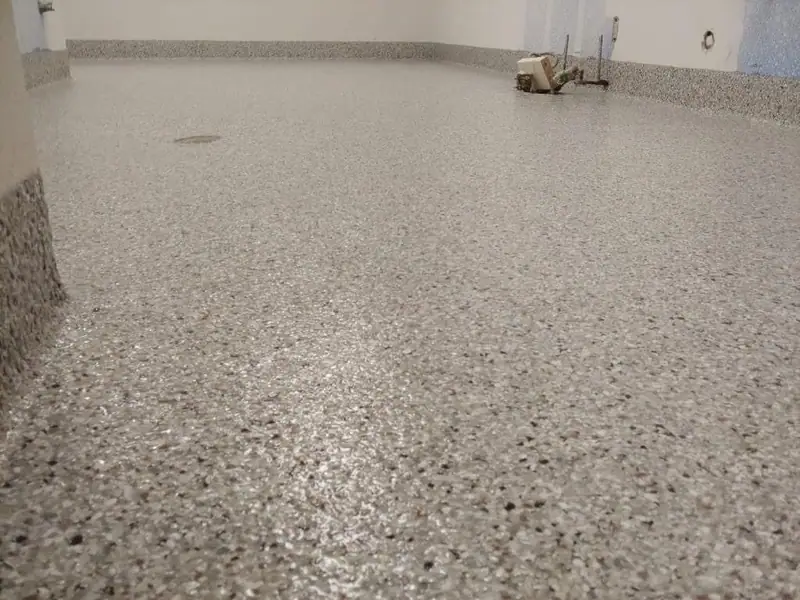
Flakes are small vinyl or polymer chips broadcast into the coating while it's being installed. They add texture and visual variation and make the floor tougher.
Why people choose them
A flake floor looks better, hides stains and dirt, adds slip resistance and gives the surface more texture.
Partial broadcast
A partial broadcast uses lighter flake coverage, so more of the base color shows through and less material goes into the floor. It suits homeowners who want a cleaner, more minimal look with a few decorative accents.
Full broadcast
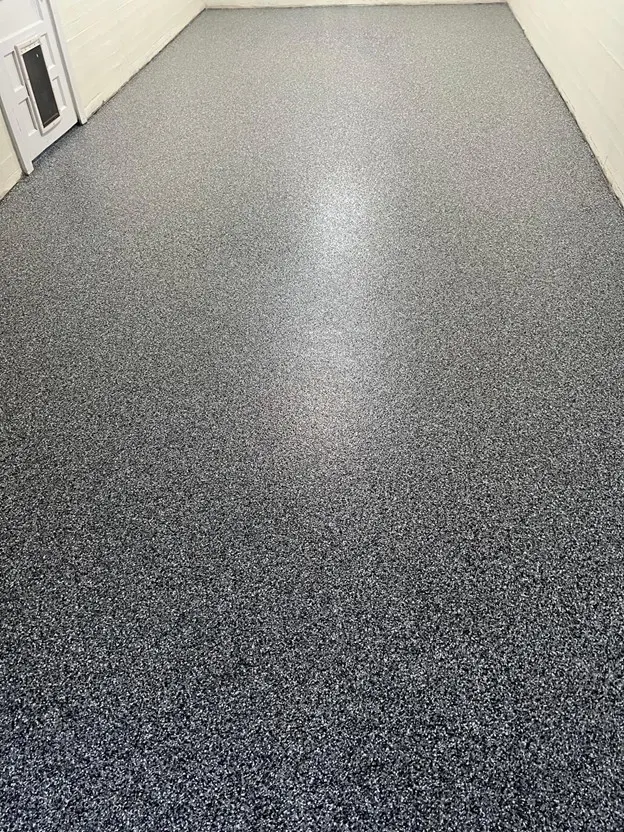
A full broadcast covers the whole floor with flakes. It's tougher, looks more uniform, hides wear better and has more texture, which is why it's often the pick for garages that see heavy use.
Popular Flake Colors for Windsor Homes
The color you pick affects both how the floor looks and how much cleaning it needs.
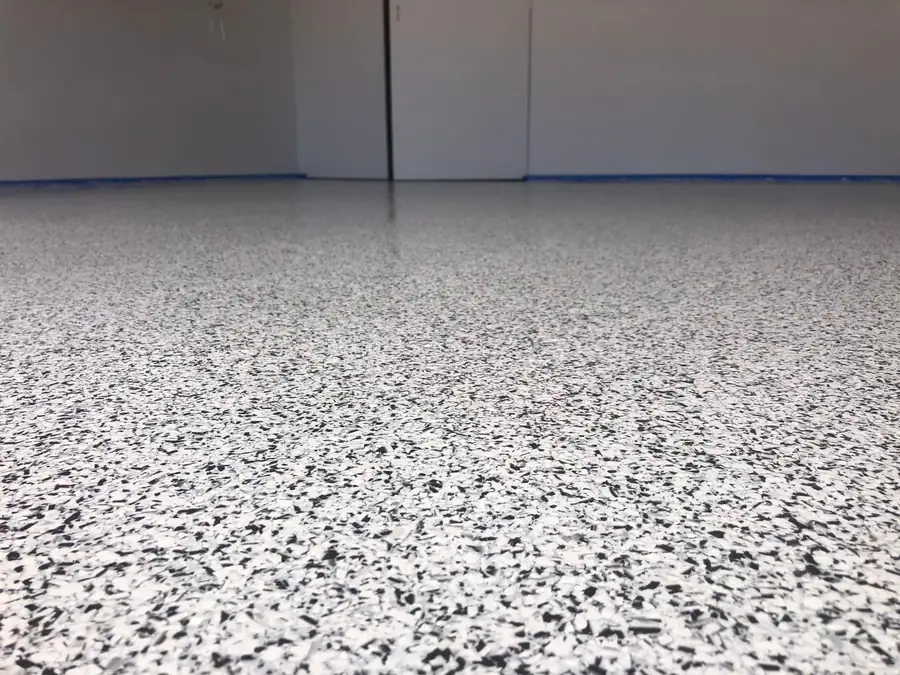
- Gray blends are still among the most popular choices because they hide dirt well, go with most interiors and look clean and professional.
- Tan and neutral blends go with a lot of home designs and give the garage a warmer feel.
- Black and white blends have a modern, high-contrast look and hide tire marks and dust.
- Custom blends let you match the floor to your home's exterior, your cabinets, your workshop layout or your vehicles.
Choosing the Right Finish
The finish layer decides a lot about how the floor looks and how well it wears.
Gloss
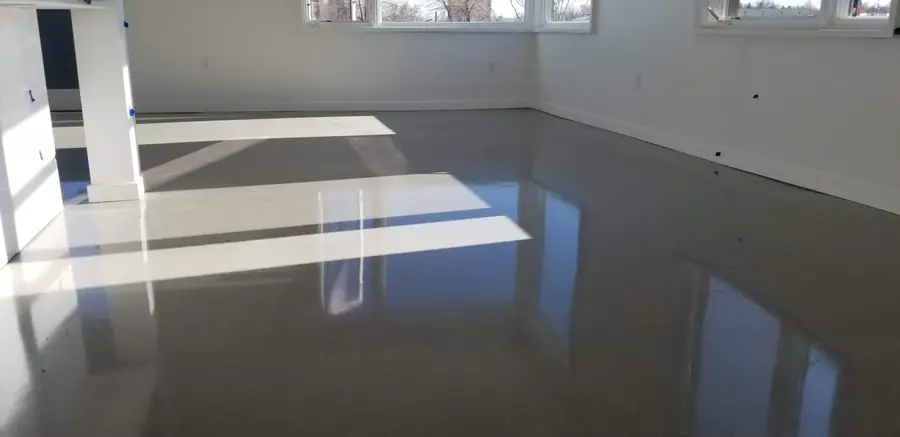
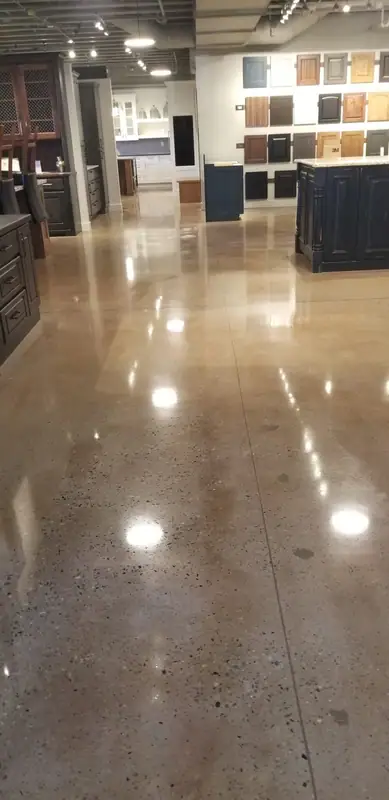
Gloss is bright and highly reflective, cleans easily and gives you the showroom look. Plenty of homeowners pick it because it makes the biggest visual impact.
Satin
Satin is more subtle and cuts glare, so it often works well in workshops, multi-purpose garages and utility spaces.
Matte
Matte is softer and less reflective, and it suits you if you'd like a more understated floor.
How Topcoats Affect Performance
The topcoat is the protective layer over the color and flakes.
Chemical resistance
A good topcoat helps protect against oil spills, fuel, cleaning chemicals and other automotive fluids.
UV protection
Some coating materials yellow over time in sunlight, and modern UV-resistant topcoats help the color stay true.
Abrasion resistance
The topcoat takes most of the daily wear from foot traffic, tires, rolling equipment and storage systems.
Easier cleaning
A protective topcoat makes routine cleaning simpler and lowers the chance of stains. In a busy garage, a durable floor can cut down a lot on upkeep.
Common Mistakes Homeowners Make
Many garage floor problems start before the installation does.
- Shopping on price alone. Low-cost systems often cut corners on prep, material thickness and durability.
- Ignoring moisture. Even a high-quality coating can fail if moisture problems aren't dealt with first.
- Picking by color first. Choose the floor for how you'll use the garage, then pick the color.
- Putting off repairs. Cracks and surface defects should be fixed before the coating goes down.
How Windsor's Climate Affects a Coated Floor
Snow-covered vehicles bring a lot of moisture into the garage in winter. Fast temperature swings affect how the concrete moves and how the coating performs, and garages with windows or doors left open can get direct sun. Concrete also expands and contracts through the seasons, and proper preparation helps the coating handle that movement.
Five Things to Consider Before You Choose
- Surface condition. The state of your slab decides how much prep it needs.
- How you use the garage. Parking, a workshop and a hobby space may each call for a different system.
- Flake coverage. Pick a flake system that balances the look you want with the durability you need.
- Finish. Gloss, satin and matte each look different.
- Maintenance. Choose a system that matches how much upkeep you're willing to do.
Beyond the Garage
The same coatings are showing up in other parts of the home. In a workshop they hold up well and clean up easily. A home gym gets a cleaner, more finished floor. In a utility room, a moisture-resistant coating protects the concrete, and in storage areas a finished floor looks better and keeps the dust down. A lot of homeowners who start with their garage floor end up coating workshops, storage rooms and other utility spaces around the property too.
What the Installation Looks Like
- Evaluation and prep. Inspection, grinding, repairs and cleaning.
- Base coat. The first coat sets the bond and the base color.
- Flake broadcast. Flakes go on while the coating is still active.
- Topcoat. The protective layers finish the system.
- Cure time. The floor has to cure properly before it goes back into full use.
Long-Term Maintenance Tips
A well-installed floor is pretty simple to look after. Sweep it regularly so grit doesn't wear the surface, and clean up spills quickly to keep stains from setting. Skip harsh chemicals and use cleaning products made for coated floors. Every so often, look the floor over, because catching damage early keeps it performing.
Why Professional Installation Matters
A garage floor coating takes more than rolling a product onto concrete. A good installer knows surface preparation, moisture management, which materials work together, how the conditions on install day affect the coating, and what the floor needs to cure properly. All of those show up in how long the floor lasts. For a closer look at why so many local homeowners are making the switch, read why Northern Colorado homeowners are upgrading to epoxy garage floors and our post on epoxy flooring trends in Colorado. When you're ready to talk about your own garage, ask us for an estimate.
Common Questions
Frequently Asked Questions
Ready To Start?
Get Your Free Quote Today
Get a free quote from Hugo's Concrete — serving Fort Collins and surrounding areas.