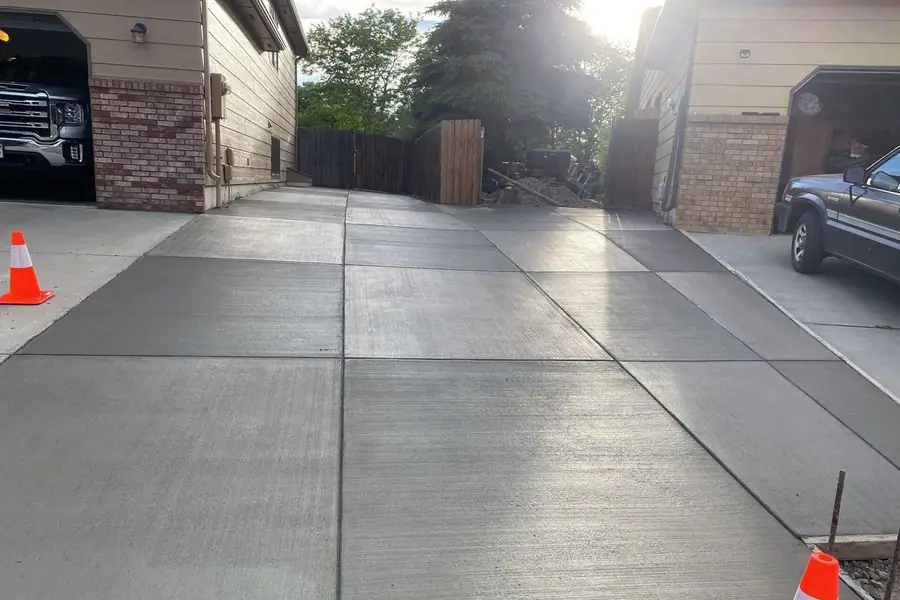
How Much Does Driveways Cost in Fort Collins, CO?
Understand the true factors behind concrete driveway pricing in Fort Collins, from soil excavation to rebar reinforcement.
The Short Answer
Concrete driveways in Fort Collins typically cost $13 – $17 per sq ft for standard installations. Your total investment depends on project square footage, demolition of old slabs, subgrade prep in expansive clay soils, slab thickness for heavy vehicles or RVs, and finish style. Because site conditions vary across Northern Colorado, an on-site evaluation is the only way to get an accurate price.
Driveways along the Front Range endure some of the harshest seasonal swings in the country. Between sudden spring blizzards, over three hundred days of intense high-altitude sun, and winter nights that drop well below zero, an exterior concrete slab takes a relentless beating. In Fort Collins, homeowners often wake up after a rough winter to find new spiderweb cracks, spalling surfaces, or slabs that have tilted out of alignment. Replacing an old driveway is a major home improvement project, and the price tag depends on much more than simply pouring wet cement into wooden forms.
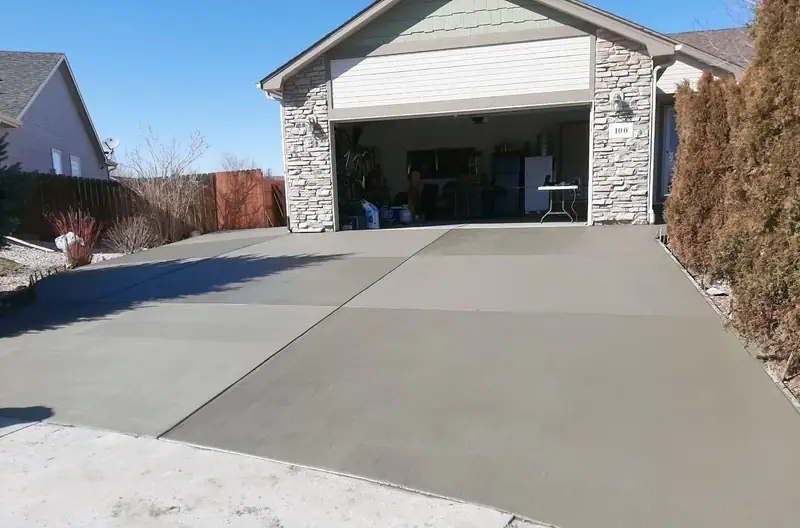
Typical Concrete Driveway Costs in Fort Collins
In Northern Colorado, concrete driveway costs depend on square footage, subgrade preparation, slab thickness, and selected finishes. Contact Hugo's Concrete for an accurate, on-site quote.
That per-square-foot figure covers professional installation, but your final invoice reflects the real-world conditions of your specific yard. A flat, clear two-car driveway replacement in an established neighborhood presents a completely different scope of work than an expansive rural driveway requiring extensive earthmoving, tree root removal, or heavy-duty subgrade stabilization. To understand where your budget actually goes, it helps to break down the specific components that shape the bottom line.
Demolition and Old Concrete Removal
Unless you are building on a brand-new lot, installing a new driveway starts with tearing out the old material. Demolition is labor-intensive and equipment-heavy. Concrete weighs roughly 150 pounds per cubic foot, meaning an average two-car driveway contains several tons of solid rubble that must be broken up, loaded into dump trailers, and hauled away.
Demolition costs depend on three main variables:
- Slab Thickness: An existing slab that is four inches thick without reinforcement breaks up quickly with a hydraulic skid-steer breaker. An older six-inch slab laced with heavy steel mesh or rebar requires significantly more machine time and labor to cut and haul.
- Hauling and Disposal Fees: Local recycling centers and transfer stations charge tipping fees based on tonnage. Clean concrete can often be crushed and recycled into road base, while slabs contaminated with asphalt, dirt, or heavy wire require standard disposal.
- Site Access: Tight side yards, low-hanging trees, or narrow property lines can restrict where heavy machinery can maneuver, requiring smaller equipment or manual wheelbarrow transport that increases labor hours.
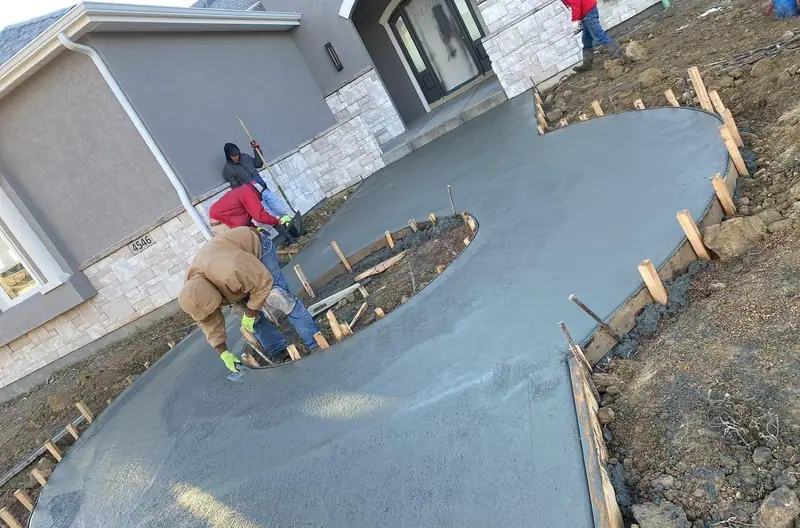
Managing Fort Collins Expansive Clay Soils
The ground beneath your driveway matters just as much as the concrete poured on top of it. Much of Fort Collins and the surrounding Larimer County area sits on expansive bentonite clay soil. This clay acts like a sponge, swelling significantly when saturated with rain or melting snow, and shrinking as it bakes dry under the summer sun. This constant underground movement is the number one cause of cracked and uneven driveways in our region.
Pouring fresh concrete directly over native clay is a recipe for premature slab failure. Proper preparation requires excavating several inches into the subgrade, rolling out a geotextile fabric if the soil is especially volatile, and importing a structural aggregate base, such as Class 6 road base. Compacting this stone base in mechanical lifts establishes a rock-solid, uniform foundation that drains moisture away from the slab underside. Skimping on base prep might save a few dollars upfront, but it almost always leads to sunken panels and broken joints within three to five years.
Slab Thickness and Vehicle Weight Loads
A standard residential driveway pour is four inches thick, which is perfectly adequate for standard passenger cars, minivans, and small SUVs. However, many Northern Colorado homeowners keep work trailers, boats, fifth wheels, or heavy-duty diesel pickups on their driveways. If you park an RV or heavy machinery on a standard four-inch slab, the point loads can easily crack the concrete, especially along the edges and control joints.
Upgrading to a five-inch or six-inch pour increases the volume of concrete required, which directly impacts material and placement costs. For homeowners with recreational vehicles, pouring a dedicated heavy-duty parking pad or thickening the entire driveway is far cheaper than paying to replace cracked slabs down the road. During our on-site evaluation, we always discuss how you plan to use the space so the slab's load capacity matches your household's actual lifestyle.
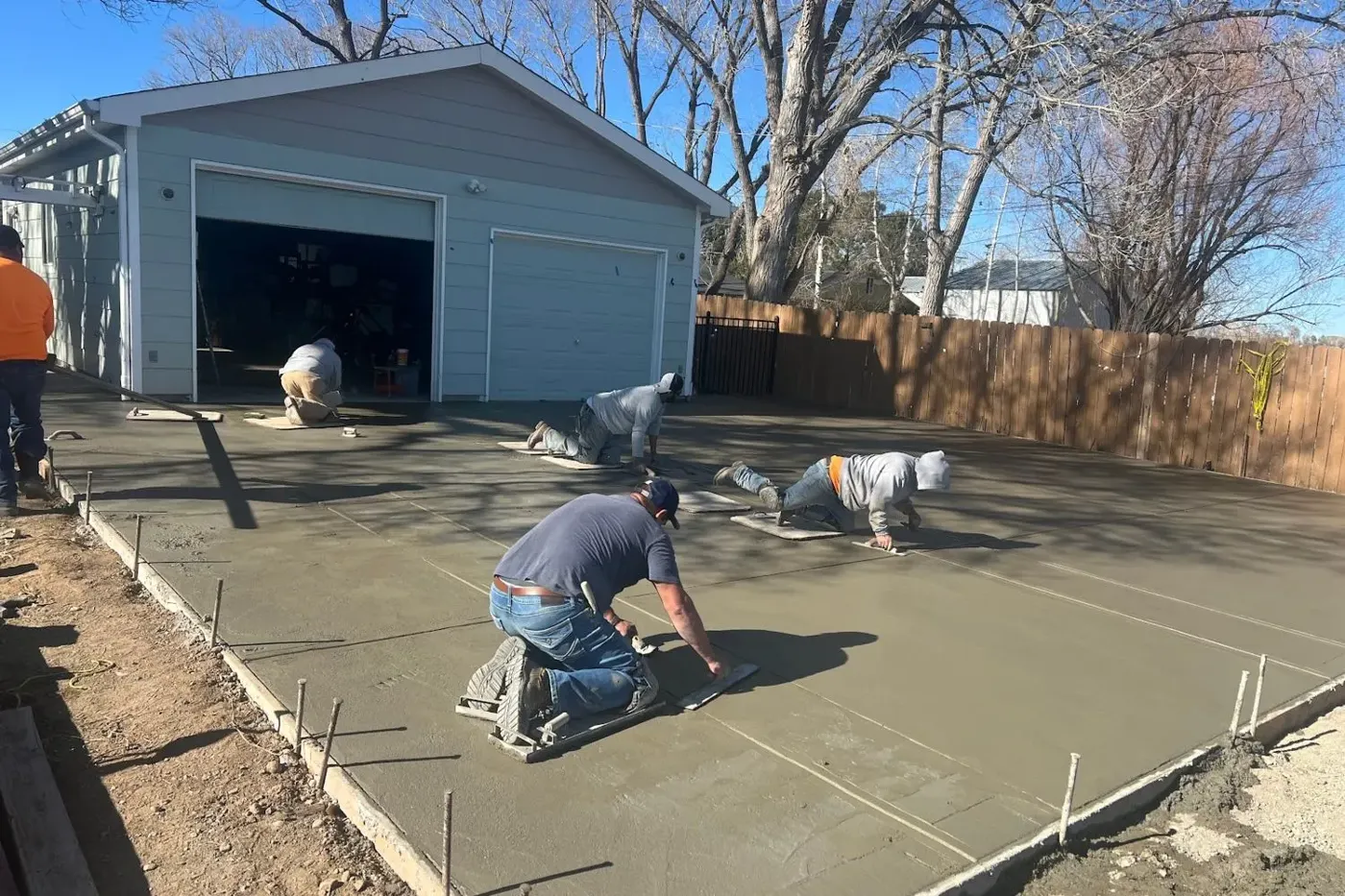
Rebar Grids vs. Wire Mesh Reinforcement
Concrete possesses incredible compressive strength, meaning it can support heavy downward pressure without crushing. But it has relatively weak tensile strength, meaning it is vulnerable to pulling, bending, and heaving forces caused by frost and shifting soil. Internal reinforcement provides that missing tensile strength.
Some low-bid contractors cut corners by using thin welded wire mesh, or skipping steel reinforcement altogether. In Colorado's harsh climate, Hugo's Concrete strongly recommends installing a tied grid of #4 steel rebar set on chairs so the steel sits suspended in the middle third of the slab. While rebar adds to the initial material cost, it keeps individual concrete panels locked together. Even if an hairline stress crack forms over decades of ground movement, the steel reinforcement keeps the crack tight and level, preventing trip hazards and moisture intrusion.
Decorative Finishes and Aesthetic Upgrades
The visual style you choose for your driveway plays a large role in the overall cost per square foot. Standard gray concrete with a non-slip broom finish is the most economical and functional choice for everyday vehicle traffic. It provides dependable traction through snowy winters and reflects summer heat effectively.
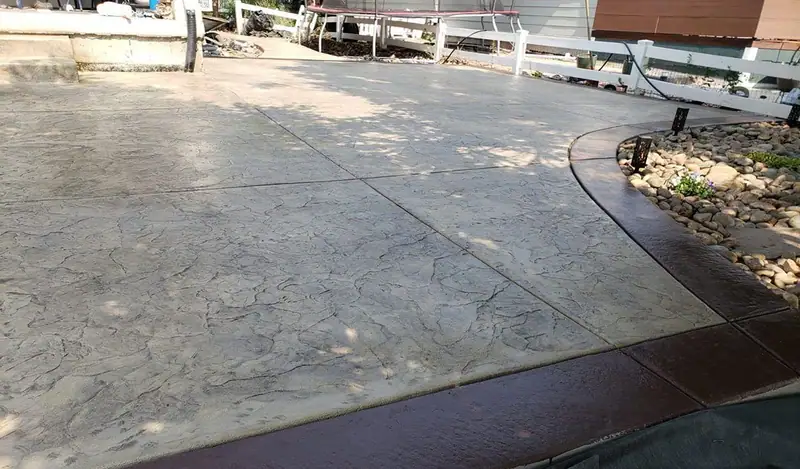
If you want to upgrade your home's curb appeal, decorative concrete options open up distinct possibilities. Some homeowners choose integral coloring mixed directly into the concrete truck, while others add decorative borders or ribbons to frame the driveway. You can also pair a traditional broom-finished driving lane with custom stamped concrete aprons, borders, or adjacent walkways. Stamping involves specialized texturing mats, color hardeners, antique release agents, and protective sealers, which require skilled hand tooling and naturally increase the per-square-foot investment.
Permits and City of Fort Collins Right-of-Way Rules
When you replace a driveway, the section located on private property typically falls under general residential property guidelines. However, the driveway apron, the transition section that crosses the public sidewalk and connects directly to the street curb, lies within the city right-of-way. In Fort Collins, work in this zone requires proper documentation and inspection.
According to the City of Fort Collins Engineering Department driveway approach guidelines, contractors performing work on sidewalks or driveway approaches must hold a valid city-issued right-of-way license and obtain specific permits before cutting curbs or pouring concrete in the public right-of-way. These standards follow the Larimer County Urban Area Street Standards (LCUASS) to ensure proper stormwater drainage, sidewalk slope, and pedestrian safety, though municipal requirements vary across neighboring communities, so you should always confirm current local codes before breaking ground. Permit fees, traffic control planning, and right-of-way inspections add a modest administrative cost to the project, but pulling the right paperwork protects you from fines and mandated concrete removal.
Repair vs. Full Replacement: Making the Call
Before committing to a complete tear-out, it is wise to determine whether your existing concrete can be salvaged. Surface scaling or minor surface spalling can sometimes be corrected with topical repairs, patch work, or resurfacing overlays. However, repairs are temporary if the underlying foundation has failed.
You should strongly consider a full concrete driveway replacement if you notice any of these structural red flags:
- Extensive Spiderweb Cracking: Widespread, deep cracks spanning multiple panels indicate severe subgrade shifting that patch materials cannot fix.
- Significant Heaving or Sinking: Slabs that have dropped or lifted by more than half an inch create trip hazards and allow pooling water to soak into the subgrade.
- Severe Salt Damage: Magnesium chloride and commercial deicers tracked in from winter highways can break down the surface paste of unsealed concrete, causing extensive crumbly deterioration.
- Water Flowing Toward the Foundation: If settlement causes the driveway to pitch runoff toward your garage or home foundation rather than the street, the grade must be corrected immediately.
The Hugo's Concrete Approach to Every Pour
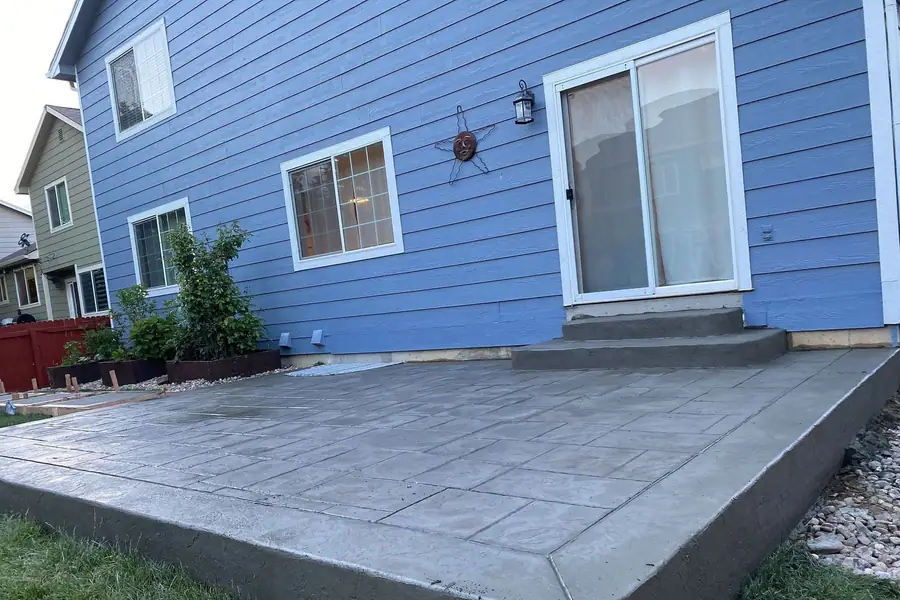
Concrete flatwork is an investment that should easily last thirty years or more when installed with precision. At Hugo's Concrete, our team works across Northern Colorado. Company founder Hugo De La Luz personally supervises our projects, so grading, formwork, rebar placement, and finishing all meet our standards.
We believe in doing things right from the ground up. We are licensed in the state of Colorado (License # 20211954844), fully insured with $2 million in liability coverage, BBB accredited, and OSHA 10 safety certified. To give you complete peace of mind, we back all our flat concrete work with our dedicated 3-year warranty.
Get an Accurate Driveway Quote for Your Property
Online calculators and rough square-foot estimates are helpful starting points, but no two residential properties in Fort Collins are identical. Grade slopes, soil conditions, tree roots, vehicle loads, and access constraints all dictate the actual work required to deliver a lasting slab. The only way to get an honest, reliable price is through an on-site inspection of your property.
If your driveway is cracked, settling, or struggling to handle winter weather, reach out to our local team today. We will measure your layout, evaluate your subgrade, discuss your vehicle needs, and provide a clear, detailed estimate for your home.
Common Questions
Frequently Asked Questions
Ready To Start?
Get Your Free Quote Today
Get a free quote from Hugo's Concrete — serving Fort Collins and surrounding areas.