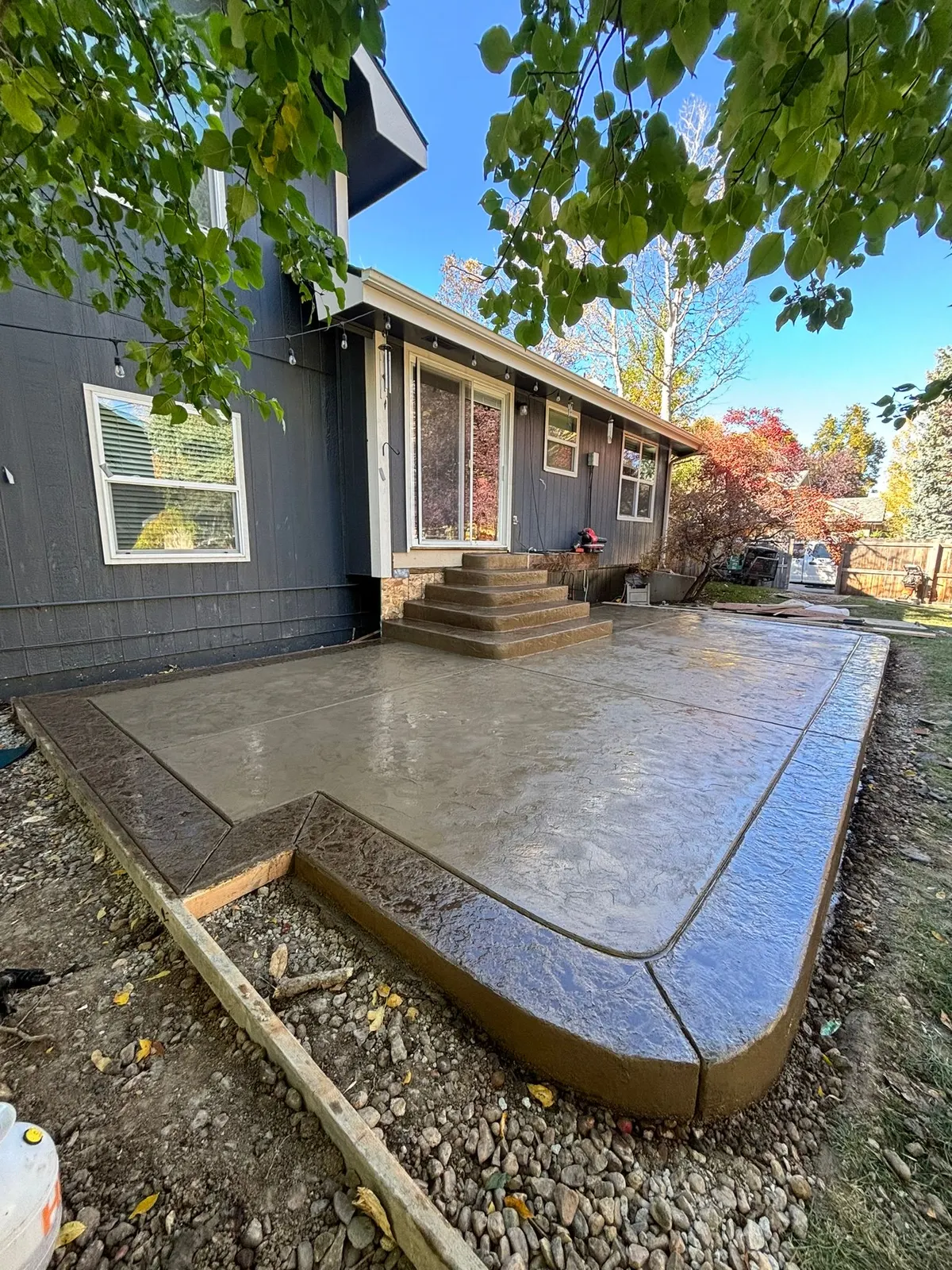
How Much Does Decorative Concrete Cost in Fort Collins, CO?
Understand the real factors driving your stamped, polished, and custom concrete estimates in Northern Colorado.
The Short Answer
How much you will pay for decorative concrete in Fort Collins depends on the square footage, subgrade condition, and finish complexity. For our concrete polishing services, the price depends on the condition of your existing slab and the desired finish; contact us for a quote. Market data shows exterior stamping averages $12 to $25 per square foot nationally. Because soil prep and custom finishes vary wildly, contact us for a free, exact estimate for your specific property.
The true cost of decorative concrete in Fort Collins depends on your chosen finish, the condition of your subgrade, and the total square footage of the pour. A basic stained patio requires less labor and material than a multi-color stamped driveway, shifting the final price tag significantly. Because Northern Colorado’s intense freeze-thaw cycles demand meticulous base preparation, the only way to get a completely accurate number is through a professional on-site inspection.
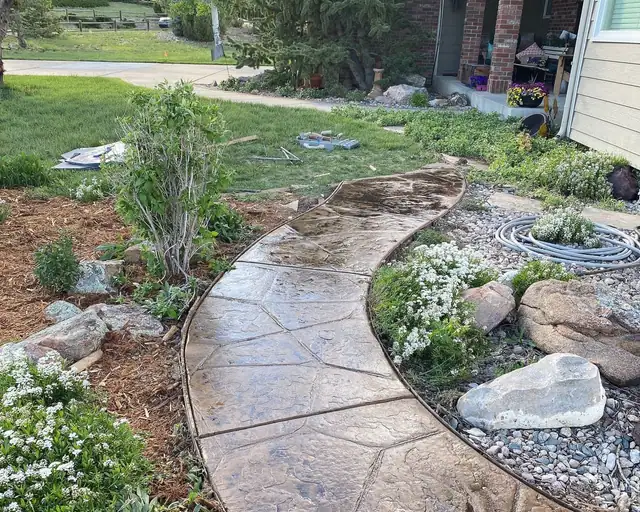
The Core Factors Driving Your Estimate
Most homeowners start with a specific budget in mind. But before a contractor can hand you a firm number, they have to evaluate what they are actually working with on your property. Three main variables drive the final price of any decorative flatwork.
First is the total square footage. Like most construction trades, concrete benefits from economies of scale. A massive stamped driveway will cost more overall than a small front porch, but the price per square foot usually drops on larger jobs. The mobilization costs, meaning getting the crew, the equipment, and the concrete trucks to your house, are roughly the same whether the project is 200 or 2,000 square feet.
Second is design complexity. A single-color pour with a basic broom finish is standard. Once you introduce powdered color hardeners, antiquing release agents, and intricate stamping mats, the labor hours shoot up. Adding a contrasting border or a custom compass rose design takes serious time and skill, which adds to the bottom line.
Third is site access. If you have a wide-open front yard where a concrete mixer can back right up to the forms, the job moves fast. If a backyard patio is being poured and the only access is a narrow side gate, the crew has to transport the wet concrete using motorized buggies or even wheelbarrows. In some tight neighborhoods, a boom pump truck must be hired to pipe the concrete directly over the house. Hard access means more equipment rentals and more labor hours.
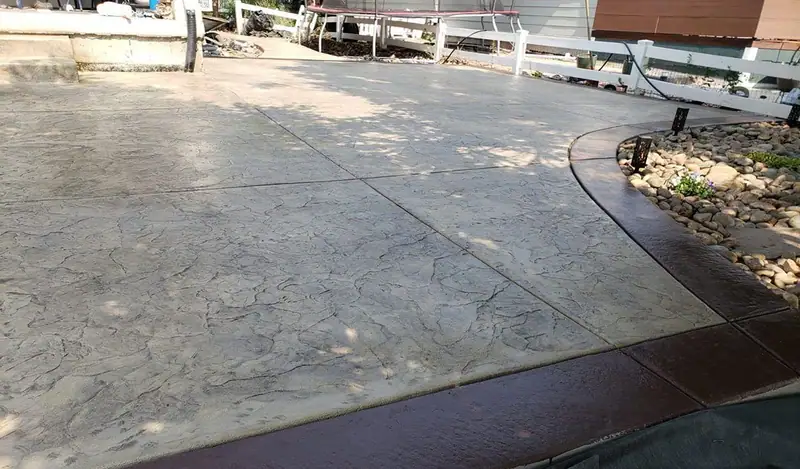
Price Breakdown by Decorative Finish
Decorative concrete is a broad category. What you pay hinges heavily on the specific technique you want. Each method requires different materials, different tooling, and varying levels of surface preparation.
Stamped Concrete
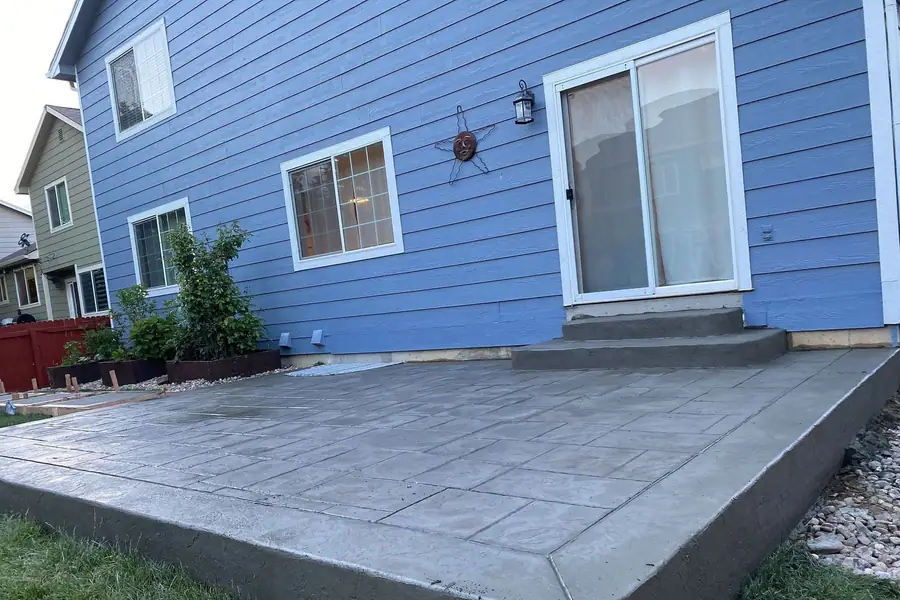
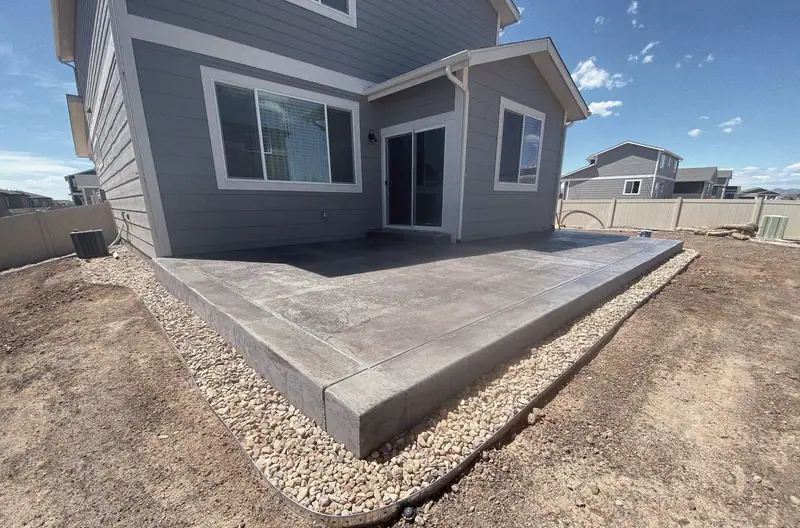
This process involves pouring fresh concrete, applying color hardeners, and tamping large polyurethane texture mats into the wet surface before it sets. The result mimics natural stone, brick, cobblestone, or wood planks. Stamped concrete pricing varies widely, and your local cost will fluctuate based on the number of colors used and the intricacies of the stamp pattern. For a deeper look at these options, we often walk clients through the various stamped concrete patterns that hold up best in our climate. The stamping process is incredibly time-sensitive, requiring a highly coordinated crew to texture the slab before the material cures.
Concrete Polishing
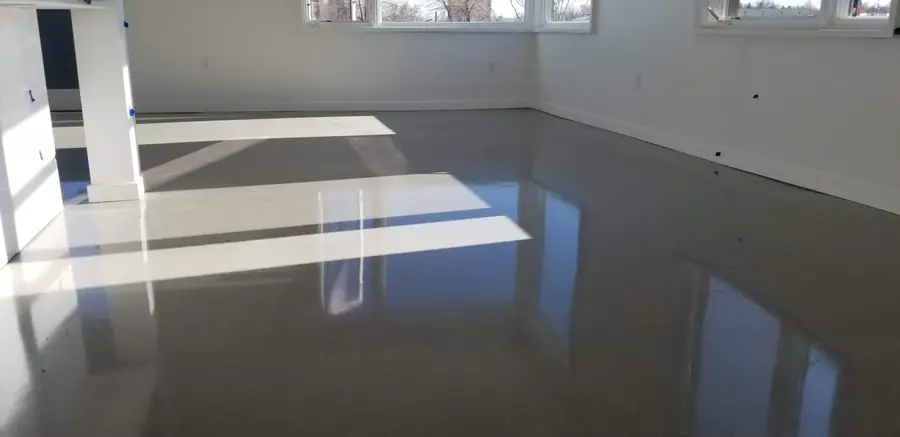
If you have an existing slab that is in reasonably good shape, polishing is a highly durable and sleek option. Instead of pouring new material, industrial diamond grinders mechanically hone the surface until it achieves the desired gloss level. The process typically starts with coarse metal-bond diamonds to remove blemishes, then liquid densifiers are applied to harden the surface, and it finishes with fine resin-bond diamonds to bring up the shine. For our concrete polishing in Fort Collins, our quotes depend on the existing surface conditions and desired finish; contact us for an accurate estimate. The final price depends on how much surface repair is needed beforehand and the level of reflectivity you want.
Epoxy Floor Coatings
Garage floors and basements often benefit from epoxy or polyaspartic coatings. The price here is heavily dictated by the preparation. The entire floor is mechanically ground to open the pores, any existing cracks are patched, and a moisture-mitigating primer is laid down before the color flakes and clear topcoats go down. Skipping the prep work makes the job cheaper initially, but the coating will almost certainly peel and bubble within a year.
The Hidden Costs of Demolition and Site Prep
Many estimates focus solely on the shiny new patio, but getting the site ready often represents a major chunk of the invoice. Tearing out old, cracked concrete is heavy, loud, and labor-intensive work.
If you have an existing slab that needs to go, a contractor has to break it up with jackhammers or skid steers, load the rubble into dump trailers, and pay disposal fees at the local recycling yard. The thicker the old concrete, the more expensive the removal. Sometimes it is found that the previous installer poured the slab directly over tree roots or unstable dirt, which means deeper excavation is required to establish a proper foundation.
Grading and drainage are equally important. A patio is useless if it funnels rainwater straight into your basement. The crew has to shoot grades with a laser level and contour the dirt so water sheds safely away from the foundation. If your yard slopes heavily toward the house, a French drain might need to be installed or a small retaining wall built before a wooden form is ever set. These necessary steps protect your property, but they do add to the initial project cost.
Why Fort Collins Soil and Weather Affect Your Estimate
Colorado weather is notoriously hard on exterior flatwork. We deal with wild temperature swings that cause the ground to expand and contract constantly. If a contractor quotes you a rock-bottom price, they are almost certainly cutting corners on the sub-base and the reinforcement, the two things that keep your concrete from cracking during the first winter.
Much of Larimer County sits on expansive clay soils. When this dirt gets wet, it swells. When it dries out, it shrinks. To combat this, a proper installation requires excavating the bad soil and bringing in several inches of structural road base. This aggregate must be heavily compacted with a vibratory plate compactor to create a stable, unmoving foundation.
The concrete itself also needs serious reinforcement. While wire mesh is cheap, it often gets trampled down to the bottom of the slab during the pour, rendering it useless. Tying a rigid grid of steel rebar is often preferred. A specific concrete mix design is also ordered from the plant, usually air-entrained concrete with a high compressive strength. The microscopic air bubbles in the mix give freezing water a place to expand without popping the surface off your driveway. Doing all of this correctly requires more labor and better materials, which naturally influences the estimate.
Common Mistakes That Drive Up Repair Costs
When homeowners collect multiple bids for a decorative project, the numbers can be surprisingly far apart. The difference usually lies in what a cheaper contractor is leaving out. One of the most common mistakes in low-budget installations is a lack of proper control joints. As concrete cures and shrinks, it naturally wants to crack. Deep control joints are saw cut or tooled into the slab to dictate exactly where those cracks happen, keeping the surface looking clean. If a crew spaces these joints too far apart, random jagged cracks will ruin the decorative finish.
Another frequent issue is adding too much water to the mix on site. When the concrete arrives from the plant, it can be thick and hard to push around. Inexperienced crews will ask the driver to add gallons of water to the chute to make the concrete flow easier. While this saves them manual labor, the excess water drastically weakens the structural integrity of the slab. Within a year, the top layer of the stamped or broomed finish begins to flake and scale off, completely destroying the aesthetic. Doing the job right means pushing a stiff, heavy mix manually, which requires an experienced, hardworking crew. The mix design should never be compromised just to make the afternoon easier.
Do You Need a Permit for Concrete Work?
A common question we hear from homeowners is about the red tape. Will you have to pay for a building permit just to upgrade your backyard patio or widen your driveway?
Generally speaking, according to Larimer County and Fort Collins building guidelines, standard residential concrete flatwork like driveways, sidewalks, and patios on grade are exempt from building permits. This assumes the slab is not acting as a structural foundation for a covered addition and does not sit out in the public right-of-way. Requirements vary by municipality and exact project scope, so confirm with your local building department before relying on this. If your project involves pouring steps over a certain height, building a retaining wall taller than four feet, or cutting into the city curb, permits and inspections will absolutely be required, which adds nominal fees and time to the project schedule.
The Long-Term Value of Quality Installation
It is easy to focus strictly on the upfront cost, but cheap concrete is the most expensive thing you can buy. A poorly prepped driveway that cracks and heaves after two years will cost thousands to tear out and replace.
Decorative concrete also requires minor ongoing maintenance. Stamped and colored surfaces should be washed and resealed every two to three years. The clear acrylic sealer protects the color from UV fading and blocks moisture from penetrating the surface. When budgeting for your project, it is smart to factor in this occasional maintenance cost.
When you hire a professional team, you are paying for peace of mind. Hugo's Concrete is a local crew with hands-on trade experience. Owner Hugo personally supervises every installation to ensure the grades are right, the rebar is tied correctly, and the finish looks perfect. We are fully licensed (License # 20211954844) and insured, and we stand by our work. Our warranty includes 3 years on concrete flatwork, 5 years on concrete polishing, and 10 years on epoxy coating systems.
Get an Accurate Quote for Your Specific Project
Because every property in Fort Collins has different soil conditions, access challenges, and design requirements, a blind quote over the phone is never accurate. The only honest way to price a decorative concrete job is to walk the site, take exact measurements, and discuss your design goals in person.
If you are ready to upgrade your driveway, patio, or garage floor, reach out to schedule a free, no-pressure estimate. We will talk through your options, explain exactly what the job requires, and give you a detailed, accurate quote for your specific project.
Common Questions
Frequently Asked Questions
Ready To Start?
Get Your Free Quote Today
Get a free quote from Hugo's Concrete — serving Fort Collins and surrounding areas.