Concrete Polishing in Fort Collins
We transform dull, dusty concrete into bright, durable polished floors that resist stains and heavy foot traffic.




Polished Concrete Floors
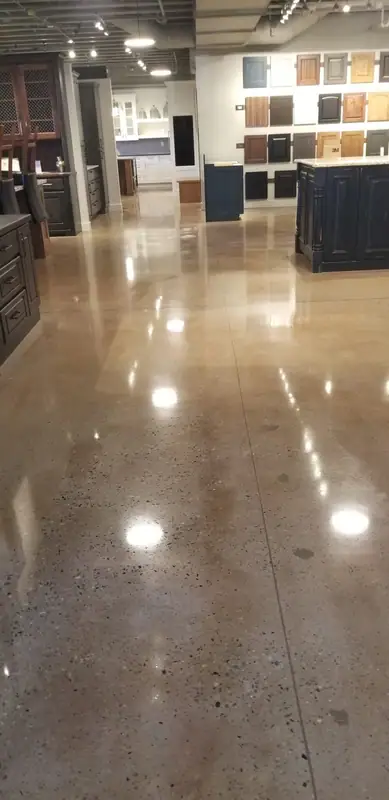
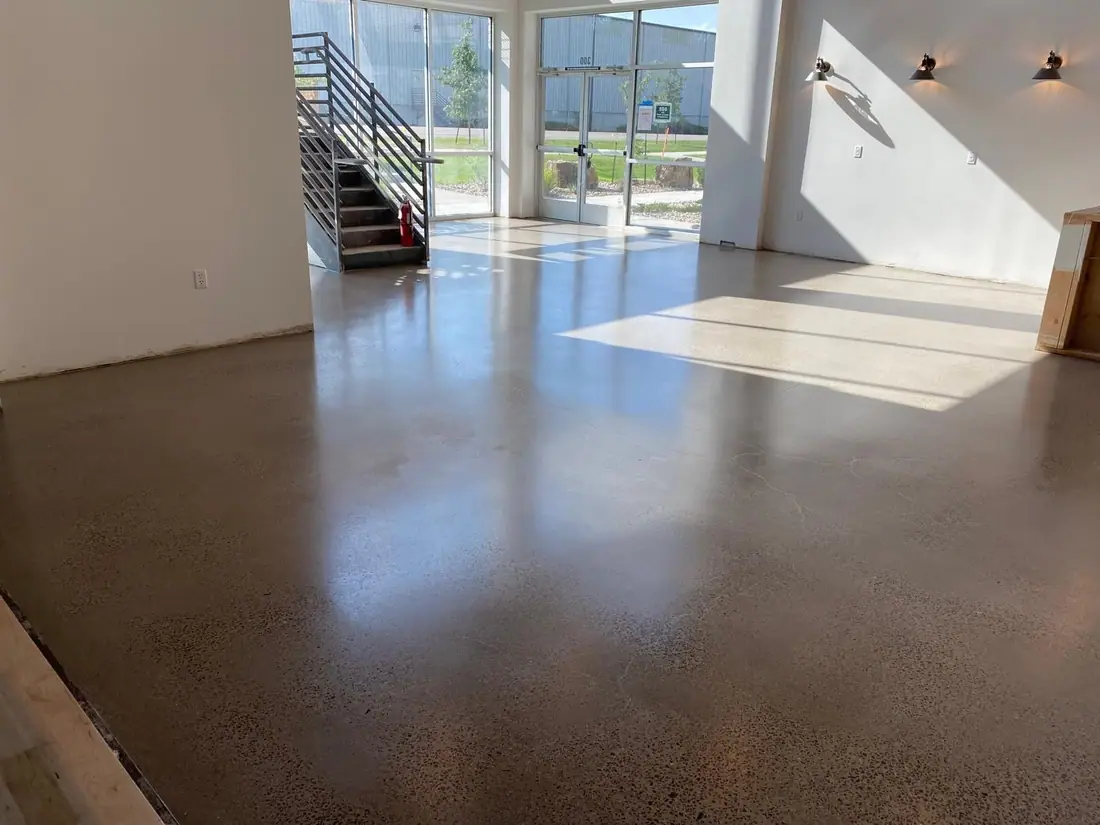
If you have a dusty basement slab or a dull workshop floor, concrete polishing in Fort Collins turns bare gray concrete into a clean, smooth surface that wipes down without sweeping up constant grit. You don't have to live with powdery cement dusting your boots every time you walk into the basement. We run commercial planetary grinders equipped with diamond-grit segments over your existing slab, cutting away the weak surface paste to reveal the hard aggregate beneath.
Our local weather puts unique demands on interior slabs. Northern Colorado sits over expansive bentonite clay, and moisture tables shift between our bone-dry winter months and wet spring runoff. When groundwater vapor pushes up through a foundation, topical paints and peel-and-stick tiles bubble and peel right off. Mechanically polished concrete breathes naturally, so rising moisture passes right through without lifting a film or leaving behind moldy adhesive.
During the process, we saturate your floor with a liquid lithium silicate densifier. This chemical reacts with the free lime in your slab, creating a crystal structure that hardens the concrete from the inside out. Once the densifier cures, we switch to finer resin-bonded diamond pads, polishing the floor up to your chosen level of shine. If you want a floor that stands up to dropped tools and muddy boots, polished concrete gives you years of clean use with very little upkeep. Hugo personally supervises each job site, and we back all our concrete polishing with a written warranty. You can also explore our epoxy flooring options if you prefer an impervious colored resin coating for high chemical resistance.
Why Choose Us
Why Homeowners Choose Polished Concrete
No Peeling or Delamination
Floor paints and thin sealers sit on top of the concrete and inevitably flake off under foot traffic. Polishing hardens and refines the actual slab, creating a permanent wear layer that won't chip, flake, or lift.
Stops Concrete Dusting
Unfinished concrete sheds a fine white powder as the top surface breaks down under footsteps. Our grinding and densifying steps lock in the loose paste so your storage boxes and boots stay completely clean.
Improved Natural Lighting
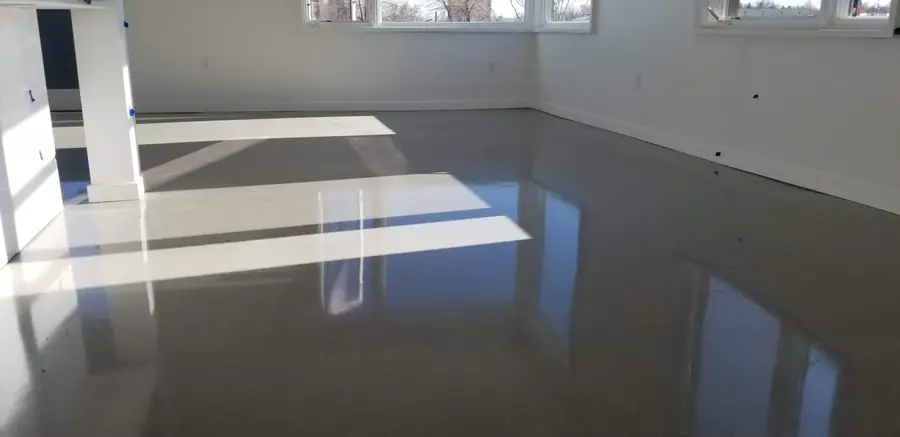
The reflective sheen bounces overhead light across your basement or workshop, brightening up dim spaces without adding extra lighting fixtures. That higher light reflectivity cuts down on your everyday power use.
Simple Daily Maintenance
You don't need special waxes, strippers, or harsh chemical detergents to keep the floor looking sharp. A simple microfiber dust mop and occasional damp mopping with neutral soap keeps the surface clean.
Our Process
Our Concrete Polishing Process
Surface Inspection
We check your slab for cracks, joint spalling, and moisture levels. We determine the concrete hardness so we can select the exact metal-bond diamond abrasives required for your specific floor.
Initial Diamond Grind
Chemical Densification
Progressive Resin Polishing
Penetrating Stain Guard
Pricing Guide
What Affects Concrete Polishing Cost
Existing Slab Condition
Floors with deep gouges, heavy spalling, carpet adhesive, or thick paint require extra grinding passes and repair mortars before we can begin the polishing sequence, which adds labor time.
Desired Sheen Level
A low-sheen satin finish requires fewer grinding and honing passes. High-gloss finishes require polishing up to 1500 or 3000 grit, which involves more machine time and diamond tooling.
Room Layout and Edges
Large, open rectangular basements take less time to grind than cut-up rooms with numerous support posts, closets, and tight corners that require extensive hand-grinder work along every wall.
The Contractor You Choose
Proper equipment and credentials matter. Hugo's Concrete holds Colorado state license 20211954844, carries $2 million in liability insurance, and maintains BBB accreditation so you don't take on unnecessary risk.
Common Questions
Frequently Asked Questions