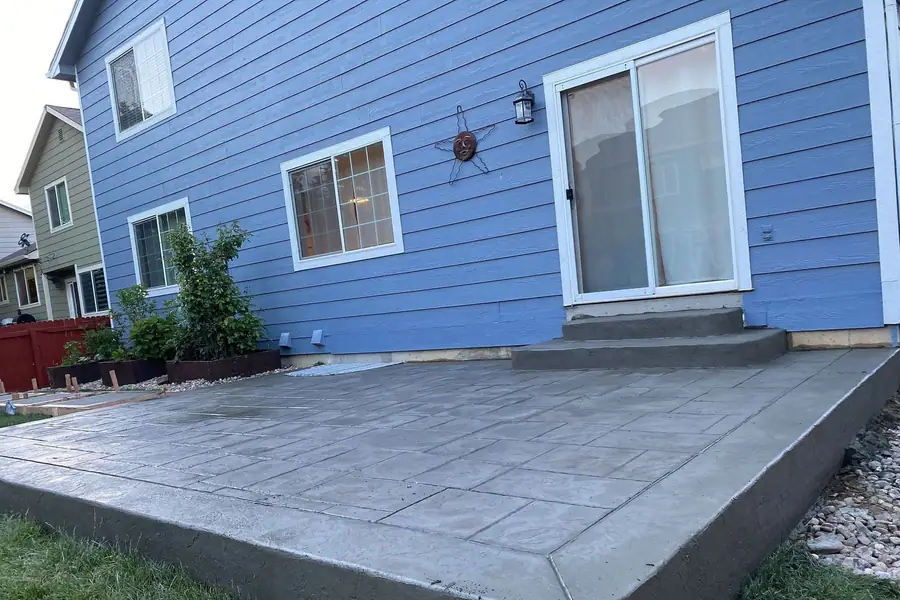
How Much Does Concrete Repair Cost in Fort Collins, CO?
Get the facts on what drives concrete repair pricing in Northern Colorado, from soil mechanics to local permit requirements.
The Short Answer
Concrete repair in Fort Collins typically costs $4 – $18 per sq ft. However, your exact price depends entirely on the type of damage, the repair method required, and how much expansive soil movement has occurred beneath the slab. Simple crack sealing sits at the lower end, while extensive resurfacing or lifting costs more. The only way to get a precise number is through a free site inspection.
Concrete in Northern Colorado doesn't fail the way it fails elsewhere. Between aggressive freeze-thaw cycles and the highly active clay soils sitting beneath our neighborhoods, a cracked driveway or sunken patio is rarely just a surface issue. It's a structural response to the ground moving underneath. Figuring out what it will cost to fix requires diagnosing exactly what broke it.
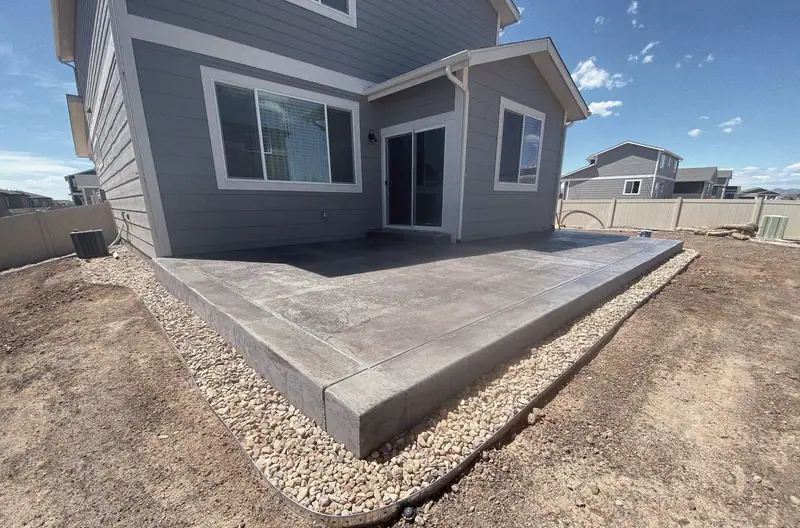
The Real Reasons Concrete Fails in Northern Colorado
Fort Collins sits at roughly 5,000 feet of elevation along the Front Range. This specific geography means our concrete takes a beating that most of the country never experiences. We have a complicated mix of expansive clay near the foothills and sandy alluvial deposits along the Cache la Poudre River. When you combine those varied soil conditions with our dramatic temperature swings, you get a recipe for extreme concrete stress.
Expansive Clay Soils
Bentonite clay, found throughout Northern Colorado, acts like a microscopic sponge. As it absorbs moisture from rain, snowmelt, or poor drainage, it expands significantly. According to the Colorado Geological Survey, expansive soil causes more property damage in the state than floods, earthquakes, and tornadoes combined. The upward pressure generated by swelling clay can reach thousands of pounds per square foot. No concrete slab is heavy enough to resist that kind of force. It will lift, heave, and eventually crack.
The Freeze-Thaw Cycle
Once a crack forms, the weather takes over. Water runs into the open fissure during a warm winter afternoon. When the sun goes down and temperatures plummet, that water freezes. Water expands by roughly nine percent when it turns to ice. That expansion acts like a wedge, silently prying the concrete apart.
The next day, the ice melts, leaving a slightly wider crack. The following night, more water enters and freezes again. Fort Collins averages over 100 of these freeze-thaw cycles every single year. A hairline crack in October can easily become a major structural failure by May if left unsealed.
De-Icing Chemicals and Surface Wear
Beyond the weather, the products we use to stay safe in the winter also damage our concrete. Magnesium chloride and rock salt are heavily used on local roads and sidewalks. While they melt ice effectively, they also lower the freezing point of water, which actually increases the number of freeze-thaw cycles your slab endures. Worse, these chemicals chemically attack the bonds within the concrete itself, leading to surface flaking and spalling. This leaves your driveway looking pitted and worn long before its time.
How Much Does Concrete Repair Cost in Fort Collins?
When homeowners call us about a cracked patio or sinking walkway, they want real numbers. Repair costs depend heavily on the extent of voiding beneath the slab, access to the site, and the specific stabilization method required, making an on-site evaluation essential for an accurate quote. But because every property's soil conditions are different, general averages only tell half the story.
For projects handled by our crews, you can expect pricing to fall within $4 – $18 per sq ft. Depending on the severity of the deterioration, your exact bill could sit closer to our $4 low end or stretch up to the $18 high end for highly complex structural fixes. A simple surface fix often runs $4, while intensive stabilization requires more labor, heavy equipment, and specialized material.
Because there are so many variables, the only honest way to price concrete repair in Fort Collins is through a thorough site inspection. Quoting a job blind almost always leads to unexpected costs later.
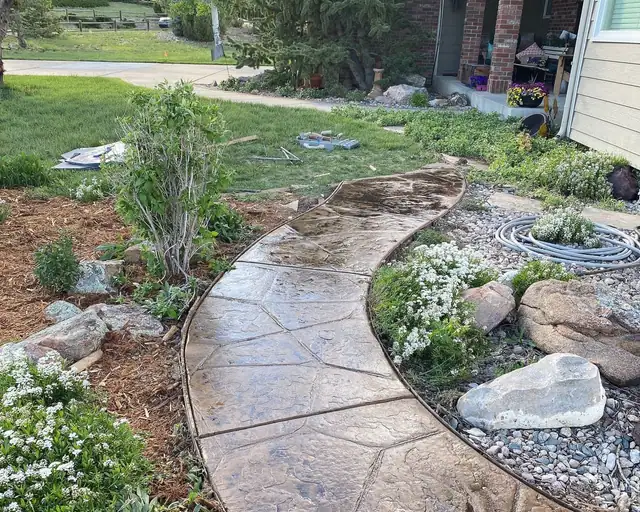
Types of Concrete Repair and What They Fix
Not every damaged slab requires the same approach. The repair method dictates the timeline, the longevity of the fix, and the final cost.
Crack Routing and Sealing
If the concrete is still level and structurally sound, sealing the cracks is the most cost-effective way to extend its life. We do not just smear caulk over the top. The standard trade process involves routing out the crack to create a clean, uniform channel, blowing out the dust, and injecting a flexible, commercial-grade sealant. This keeps water out while allowing the slab to shift slightly with the changing seasons.
Concrete Resurfacing and Overlays
If the surface of your patio is heavily spalled from salt damage but the core slab is intact, resurfacing is a smart option. This involves grinding down the damaged top layer, cleaning the surface extensively, and applying a specialized polymer-modified overlay. This new layer bonds permanently to the old concrete, giving you a brand-new finish without the heavy cost and disruption of a full demolition.
Lifting and Leveling
When expansive soil settles unevenly, it takes the concrete down with it. Sunken driveway panels or uneven sidewalk joints are massive tripping hazards. Instead of tearing the slab out, the industry standard is often polyurethane foam injection. Small holes are drilled into the slab, and a high-density foam is injected underneath. The foam expands, fills the voids left by settling dirt, and gently raises the slab back to its original grade.
Do You Need a Permit for Concrete Repair?
One question we hear constantly from homeowners near CSU or down in the Harmony Corridor is whether they need a permit to fix a cracked slab. According to the Fort Collins Building Department, concrete flatwork that sits entirely on your private property, like a backyard patio or the upper section of a driveway, typically does not require a building permit.
However, if your repair touches the public right-of-way, the rules change immediately. Work involving the city sidewalk, the curb and gutter, or the driveway approach (the apron connecting your driveway to the street) requires a specific right-of-way permit from the City of Fort Collins. Pulling this permit ensures the work meets municipal standards for ADA accessibility and drainage. Requirements vary by municipality, so confirm with your local building department before relying on this.
As a fully licensed operation (License #20211954844), we work with these local codes daily. Getting the municipal sign-off ensures your repairs won't cause headaches or fail a city inspection if you ever sell your home.
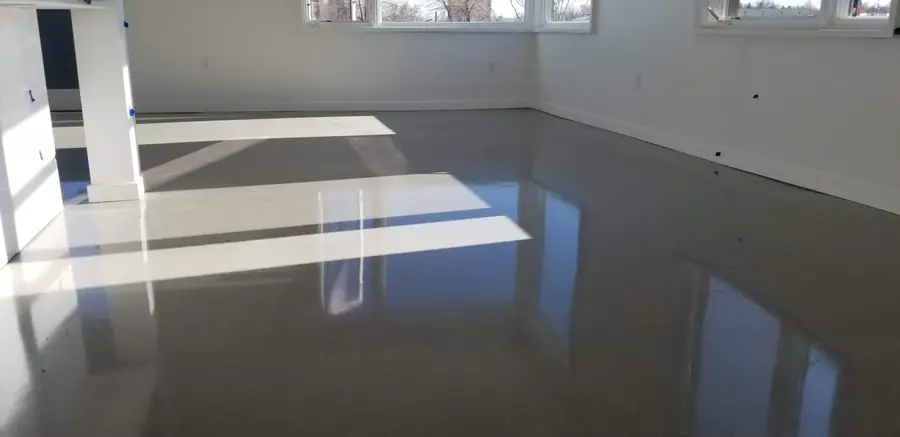
Repair vs. Replacement: Making the Right Call
Sometimes a repair simply won't hold. If a monolithic slab is completely shattered by a massive tree root, or if you are looking to do a substantial driveway extension to accommodate more vehicles, patching is a waste of money. Concrete has a finite lifespan, and eventually, the structural integrity drops below the point of no return.
When tear-out is necessary, we build new concrete driveways engineered specifically for the local climate. This often involves accommodating things like A/C unit removal and laying down future electrical PVC conduits under the slab before the final pour. Those small details matter immensely for the long-term usability of your property.
The Importance of Proper Subgrade Preparation
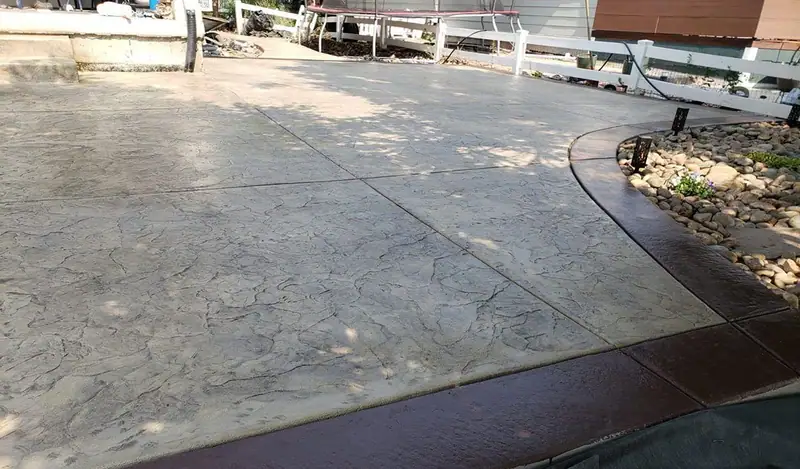
A common issue we see when fixing older properties is poor initial ground preparation. When we get called to fix a sinking patio, the culprit is almost always the dirt underneath it. Homeowners frequently need backyard concrete work starting from raw, uncompacted dirt. Complete dirt leveling and subgrade compaction should always be performed before any material is poured.
If your existing patio has sunk toward your foundation, the original installers likely failed to compact the base material properly. Correcting the grade allows water to move safely away from the foundation, preventing the conditions that caused the initial failure.
Why Quality Materials Matter
Cheap concrete work usually relies on thin wire mesh that ends up sinking to the bottom of the dirt before the concrete even cures. That provides zero structural benefit. A proper repair or replacement requires a rigid rebar grid lifted on chairs, combined with fiber-reinforced concrete mixes that hold the slab together even when the ground attempts to move.
At Hugo's Concrete, our founder personally supervises every installation to ensure the compaction, rebar setup, and finishing techniques meet our strict standards. We do not cut corners on preparation, which is why we back our flatwork with a 3-year warranty.
Get a Real Assessment for Your Property
Every crack tells a story about what the soil beneath it is doing. Guessing at repair costs over the phone usually results in wrong expectations and bad fixes. The only way to know exactly what your concrete needs is to have an experienced local professional walk the site, check the grade, and assess the structural integrity of the slab.
Stop letting freeze-thaw cycles make your concrete damage worse. Reach out to schedule an estimate, and let's get an accurate quote for your specific project.
Common Questions
Frequently Asked Questions
Ready To Start?
Get Your Free Quote Today
Get a free quote from Hugo's Concrete — serving Fort Collins and surrounding areas.